Albatross
A visit to Taiaroa Head is always enjoyed, even on dull days. It was cloudy but we weren’t put off. The views always brighten the mood and when you get to see native wildlife up close and personal, it’s all the better!
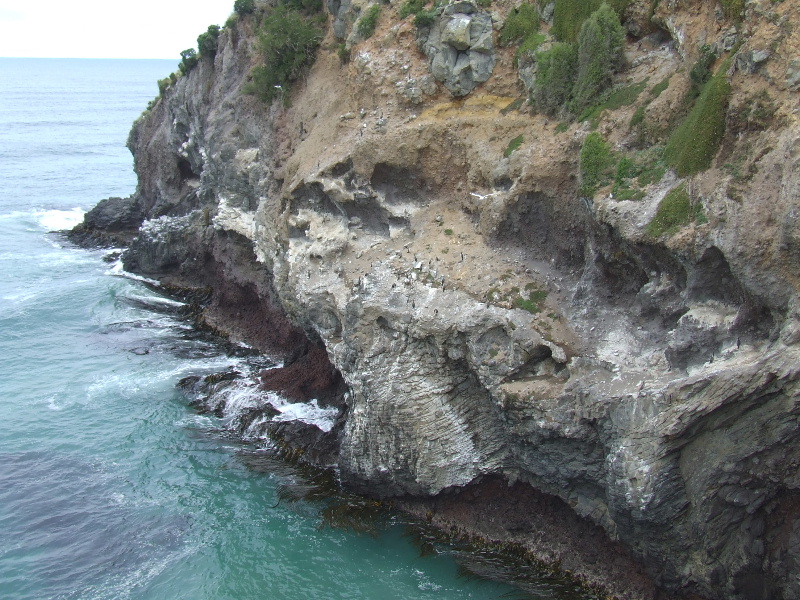
Walking to the look out points for the kelp beds below is at times challenging. The pathway is quite steep and some of the rocks placed to prevent slippage, deep. The ground is covered with tussock and ice plant, both of which can provide traction or become slippery hazards.
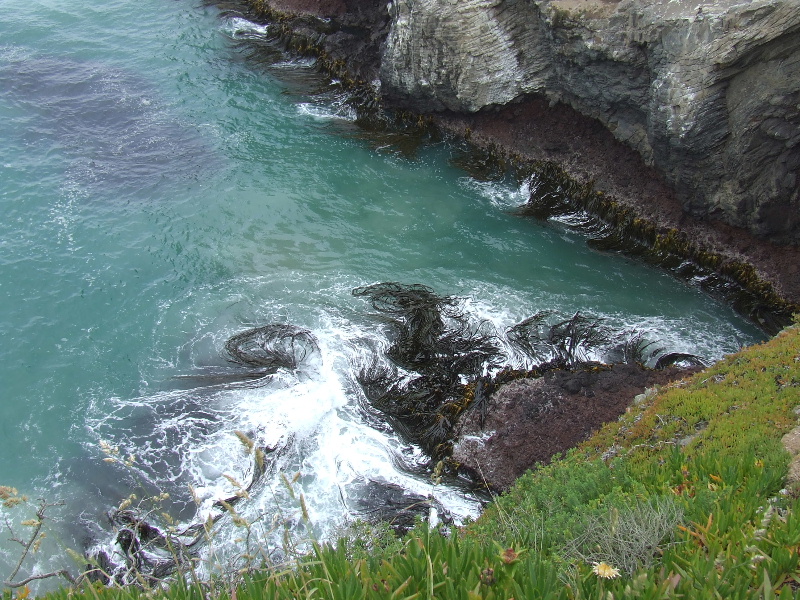
Below, on rocks well out of sight, are many seal cubs, learning the skills they need to survive, honing them in rock pools and the safer coves before venturing out into the ocean.
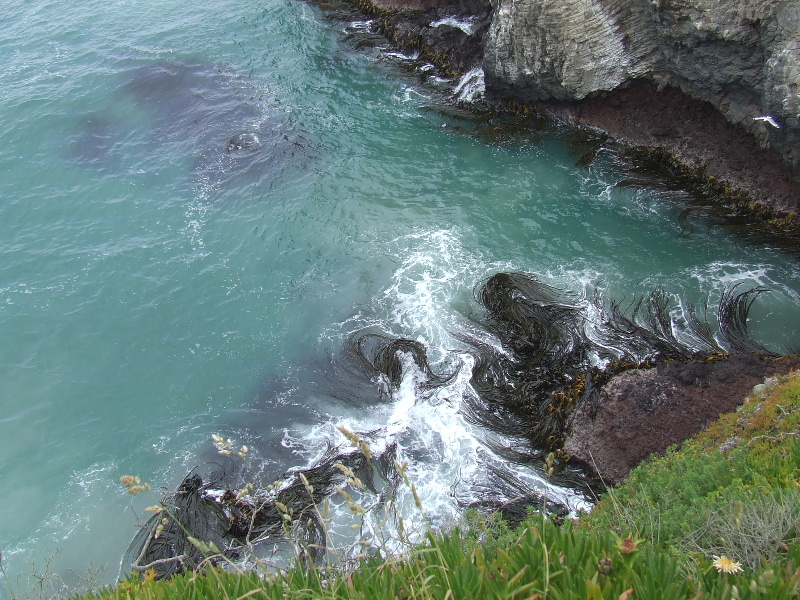
The elephant kelp here provides nourishment for the seals, cover for many smaller fish and crustaceans and a hunting ground for many sea birds. Cormorants, gulls, tern, shearwaters, albatross – all use this area for food.
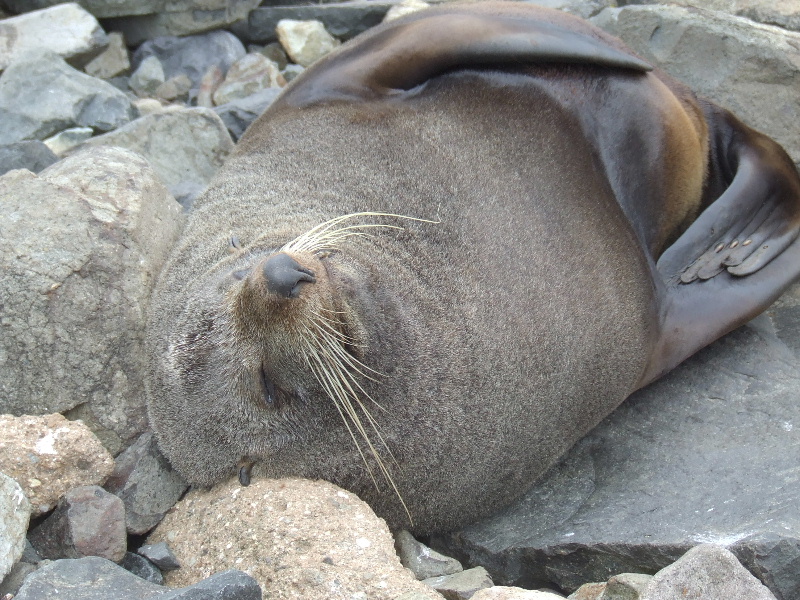
Down on Pilots Beach some of the NZ fur seals lay resting, enjoying the tepid sunshine. This one was in a favoured place, on the rocks at the entrance to the bay. I get the feeling it’s an ‘old hand’ at photographs as it didn’t flinch when we got quite close! They bark warnings if you overstep their limits, but aren’t so inclined to chase you away as the sea lions will, because moving on solid ground isn’t so easy for them.
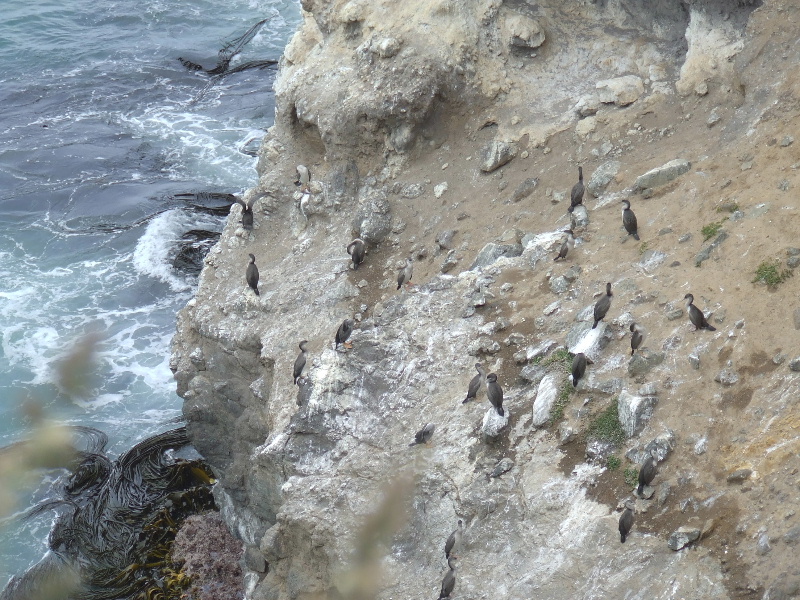
Back above the kelp beds cormorants could be seen, spreading their wings to dry out some. Unlike many water birds, the cormorant (called shags over here and in my native county of the UK, Devon!) doesn’t have the oil gland needed to protect themselves, so drying out between dives is essential if they are to survive.
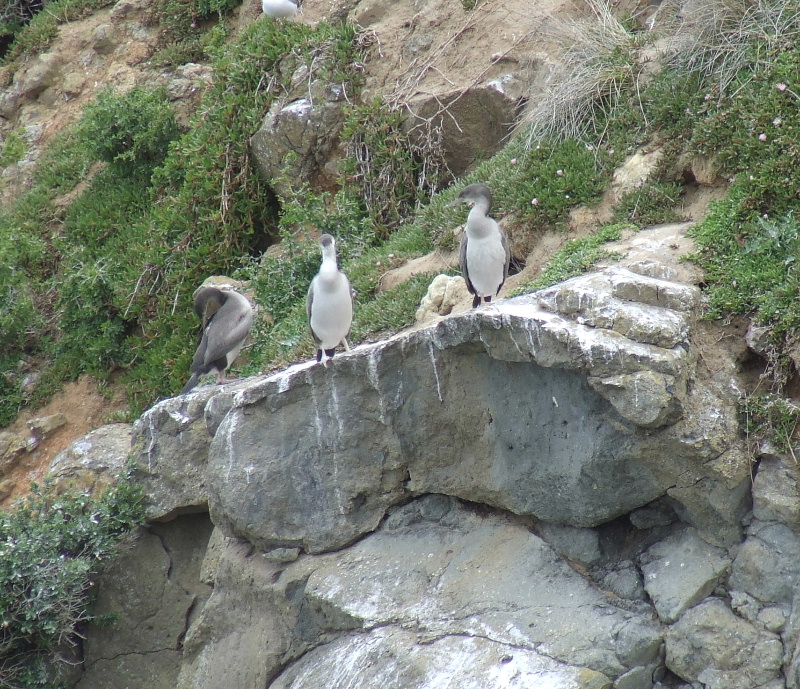
In the spring, they are found clinging to these cliffs in very haphazard and precarious nests, built of a few flimsy twigs and stones. However, they might appear fragile but are robust enough to withstand the storms and ensure the survival of most of their chicks! There are several types of cormorant found here and they seem to nest happily side by side.
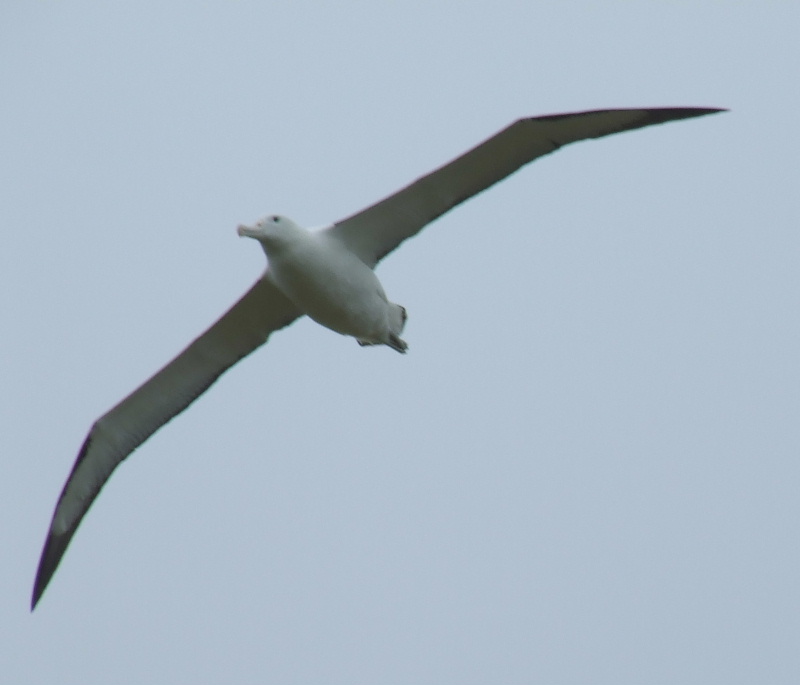
A visit to the Heads isn’t complete without the sight of one of the beautiful Royal Albatross. This day we were blessed with a display of ‘learner’ flight from a few of the chicks who will be leaving for their first time this autumn. The adults who’ve raised their young are out at sea fishing, bringing food back to their young for a wee while yet.
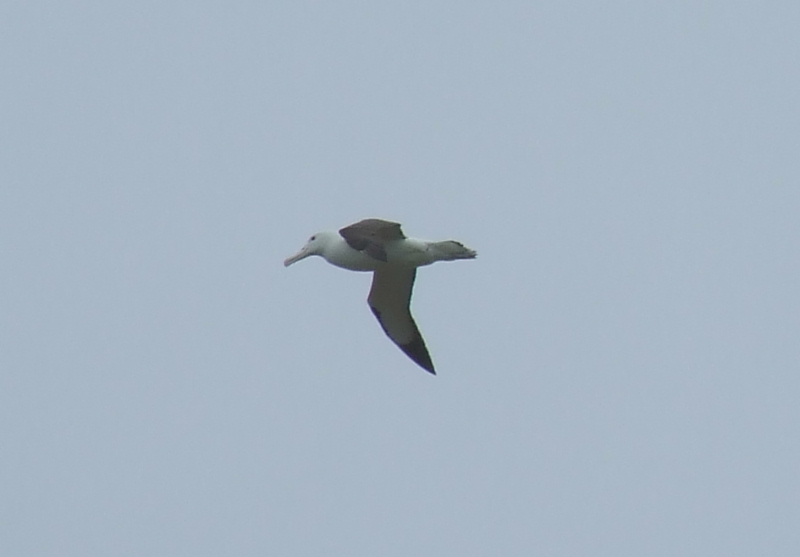
Tracking these huge birds while they soar above you isn’t easy for the average person. Add a dizzy blonde to the equation and I was very lucky to capture the few snaps I did get! I admit, I almost fell over once, turning too fast to regain my balance! And the ensuing photo was too blurred to use!
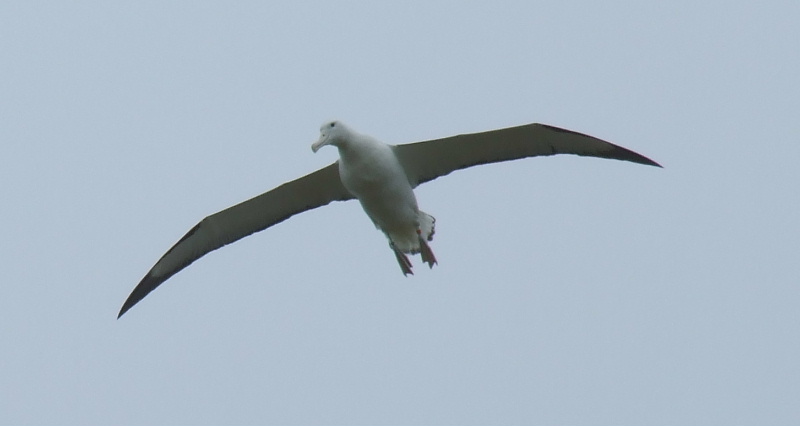
Their wing span is huge, their beaks are menacing, yet they fly soundlessly, gliding on the air currents and surveying the ground below with a look of amusement on their faces. As the only mainland nesting place for the Royal Albatross, the church bells in Dunedin ring out the arrival of the first bird back to the colony each year, and their progress is monitored very carefully throughout the breeding season, ensuring as far as possible, the minimum of interference and the survival of the maximum young.
A magnificent sight indeed.