
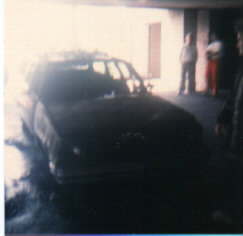
But back to this car fire. In this particular case, the car was fully involved upon arrival, and as you can see the car was halfway into the parking garage. The flames were licking at the roof of the garage. While the actual car fire was extinguished within a few minutes, we spent at least 45 minutes to an hour checking the next floor of the building for extension. This call happened during the weekday, when it is hard to get members to respond to calls. We sent only our resuce pumper (which was the only piece designated in the running order for car fires). I rode on the back step (which some years after I left the fire service was outlawed) and spent the whole time checking for extension while the nozzle team did their thing.
This was also an example of another thing about firefighting that those who've never done it rarely consider. The exciting, adrenaline-filled time of actually putting a stream of water on the flame rarely lasts more than a few minutes. 90% of firefighting consists of mundane tasks such as clean-up, checking for extension of the fire, cleaning up an accident scene after the injured are taken away, etc. This made it no less rewarding for me, and I am not complaining, but I mention it so that readers can have a better understanding that the job is not glory-filled as TV makes it out to be.