Slideshow on Seurat Paintings
|
|
|
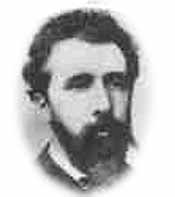
(b. Dec. 2, 1859, Paris--d. March 29, 1891, Paris) Definite well-known Painter and founder of the 19th-century French school of Neo-Impressionism, he personified the technique for portraying the play of light using tiny brushstrokes of contrasting colours became known as Pointillism. Looking up above at his numerous paintings, it's easy to tell that all of these incorporated the use of dots and only dots. Using this techique, he created huge pieces of artwork with tiny, detached strokes of pure color. The color was too small to be distinguished or analyzed when looking at the entire work, but it did make his paintings shimmer with an illuminating light. Works in this style include "Une Baignade (1883-84) and Un dimanche apr�s-midi � l'Ile de la Grande Jatte (1884-86)."
Georges-Pierre was obviously French, because his paintings were all titled in French. He was a leader in the neo-impressionist movement of the late 19th century in a time of uniformity and unorigonality. Georges Seurat is the ultimate example of the artist as a scientist. He spent his life studying color theories and the effects of different linear structures. His 500 drawings alone establish Seurat as a great connoisseur of lighting effects, but he will be remembered for his technique called pointillism, or divisionism, which uses small dots or strokes of contrasting color to create subtle changes in form.
Georges-Pierre Seurat was born on Dec. 2, 1859, in Paris, France! He studied at the Ecole des Beaux-Arts in 1878 and 1879. His teacher was a disciple of Jean-Auguste-Dominique Ingres. As a teenager, Seurat was strongly influenced by Rembrandt and Francisco de Goya.
After a year of military service at Brest, Seurat exhibited his drawing Aman-Jean at the official Salon in 1883. A salon was a place that was specifically designed for artists, where their paintings would be judged on whether or not they met the required expectations and goals set for them. Obviously, since he lived in an age where change was just not acceptable, panels from his painting Bathing at Asnieres were refused by the Salon the next year. So Seurat and several other artists founded the Societe des Artistes Independants. His famous canvas Sunday Afternoon on the Island of the Grande Jatte was the centerpiece of an exhibition in 1886. By then Seurat was spending his winters in Paris, drawing and producing one large painting each year, and his summers on France's northern coast. In his short life, Seurat produced seven monumental paintings, 60 smaller ones, drawings, and sketchbooks. His most famous ones are up above. He kept his private life very secret, and not until his sudden death in Paris on March 29, 1891, did his friends learn of his mistress, who was the model for his painting Young Woman Holding a Powder Puff.