>>Cherokee Language, Tribes, and Settlements Still Left<<
A Famous Quote:
Basics:
This is a site about the cherokee Nation, which has been divided up in the United States in several specific groups. On down, you will find out important information about Cherokee tribes, cultures, where they settled in the past, where they are presently located, and how many are left to date!
Location
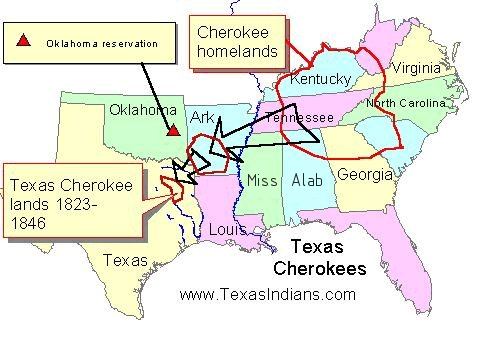
In the southern Appalachian Mountains, like North Carolina, Kentucky, and Virginia, and also in the grassy region of Oklahoma, the eastern Cherokee nation has a solid maintained Indian reservation. The Northern Cherokee Nation of the Old Louisiana Territory has almost 12,000 members and has been recognized by the State of Missouri. Other groups of Cherokee, like the 2,500 members of the North Alabama Cherokee, are located in Arkansas, Georgia, and Alabama, but currently do not have federal recognition like the others obviously do.
Population Affected
European diseases, common and less severe, were were introduced into the southeastern United States region in the 1540's. The Indians contracted these diseases by the Desoto expedition. The common cold and other diseases are estimated to have killed at least 75% of the original native population! 75%! That means every three out of four Indians died because of this! So why did this happen? Europeans were used to these diseases because, over time, their immune systems grew against these diseases. So when a large number of Indians were given these diseases, their bodies had no way to defend against them, for they had no immunity. How much the Cherokee suffered from this disaster is unknown, but we can look at previous years and then those years that they contracted several diseases, and detuct some form of reasoning. Their population in 1674 was about 50,000. A series of smallpox outbursts (1729, 1738, and 1753) cut this in half, and it remained fairly stable at about 25,000, until their ultimate removal to Oklahoma during the 1830s. The American Civil War was the next disaster and cost the Cherokee 25% of their population. No other group of Americans, red or white, suffered as severely during this conflict. The 1990 census listed 308,132 people (15,000 full-blood) who identified themselves as Cherokee. Of these, 95,435 were concentrated in eastern Oklahoma, while 10,114 eastern Cherokee lived on or near the North Carolina reservation. Cherokee tribal governments have fairly liberal membership standards. Some estimates exceed the 370,000 mark, which would make the Cherokee the largest Native American group in the United States. What about that?
On a lighter note, the Eastern Band of Cherokee consist of the descended children of those who hid in the North Carolina mountains to avoid the forced removal known as the Trail of Tears. There are about 11,600 members to date, most of whom live on the Reservation.
Name
The most familiar name, Cherokee, comes from a Creek word "Chelokee" meaning "people of a different speech." The Cherokee were extremely intellectual. To be able to come up with your own language and have thousands of people use and understand it is incredible! "In their own languagem the Cherokee originally called themselves the Aniyunwiya (or Anniyaya) "principal people" or the Keetoowah (or Anikituaghi, Anikituhwagi) "people of Kituhwa." Although they usually accept being called Cherokee, many prefer Tsalagi from their own name for the Cherokee Nation (Tsalagihi Ayili). Other names applied to the Cherokee have been: Allegheny (or Allegewi, Talligewi) (Delaware), Baniatho (Arapaho), Ca�xi (or Cayaki) (Osage and Kansa), Chalaque (Spanish), Chilukki (dog people) (Choctaw and Chickasaw), Entarironnen (mountain people) (Huron), Gatohu� (Creek), Kittuwa (or Katow�) (Algonquin), Matera (or Manteran) (coming out of the ground) ( Catawba), Nation du Chien (French), Ochietarironnon (Wyandot), Oyatageronon (or Oyaudah, Uwatayoronon) (cave people) (Iroquois), Shanaki (Caddo), Shannakiak (Fox), Tcaike (Tonkawa), and Tcerokieco (Wichita)."
Language
The language derives from the Iroquian, but Cherokee differs significantly from other Iroquian languages. The Cherokee Language is a language that does not need any english or use the roman alphabet. They have their own symbols and letters that represent words. Want to type with their font? Go Here and download the font for yourself!
Sub-tribes
The Cherokee have been divided into three divisions, all of which depend on location and dialect (east to west): Lower, Middle, and Over-the-Hill.
Other distinct bands were: Atali, Chickamauga, Etali, Onnontiogg, and Qualia.
Three Cherokee groups are currently federally recognized:
Cherokee Nation of Oklahoma, United Keetoowah Band of Cherokee Indians (Oklahoma), and the Eastern Band of Cherokee Indians (North Carolina). The Echota Cherokee are recognized only by the state of Alabama. And many others today fight for the recognition they all rightfully deserve.
Villages
The number following a particular name indicates more than one of the same name.
Lower Settlements: