|
New benchmark at ground zero
Kathleen Johnson, Waveland, Ms. 7/2/06
Katrina cut a swath thru the tall pines in an area the size of England across the Gulf Coast leaving a tangled bounty of timber which has, for the most part, up to this point, been hauled off to be dumped and left to slowly rot in land fills all over the Gulf Coast.
A better use of resources
Click on pictures to see in full view
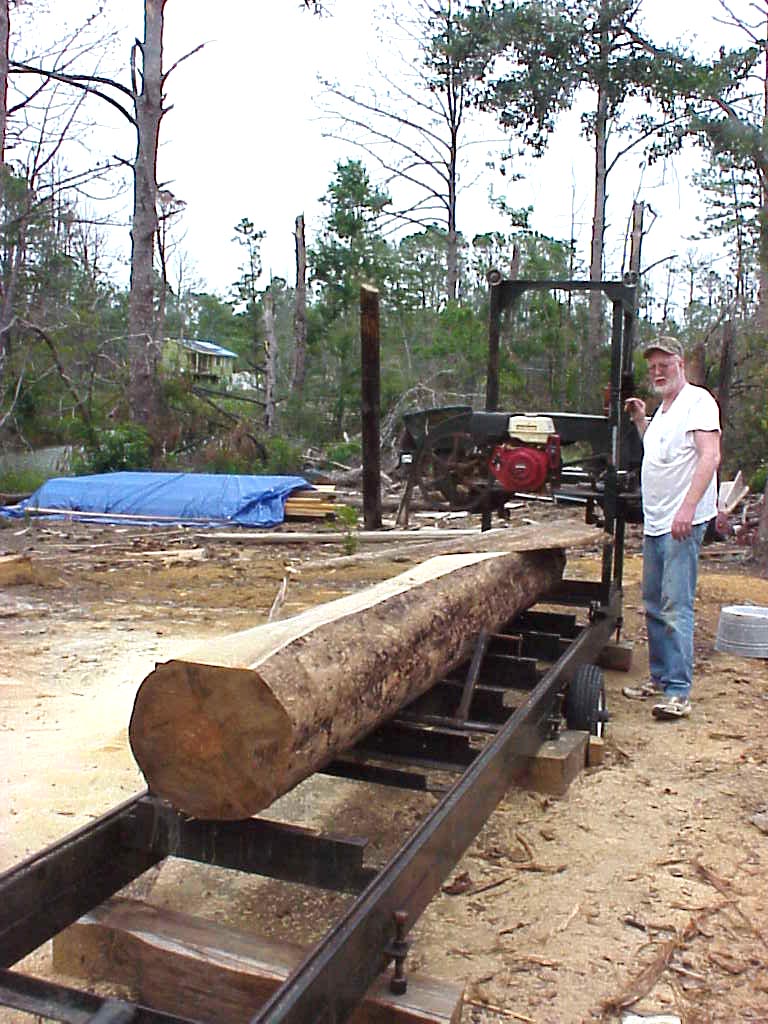
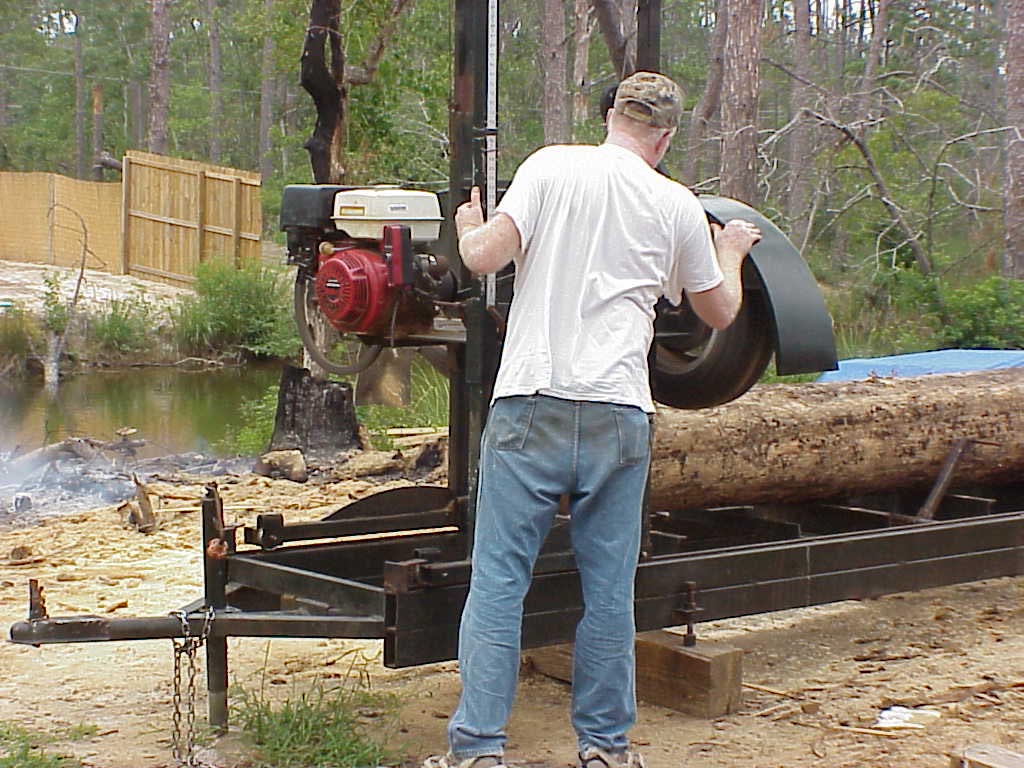 That was until I discovered “Lyle” and his portable sawmill out on Fourth Street, Bay St Louis in Hancock County Mississippi.
Designed from scratch, and built with the assistance of his sons, this mill hums along with the aid of a side mount Honda motor and scrap parts. This little motor, you could find on a lawnmower, can easily plow thru through logs up to 50” in girth and sixteen feet long to produce the rough cut building blocks for a home at little cost excepting the gas to run the mill, blades, along with a lot of sweat equity in the humid heat of a southern summer. The operation has been augmented with a new tractor added since the storm. While the old tractor survived the flood and was drained of oil and gasoline and fired immediately up – this new tractor adds the capacity to lift logs up to 2650lbs. After discussing my idea of building homes with rough cut lumber - Lyle very generously offered to cut lumber for me so I could assist someone to build a home that had no other resources.
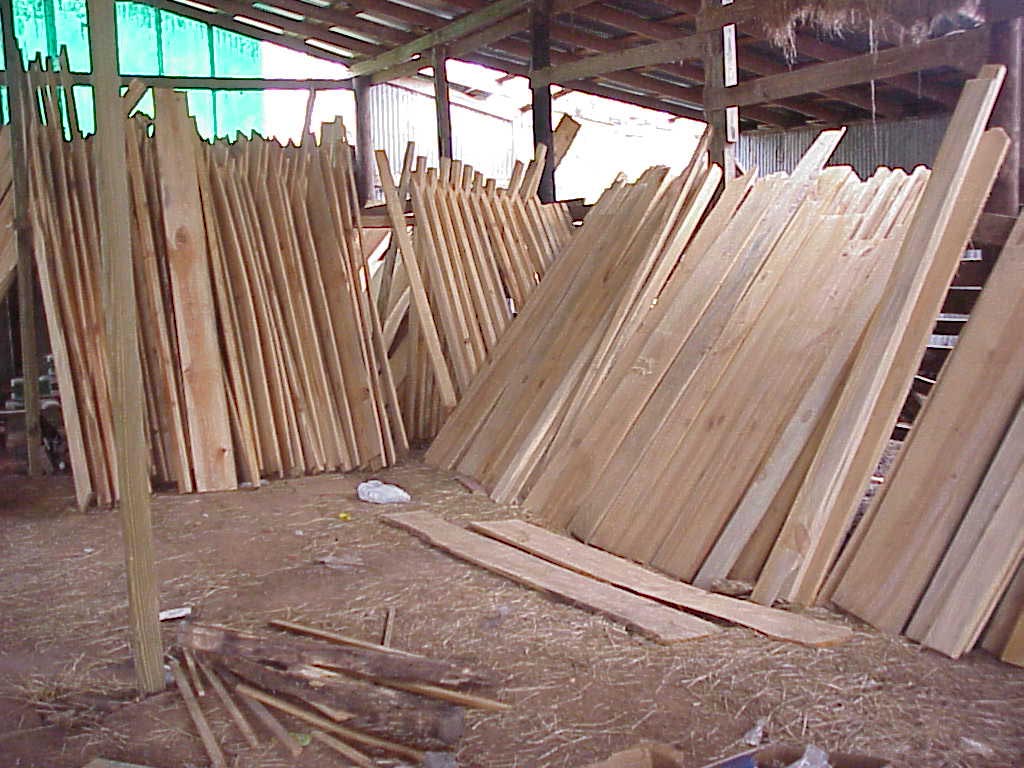 The bridge to this project developed while I was talking to Bob Friecke down off Danube Street. His farm was devastated by the flood waters that drowned 29 of his horses and decimated the family homes that housed his extended family and grandchildren. What was left, after Katrina cut a swath across the farm, were a myriad of once grand pine trees now laying every way but loose. Normally these trees would be carried off in Corp of Engineer Contractor trash trucks - but Bob and I discussed the possibility of hauling them to the sawmill on our 18’ trailers, a load at a time, to be cut into lumber to re-built the interior of the barn that had been recently roofed by volunteers.
And so the project started and we slowly hauled the logs, half a dozen at a time, to the sawmill about three miles away. And, a few days later, hauled back the 2x4’s, 2x6’s, and gorgeous 2” planks whose width depended on the girth of the tree we cut from. The lumber was carefully stacked to dry in the barn. But as the pile of lumber grew the vision changed. It was determined that this lumber could be used to build a home. In fact, Bob’s family home.
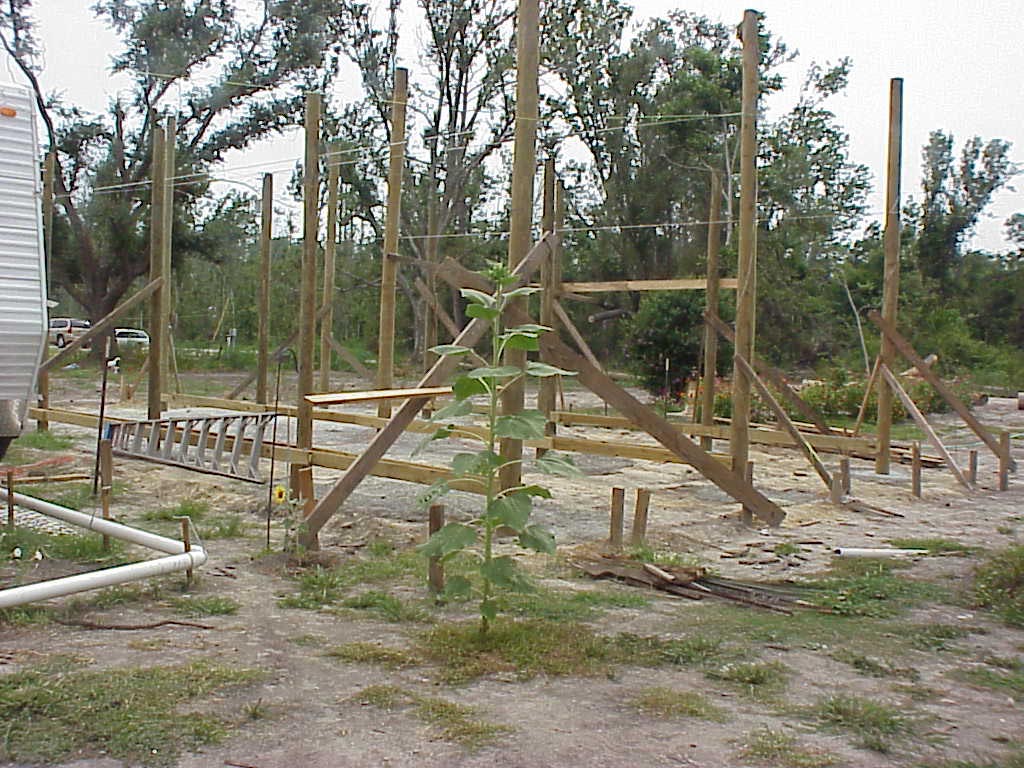 This time, with the home up on pylons, it would be far away from the next hurricanes raging waters. The bottom floor would be built of green treated lumber - the balance of the home to be constructed of these building blocks from Lyles sawmill that had been thriving previously shadowing Bob’s old home.
Building a bigger mousetrap
And then the dream grew – what if the 2”x6” planks could be used as siding? Planed to a half moon with a tongue and groove enabling a lock against infiltration of dust and water allows them to be used as siding that, when in place, gives the building the look of a log cabin. Another small sawmill was located by Bob where they had the special attachment for planning the plank. For a cost of $350 for a thousand lineal feet the rough cuts planks were hewn leaving a smooth semi circle surface that is easily treated with water repellant or stain.
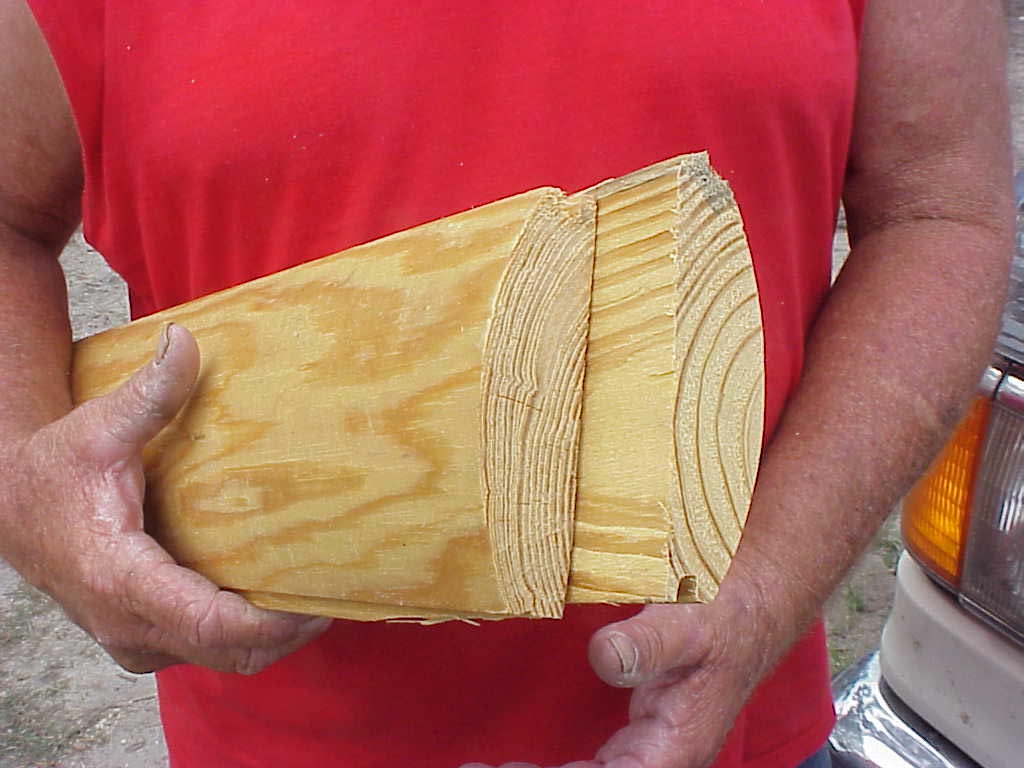
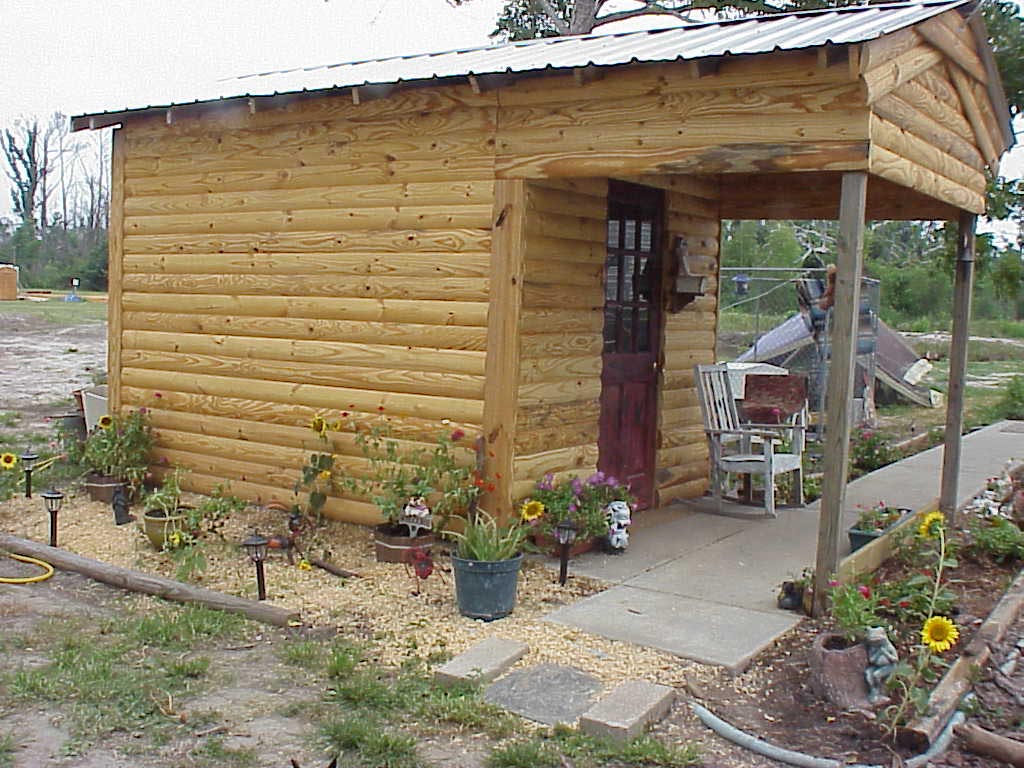 Double click on photographs to see in full view. Photo 1: Closeup of tongue and groove siding. Photo 2:The garden shed was sided with the tongue and groove siding as a test project.
Diminishing usefulness over time
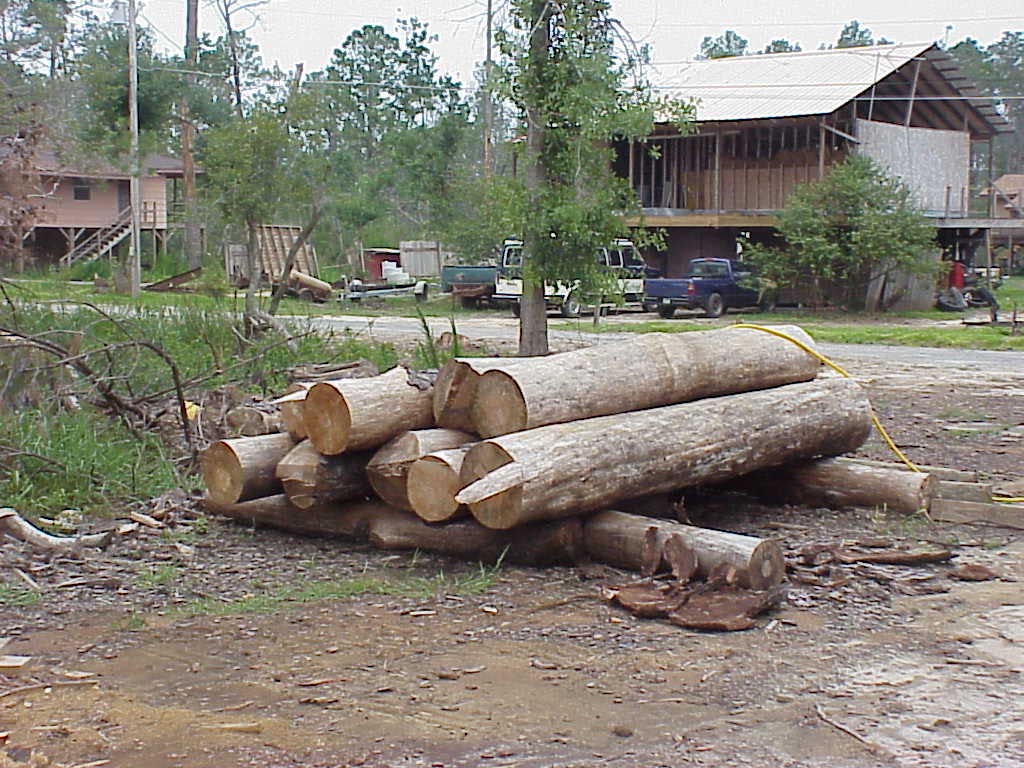 The usefulness of lumber for this use normally is about a year after the tree is cut down -the dead lumber from Katrina is now a year old and we are seeing “pith” marks and significant beetle damage in the lumber showing up during the milling process leaving some of the planks unusable for planning projects. These issues also diminish the integrity of structural lumber such as the 2.4’s and 2x6’s. Along with this the lumber cut from trees that have laid on the ground have a “gray stain” ingrained in the wood – the proportion of the gray stay is directly proportional to the time the timber has laid on the ground. This “stain” can be aesthetically unattractive on planks that are used to panel walls. Future material brought to the mill will have to be from green standing trees – damaged from the storm but still alive at the time they are harvested. There are still stands of pine trees everywhere on the horizon in this region and several stands have been donated to this project. The usefulness of lumber for this use normally is about a year after the tree is cut down -the dead lumber from Katrina is now a year old and we are seeing “pith” marks and significant beetle damage in the lumber showing up during the milling process leaving some of the planks unusable for planning projects. These issues also diminish the integrity of structural lumber such as the 2.4’s and 2x6’s. Along with this the lumber cut from trees that have laid on the ground have a “gray stain” ingrained in the wood – the proportion of the gray stay is directly proportional to the time the timber has laid on the ground. This “stain” can be aesthetically unattractive on planks that are used to panel walls. Future material brought to the mill will have to be from green standing trees – damaged from the storm but still alive at the time they are harvested. There are still stands of pine trees everywhere on the horizon in this region and several stands have been donated to this project.
Re-cycling the wallboard after the flood
And his is not the end of the story – Lyle’s home is a showcase of ingenuity in the face of the possibility of future floods and the fickle nature of sheetrock once it has become saturated with flood waters. Gypsum is no longer viable after becoming wet and the material becomes a breeding bed for mold and mildew. Looking like the interior of a log cabin in Jackson Hole, Wyoming, the interior of Lyle’s home is lined with rough sawn planks sealed with polyurethane leaving a golden hue with the tree rings and sundry knots in full view. Some of the rough cut planks are planed to remove the saw marks left on the boards by the blades of the mill and others are left in their natural rough state. The plank widths vary up to 20” and line the walls diagonally attached to the rough cut stud walls with nails and hidden screws.
After returning to their home that was inundated with 29’ of water – Lyle carefully removed his pine paneling boards, washed them off, replaced the mud saturated insulation, and placed the pine boards back up on the wall where they had sat for many a year – now standing defiant of Katrina’s fury. And so Bob Friecke also plans to line his walls on his home with similar planks made from trees on his property that succumbed to Katrina – but to live on in this new home planed to a smooth finish showing the grain for each year of life on his family farm.
Conclusion
This project will provide a bench mark for evaluating the feasibility of expanding this concept to build other homes in this manner in Hancock County, Mississippi. It is projected that we can cut the cost of constructing an average home by at least 60%. With the main floor and perlins being constructed of treated lumber to protect from damage due to moisture upwardly mobile from the ground, the only other purchased lumber will be the plywood used on the roof and add to that the cost for shingles, plumbing, electrical, insulation, doors and some misc. And, of course, there is always the possibility that a kind benefactor will donate those items. There is no labor cost here – this entire operation is manned by faith based volunteers who truly understand the parable of the Loaves and the Fishes. From one house constructed in this fashion – many more will follow. And the very next project will be finishing off the interior that barn for the three surviving horse.
And all that felled lumber that has been hauled off the past year - what a waste of resources. Perhaps we can learn from this catastrophe called Katrina and implement a plan for the future that will include the placement of portable sawmills with operators to capture the lumber felled by wind and water to recycle the lumber for immediate use in the disaster region thus minimizing re-construction cost and mitigating landfill needs.
|
Contact Author
|

|
|
|