

Broadcasting Milestones
      1920:    The first broadcasting station in the USA on AM - KDKA 100w owned by Westinghouse in Pittsburgh
      1922:   The Marconi company in England starts 2LO in London- Britains first broadcasting station
      1922: 2LO opened by Marconi in May.
      1922: 14 Nov: BBC start daily broadcasting on 2LO. The first voice was Arthur
     Burrows, reading the news. The BBC was funded by radio set manufacturers.
      1922: 15 Nov: 5IT (Birmingham) and 2ZY (Manchester) become first BBC stations
     outside London. Further stations in 1922 and 1923 were 5NO, Newcastle; 5WA,
     Cardiff, 5SC, Glasgow, and in 1924 2BE Belfast started broadcasting.
      1924: "Pips" (Greenwich Time Signal) first broadcast on 5 Feb
      1927: 5SW Chelmsford first started broadcasting shortwave broadcasts to Europe.
      1930: "National Programme" replaces 2LO. The "Regional Programme", an
     alternative service, started later this year.
      1933: Radio Luxembourg commences broadcasting
      1934:   The FCC is established in the US to regulate the radio industry
      193?    The first FM station in the USA W2 XMN 50kW from Alpine, New Jersey licenced
      1939: "Home Service" created in September by a merger of the National and
     Regional Programmes.
      1940: "Forces Programme" launched as a seperate light entertainment programme
     for servicemen.
      1941:    The FCC allocates FM broadcasting 42-50Mhz
      1945: Forces Programme renamed as "Light Programme" for peacetime.
      1946: "Third Programme" launched in September
      1952: Sony markets the minature transistor radio
      1955: The BBC launches its VHF (FM) transmitter network
      1957: "Network 3" launched as daytime service of the Third Programme.
      1959:    Robert Noyce and Gordon Moore develop a silicon transistor circuit
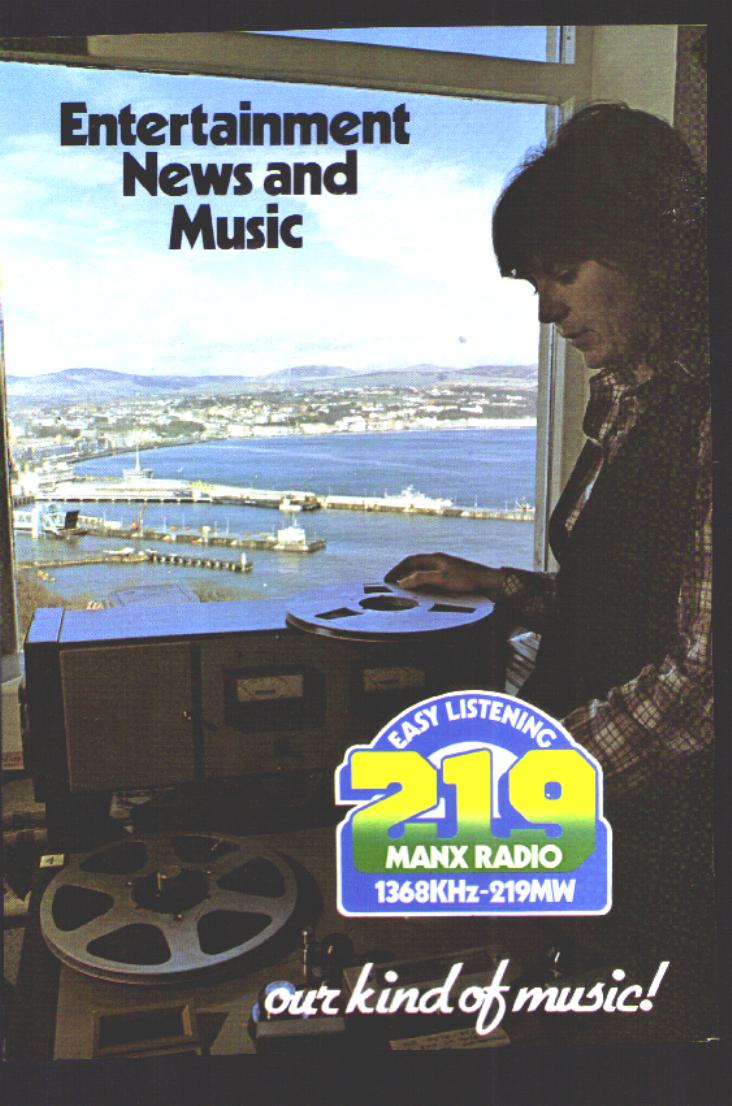
      1964:    Manx Radio - the first legal commercial radio staion in the British Isles begins broadcasting on FM stereo
      1964: "Radio Caroline" commences broadcasting on 29th March. Simon Dee was
     the first voice heard.
      1967: Marine etc Broadcasting Offences Act became law, as effort by the
     government to regulate broadcasting.
      1967: On 30th September, BBC radio reorganisation launched Radio 1,2,3 and 4.
     "Radio 1" was formed after the demand for pirate radio - the first record broadcast (by
     Tony Blackburn) was "Flowers in the Rain" by The Move, although limitations on
     needletime and funds meant it only broadcast for 5 hours 35 minutes on its first day.
     "Radio 2" was the change of name for The Light Programme, "Radio 3" was formed
     from the Third Programme and various strands from Network 3, and the Home service
     renamed "Radio 4".
      1967: BBC Radio Leicester begins broadcasting on 8th November -1967    The first BBC local radio station on FM
      1967:    Dolby noise reduction introduced
      1970: Network 3 fully absorbed into Radio 3 and Radio 4.
      1970: In Sep - Dec, eight more BBC local radio stations begin broadcasting, after
     the Leicester experiment (1967) is hailed a success.
      1973: Radio 1 Roadshow launched by Alan Freeman.
      1973: 1973    The first legal commercial radio station in the UK- LBC Radio begins broadcasting from London, this was the birth of commercial radio, (originally known as 'independent' radio after its independence from the BBC). LBC was first, joined by Capital Radio a week later, both in London.
      1974: Radio 1 launches 'Newsbeat'.
      1988: Radio 1 launched on FM
      1988: First commercial station 'splits' frequencies (broadcasting different stations on
     FM and AM frequencies). First to do it permanently was CountySound.
      1989: 'Incremental' commercial radio stations launched in London, Birmingham,
     Manchester, Bristol and Bradford as alternative services. While the term 'incremental'
     is now no longer used, these stations were mainly aimed at ethnic minorities in
     particular areas - broadcasting black dance music, or asian music to widen listener
     choice.
      1990: Independent Broadcasting Authority (the commercial radio and television
     authority) splits into the Independent Television Commission and the Radio
     Authority, with the Broadcasting Act allowing more deregulation in the industry
      1990: Radio 5 begins broadcasting on 9am Monday 27 August. First record (played
     by Bruno Brookes) was "Thunderbirds are Go" by MC Parker. It later re-launched as
     Radio 5-Live, a rolling news and sport station.
      1991: Radio 1 goes permanently 24 hours on 1 May. (It had been 24 hours before,
     most notably during the Gulf War).
      1992: Launch of Classic FM, first national commercial radio station, on 7th
     September. The first commercial station to play anything other than 24-hour pop
     music, the rapid growth of advertising on commercial radio is attributed to Classic FM.
      1992: Launch of RAJAR, a body jointly funded by commercial radio and the BBC,
     giving industry-approved listening figures for all subscribing UK radio services
      1993: Launch of Virgin 1215, now Virgin Radio, on April 30th
      1994: Radio 1 leaves AM frequencies for new commercial station
      1995: Talk Radio UK begins broadcasting on February 14th (now "TalkSport")
      1997: Radio Authority launches Sallies, small scale local licences for smaller
     communities.
 COMING SOON!...........THE MANX RADIO STORY
|
|


|

|

|