The
Life of Siddhartha Gautama
Edited by Patrick Mok
Hong Kong
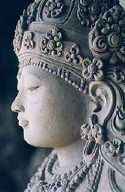
Buddha is a title, not the length of a person. It is derived from root budh. It means one who knows the sense of having become one with the highest objects of knowledge. That the man known as the Buddha was a real historical person is not seriously disputed nowadays. However, it is very difficult to establish the exact details of his life history 2500 years after it happened. The earliest full length biography known to us is the Acts of Buddha written by the first centurt CE Indian poet Ashvaghosa; it is not surprising to find that after five hundred years legendary and mythological details have found their way into story. An earlier source is the Pali Canon of the Theravadins, which relates many events from the Buddha's life, but incidentaly because of some teaching related to the event, and not in chronological order. According to such documents, we may
present the following reconstruction about the life of the Buddha, which is well accepted by the modern world.
There was a small country in what is now southern Nepal that was ruled
by a clan called the Shakyas. The head of this clan, and the king
of this country, was named Shuddodana Gautama, and his wife was the beautiful
Mahamaya. Mahamaya was expecting her first born. She had had
a strange dream in which a baby elephant had blessed her with his trunk,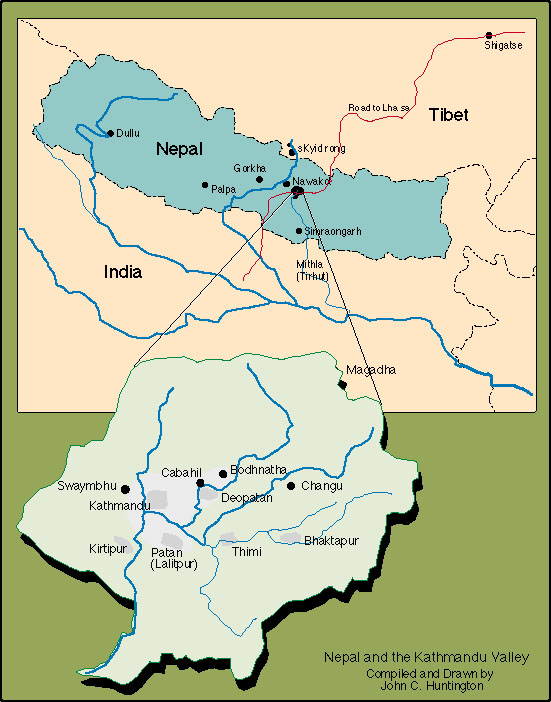 which was understood to be a very auspicious sign to say the least.
From the commentary and legends we learn that the Buddha was born on the full moon of May according to the Theravada tradition in a garden called Lumbini. At the time of his conception ten months earlier, his mother dream that a white elephant entered her womb. Even in the Pali Canon, it is suggested that this conception occured miraculously through the bodhisattva ("Buddha-to-be") descending directly from the heaven where he spent his penultimate life into his mother's womb, with no mention of his father being involved.
As was the custom of the day, when the time came near for Queen Mahamaya
to have her child, she traveled to her father's kingdom for the birth.
But during the long journey, her birth pains began. In the small
town of Lumbini, she asked her handmaidens to assist her to a nearby grove
of trees for privacy. One large tree lowered a branch to her to serve
as a support for her delivery. They say the birth was nearly
painless, even though the child had to be delivered from her side.
After, a gentle rain fell on the mother and the child to cleanse them. After his birth, he taken seven steps and proclaimed his mission. At that time, a shining light and an earthquake, together with the attendance and homage of deities.
It is said that the child was born fully awake. He could speak,
and told his mother he had come to free all mankind from suffering.
He could stand, and he walked a short distance in each of the four directions.
Lotus blossoms rose in his footsteps. They named him Siddhartha,
which means "he who has attained his goals." Sadly, Mahamaya died
only seven days after the birth. After that Siddhartha was raised
by his mother's sister, Mahaprajapati.
King Shuddodana consulted Asita, a well-known sooth-sayer, concerning
the future of his son. Asita proclaimed that he would be one of two
things: He could become a great king, even an emperor. Or he
could become a great sage and savior of humanity. The king, eager
that his son should become a king like himself, was determined to shield
the child from anything that might result in him taking up the religious
life. And so Siddhartha was kept in one or another of their three
palaces, and was prevented from experiencing much of what ordinary folk
might consider quite commonplace. He was not permitted to see the
elderly, the sickly, the dead, or anyone who had dedicated themselves to
spiritual practices. Only beauty and health surrounded Siddhartha.
To his childhood and youth, there are only two reference in the Pali Canon. It was known that he was brought up in luxury and refinement and that once as a young man, he sat under a roseapple tree while his father was working, and in the peace achieved the first level of meditation. Siddhartha grew up to be a strong and handsome young man. As a
prince of the warrior caste, he trained in the arts of war. When
it came time for him to marry, he won the hand of a beautiful princess
of a neighboring kingdom by besting all competitors at a variety of sports.
Yashodhara was her name, and they married when both were 16 years old. However, in some versions, he also had a harem of dancing girls.
As Siddhartha continued living in the luxury of his palaces, he grew
increasing restless and curious about the world beyond the palace walls.
He finally demanded that he be permitted to see his people and his lands.
The king carefully arranged that Siddhartha should still not see the kind
of suffering that he feared would lead him to a religious life, and decried
that only young and healthy people should greet the prince.
As he was lead through Kapilavatthu, the capital, he chanced to see
a couple of old men who had accidentally wandered near the parade route.
Amazed and confused, he chased after them to find out what they were.
Then he came across some people who were severely ill. And finally,
he came across a funeral ceremony by the side of a river, and for the first
time in his life saw death. He asked his friend and squire Chandaka
the meaning of all these things, and Chandaka informed him of the simple
truths that Siddhartha should have known all along: That all of us
get old, sick, and eventually die.
Siddhartha also saw an ascetic, a monk who had renounced all the pleasures
of the flesh. The peaceful look on the monks face would stay with
Siddhartha for a long time to come. Later, he would say this about
that time:
When ignorant people see someone who is old, they are disgusted
and horrified, even though they too will be old some day. I thought
to myself: I don't want to be like the ignorant people. After
that, I couldn't feel the usual intoxication with youth anymore.
When ignorant people see someone who is sick, they are disgusted
and horrified, even though they too will be sick some day. I thought
to myself: I don't want to be like the ignorant people. After
that, I couldn't feel the usual intoxication with health anymore.
When ignorant people see someone who is dead, they are disgusted
and horrified, even thought they too will be dead some day. I thought
to myself: I don't want to be like the ignorant people. After
than, I couldn't feel the usual intoxication with life anymore.
At the age of 29, Siddhartha came to realize that he could not be happy
living as he had been. He had discovered suffering, and wanted more
than anything to discover how one might overcome suffering. After
kissing his sleeping wife and newborn son Rahula goodbye, he snuck out
of the palace with his squire Chandara and his favorite horse Kanthaka. It is said that the bodhisattva left home secretly in the middle of the night. He deliberately avoided waking his wife or looking at the baby's face in case it weakened his resolve. This is symbolic of the complete detachment necessary for enlightenment.
He gave away his rich clothing, cut his long hair, and gave the horse to
Chandara and told him to return to the palace. He studied
for a while with two famous gurus of the day, but found their practices
lacking.
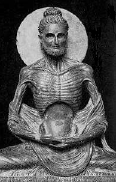
He then began to practice the austerities and self-mortifications practiced
by a group of five ascetics. For six years, he practiced. The sincerity
and intensity of his practice were so astounding that, before long, the
five ascetics became followers of Siddhartha. But the answers to
his questions were not forthcoming. He redoubled his efforts, refusing
food and water, until he was in a state of near death.
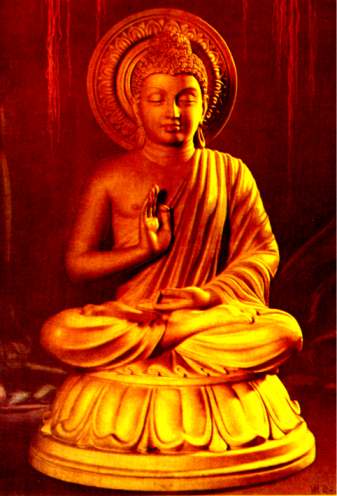
One day, a peasant girl named Sujata saw this starving monk and took
pity on him. She begged him to eat some of her milk-rice. Siddhartha
then realized that these extreme practices were leading him nowhere, that
in fact it might be better to find some middle way between the extremes
of the life of luxury and the life of self-mortification. So he ate,
and drank, and bathed in the river. The five ascetics saw him and
concluded that Siddhartha had given up the ascetic life and taken to the
ways of the flesh, and left him.
In the town of Bodh Gaya, Siddhartha decided that he would sit under
a certain fig tree as long as it would take for the answers to the problem
of suffering to come. He sat there for many days, first in deep concentration
to clear his mind of all distractions, then in mindfulness meditation,
opening himself up to the truth. He began, they say, to recall all
his previous lives, and to see everything that was going on in the entire
universe. On the full moon of May, with the rising of the morning
star, Siddhartha finally understood the answer to the question of suffering
and became the Buddha, which means the one who is awake.?
It is said that Mara, the evil one, tried to prevent this great occurrence.
He first tried to frighten Siddhartha with storms and armies of demons.
Siddhartha remained completely calm. Then he sent his three beautiful
daughters to tempt him, again to no avail. Finally, he tried to ensnare
Siddhartha in his own ego by appealing to his pride. That, too, failed.
Now alone, Siddhartha was close to his triumph. A substantial meal and a bath in the river Nairanjana restore his strength. In the evening, he went to Bodhgaya and sat down near a fig-tree in order to meditate. He directed his mind no longer towards the heavenly spheres and spheres beyond normal consciousness which his masters had taught him, but to the mysteries of death and rebirth in the world of appearance. During one memorable night in 531B C, he reached that Enlightment (Bodhi) which brings Buddahood, Enlightment of the Higher Degree (abhisambodhi), supreme and perfect Enlightment (anuttara samyahsambodhi). Siddhartha, having conquered all temptations, touched the ground with one
hand and asked the earth to be his witness. During the watches of that night, he won three knowledges: remembrance of his former lifes. knowledge of the birth and death of beings, and the certainty of having finally cast off ignorance and passion which until then had rebound him to the world of becoming and led to successive rebirthes.
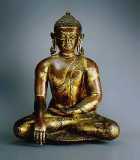
This threefold knowledge brought with it perfect insight into the mechanism of Dependent Origination and Destruction (pratitya-samutpada), the cycle of the causation of all psycho-physical phenomena of life. The Buddha mentally examined, first forwards and then in reverse, the twelve causes (nidana) which condition that origination and destruction, and thus acquired the certainty of having himself escaped from the whiring wheel of rebirths and of living his very last life.
Having continued his meditations at Bodh-Gaya for four to seven weeks, the Buddha, enlightened and compassionate, conceived of a doctrine capable of opening the doors to Immortality, of putting an end to suffering and of ensuring peace, Nirvana. This doctrine received the name of Dharma. It is profound, difficult to envisage and difficult to understand; it was not without hesitation, and only after the intervention of the great god Brahma, that the Buddha decided to expound it. He went back to the Benares, to the Deer ark. There, before the five mendicants who had witnessed his mortifications, he expounded his Disclosure "Turning the Wheel of the Doctrine" (Dharmacakrapravartanasutra), in which are set out the Four Noble Truth (aryasatya), a disclosure soon followed by the homily on the "No-self"(anatman) which proclaims the impersonality of all living phenomena of existence: there is no self, nothing belongs to a self.
Siddhartha, now the Buddha, remained seated under the tree -- which
we call the bodhi tree -- for many days longer. It seemed to him that this
knowledge he had gained was far too difficult to communicate to others.
Legend has it that Brahma, king of the gods, convinced Buddha to teach,
saying that some of us perhaps have only a little dirt in our eyes and
could awaken if we only heard his story. Buddha agreed to teach.
At Sarnath near Benares, about one hundred miles from Bodh Gaya, he
came across the five ascetics he had practiced with for so long.
There, in a deer park, he preached his first sermon, which is called Setting
the wheel of the teaching in motion.? He explained to them the Four
Noble Truths and the Eightfold Path. They became his very first disciples
and the beginnings of the Sangha or community of monks.
King Bimbisara of Magadha, having heard Buddha's words, granted him
a monastery near Rahagriha, his capital, for use during the rainy season.
This and other generous donations permitted the community of converts to
continue their practice throughout the years, and gave many more people
an opportunity to hear the teachings of the Buddha.
Over time, he was approached by members of his family, including his
wife, son, father, and aunt. His son became a monk and is particularly
remembered in a sutra based on a conversation between father and son on
the dangers of lying. His father became a lay follower. Because
he was saddened by the departures of his son and grandson into the monastic
life, he asked Buddha to make it a rule that a man must have the permission
of his parents to become a monk. Buddha obliged him.
His aunt and wife asked to be permitted into the Sangha, which was originally
composed only of men. The culture of the time ranked women far below
men in importance, and at first it seemed that permitting women to enter
the community would weaken it. But the Buddha relented, and his aunt
and wife became the first Buddhist nuns.
The Buddha said that it didn't matter what a person's status in the
world was, or what their background or wealth or nationality might be.
All were capable of enlightenment, and all were welcome into the Sangha.
The first ordained Buddhist monk, Upali, had been a barber, yet he was
ranked higher than monks who had been kings, only because he had taken
his vows earlier than they!
Buddha's life wasn't without disappointments. His cousin, Devadatta,
was an ambitious man. As a convert and monk, he felt that he should
have greater power in the Sangha. He managed to influence quite
a few monks with a call to a return to extreme asceticism. Eventually,
he conspired with a local king to have the Buddha killed and to take over
the Buddhist community. Of course, he failed.
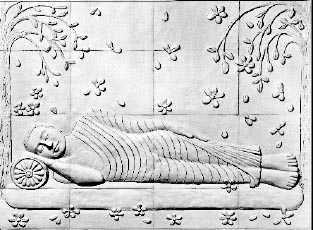
Buddha had achieved his enlightenment at the age of 35. He would
teach throughout northeast India for another 45 years. When the Buddha
was 80 years old, he told his friend and cousin Ananda that he would be
leaving them soon. And so it came to be that in Kushinagara, not
a hundred miles from his homeland, he ate some spoiled food and became
very ill. He went into a deep meditation under a grove of sala trees
and died. His last words were...
Impermanent are all created things;
Strive on with awareness.