|
|
|
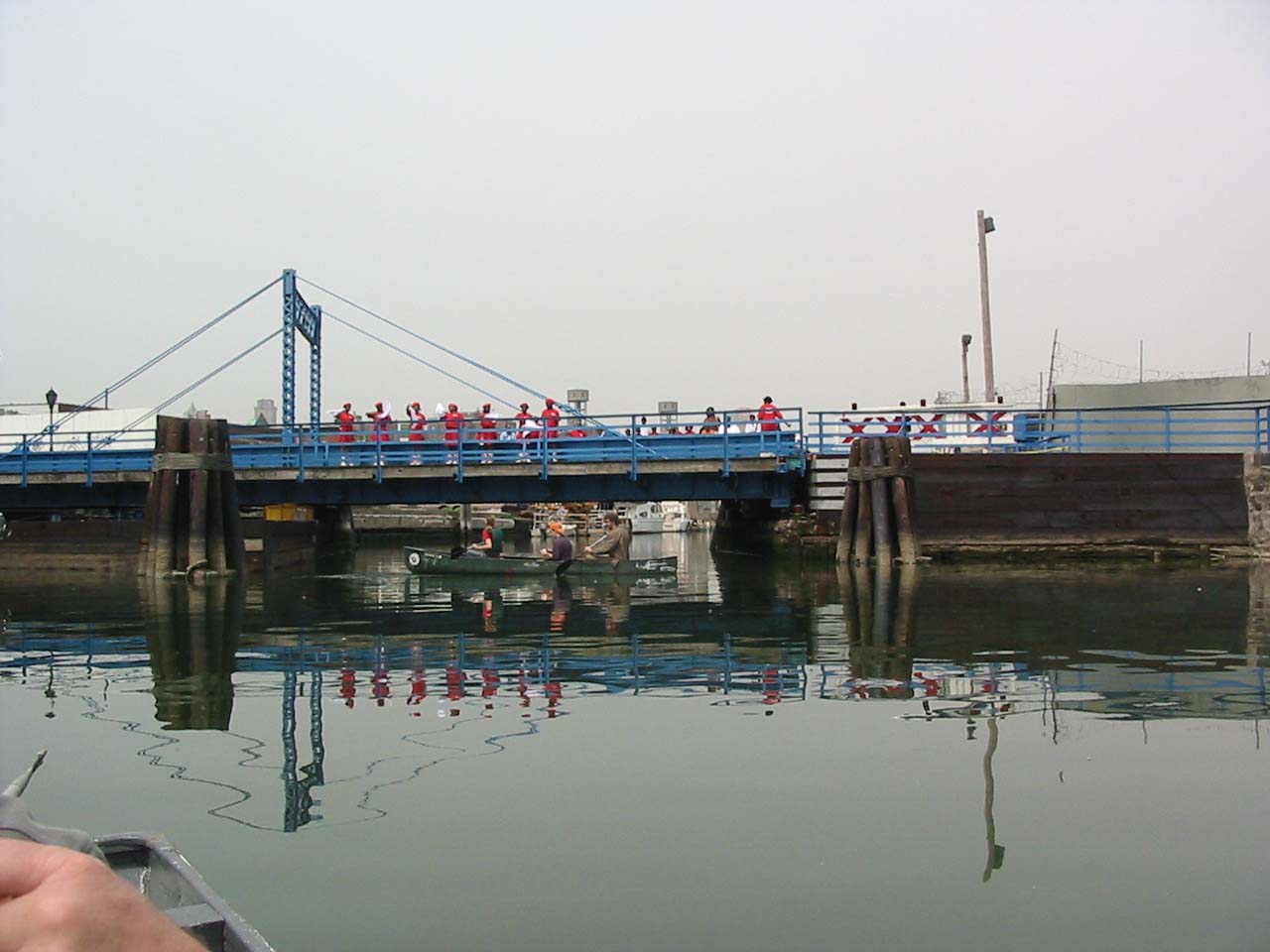
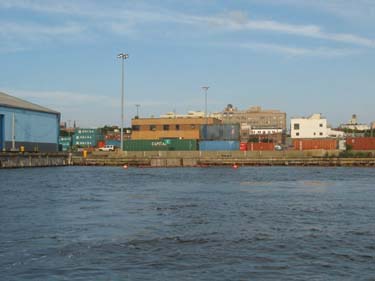
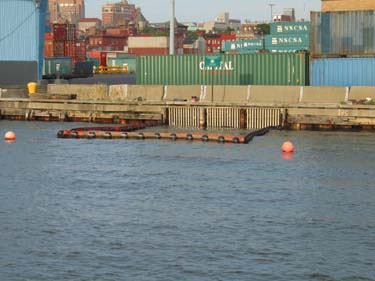
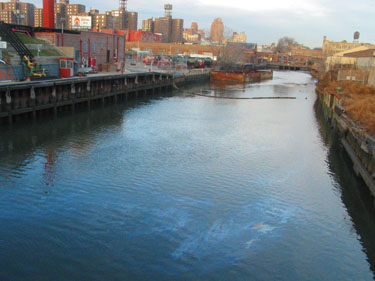
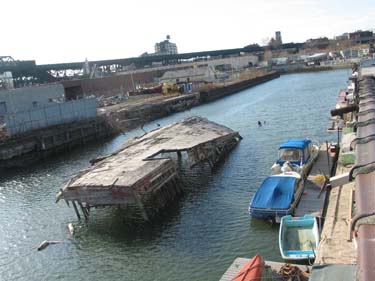
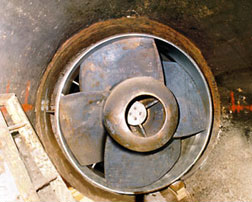
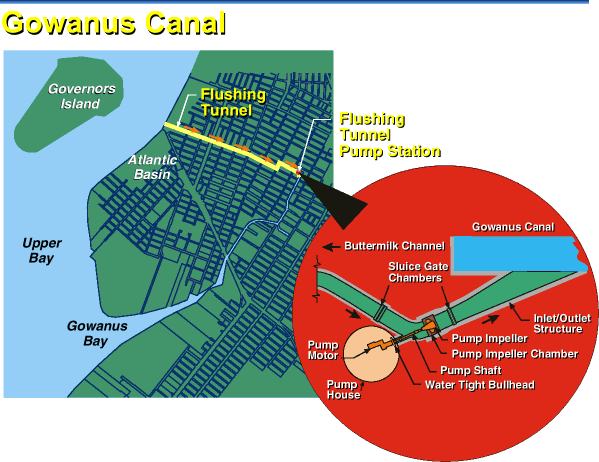
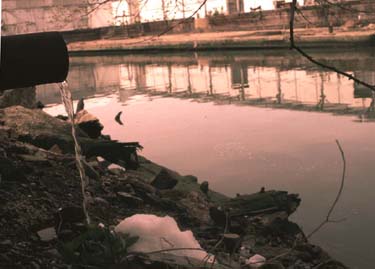
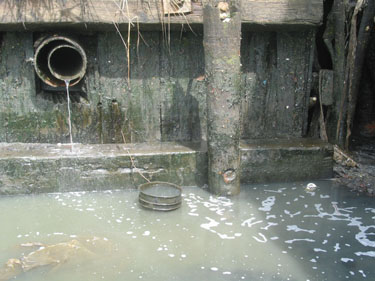
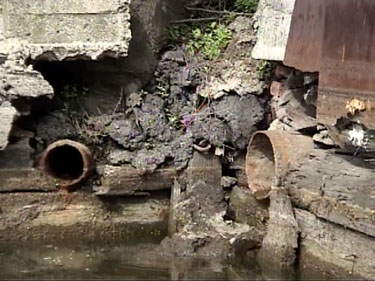
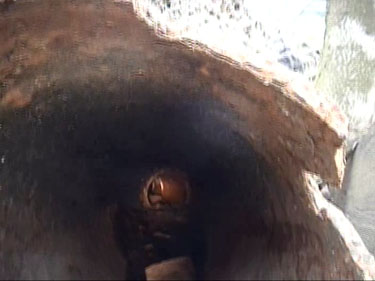
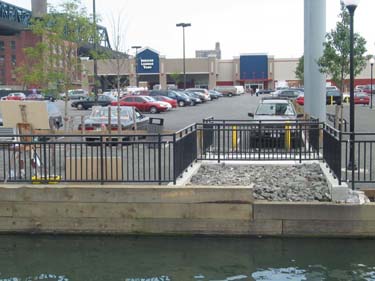
The Gowanus Canal is a tidal estuary that runs about 1.5 miles from Butler Street Flushing Station to Hamilton Street Bridge, where it discharges into the Gowanus Bay, into the Upper Bay, dilutes into the pristine Hudson River, and out into the Atlantic Ocean, at its southern end. It is approx 100ft wide, with an average depth of 12-15ft in its channel. A flushing station and a man made tunnel was constructed over the turn of the century connecting the Gowanus Canal to the East River ( Butter Milk Channel, 1st two pics above). It was a resolution to flush the stagnant, pungent, contaminated and anoxic ( no dissolved oxygen) water of the canal into the greater estuary, while bringing a much lesser contaminated water from the East River. This circulation of water is essential to raising the dissolve oxygen level of the canal from anoxic to its now hypoxic condition ( extremely stressed for oxygen). The pumping station fell into major disrepair for more than 30 yrs. The community became victorious after a long struggle, when the old pumping station was finally mended in the late 80's. As a result of the old "fixer upper", stripped bass, flounders, blue crabs, blue fish, winter flounders, oyster toad fish, a major fishery in the region, frequently migrate in feed in the little estuary that flows beneath the Gowanus Expressway, and migrate back out to the greater ocean where it is safe to fish. The consistently malfunctioning century old flushing station, recently slated for a complete overhaul beginning this summer 2005, has recently been de-prioritised and the plan postponed to be reconsidered in 2009. The work will be completed in 2012, just in time for the Olympics, and the new grand luxury housing development planned along the nice looking and love-ly canal. |
|
|
|
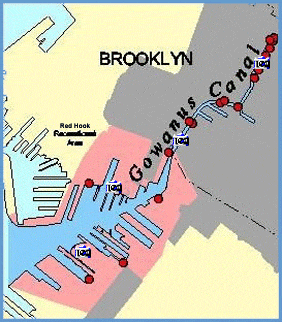
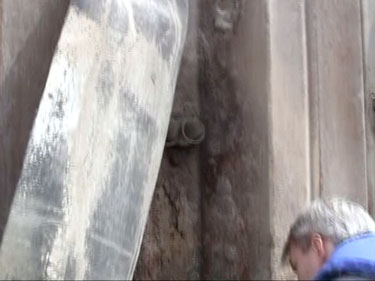
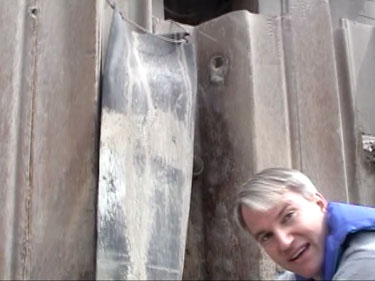
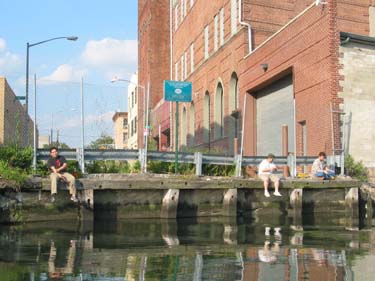
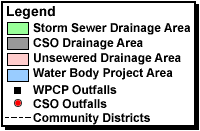
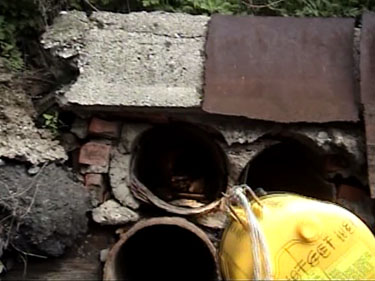
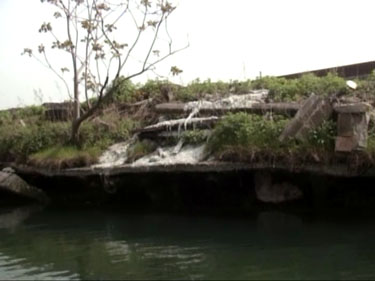
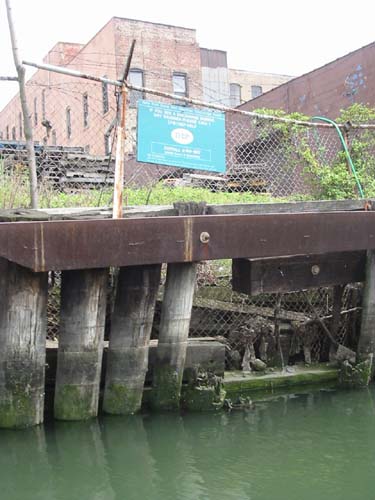
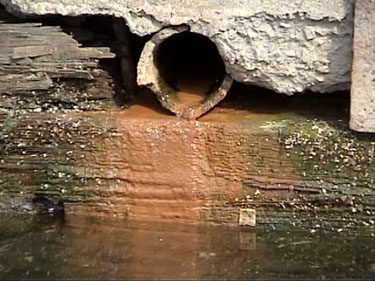
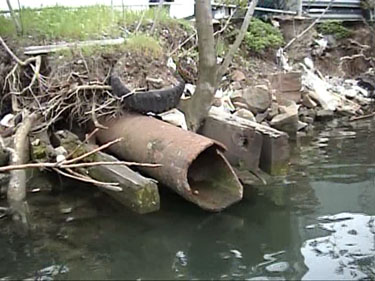
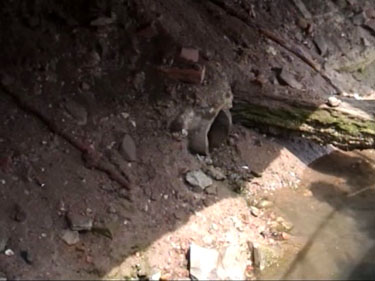
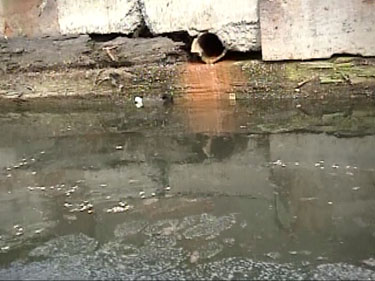
The water quality of the Gowanus Canal is further exacerbated with 14 Combine Sewage Outfalls, (CSO ) that discharge untreated raw sewage and storm water run-off after every rainfall. As the excess water from heavy rainfall overfilled the waste treatment plants to capacity, the excess sewage gets discharged directly into the canal untreated. Several unmarked drains commonly discharge waste water or other contaminants into the canal. It is required by law for any permitted discharge to be labeled. The green plaque above are two of 14 Department of Environmental Protection's permitted discharge points. The map above shows the location and concentration of the Combine Sewage Outfalls. Disease causing pathogens, are commonly associated with CSO discharge. Run-offs from impervious surfaces such as paved parking lots , metal recycling facilties, cement and concrete plants, contruction debris recycling, oil depository facilities, all along the canal also contribute to the impact on water quality. Simple remediation practices such as, a greenway along the banks of the canal, more green areas in our park, and school yards, instead of predominantly concrete paved surface, implement the catch basin abaitment project as recommended by DEP, USA, Stakeholders committee. Restoring wetlands where feasible, would began the process of remediation of the estuary and greatly improve water quality of the canal. In 2004 in two samplings fecal colliform at two locations on the Gowanus Canal exceeded 14,000. Water quality off the Gowanus Canal is not consistent with NY State standards in accordance to the Clean Water Act. |