 |
|
|
|
|
|
|
|
|
|
|
|
|
Finishing Up |
|
|
|
The next step is to attach the goatskin head to the gourd. The goatskin I ordered is just the right size for the gourd (it has about 2'' of overlap around the opening of the gourd). I also need to drill the tuning peg holes and make the tailpiece. |
|
|
|
 |
|
 |
|
|
|
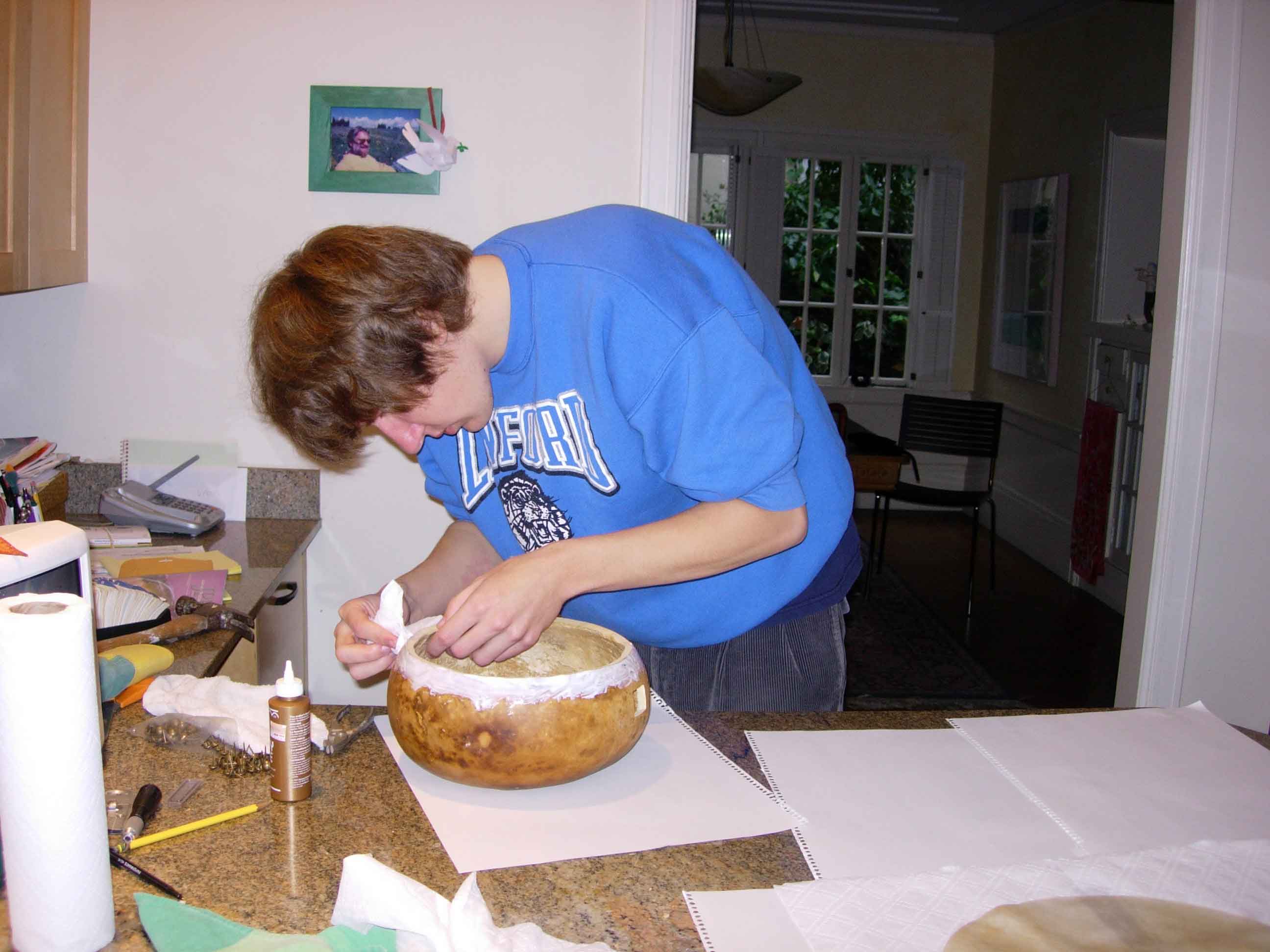
1. While the goatskin is soaking in water (for 10 minutes or so), I cover the lip of the gourd with Tacky glue. |
|
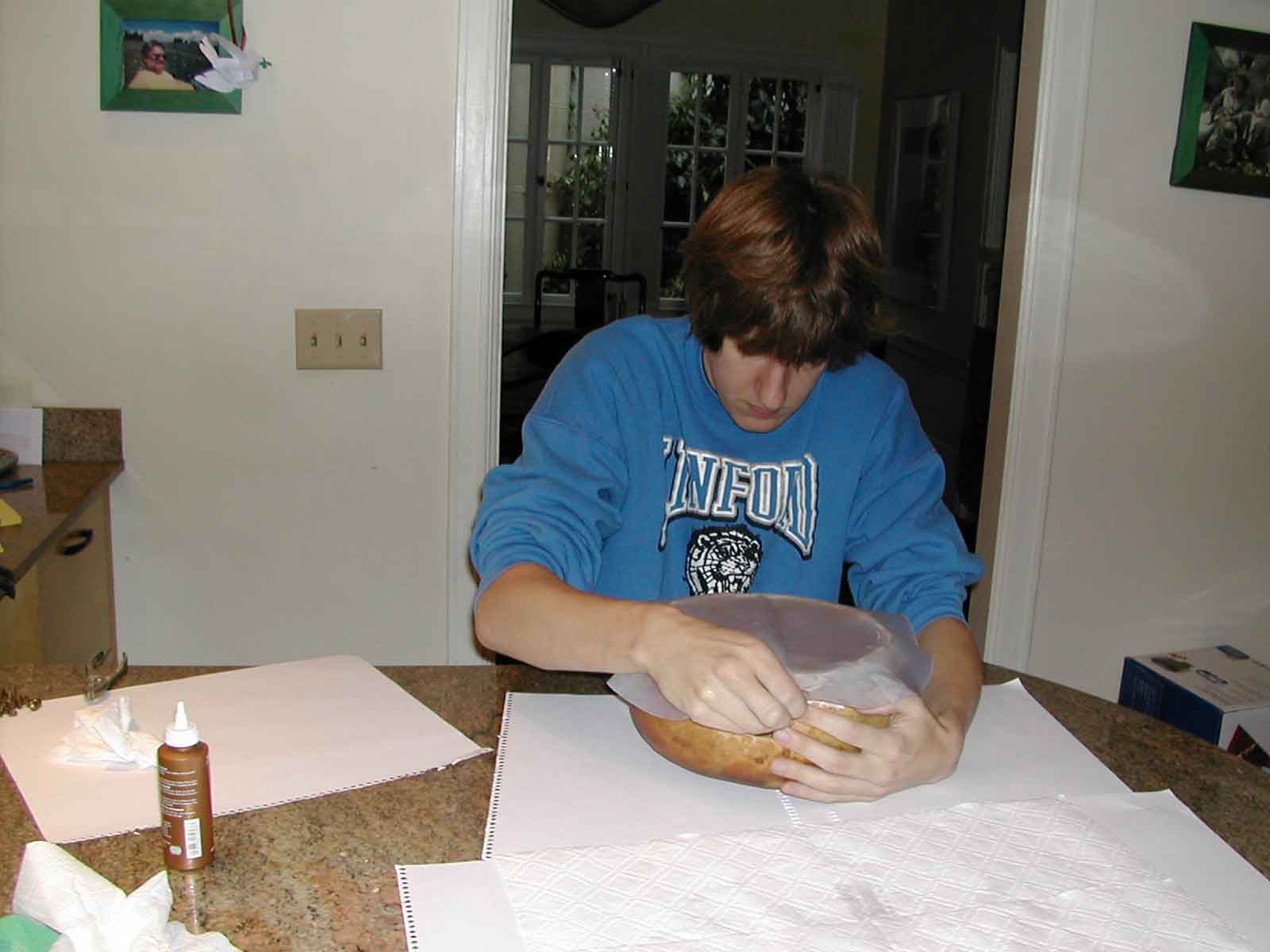
2. Once the skin was pliable, I wiped it off with a paper towel and fitted it over the gourd. |
|
|
|
 |
|
 |
|
|
|
|
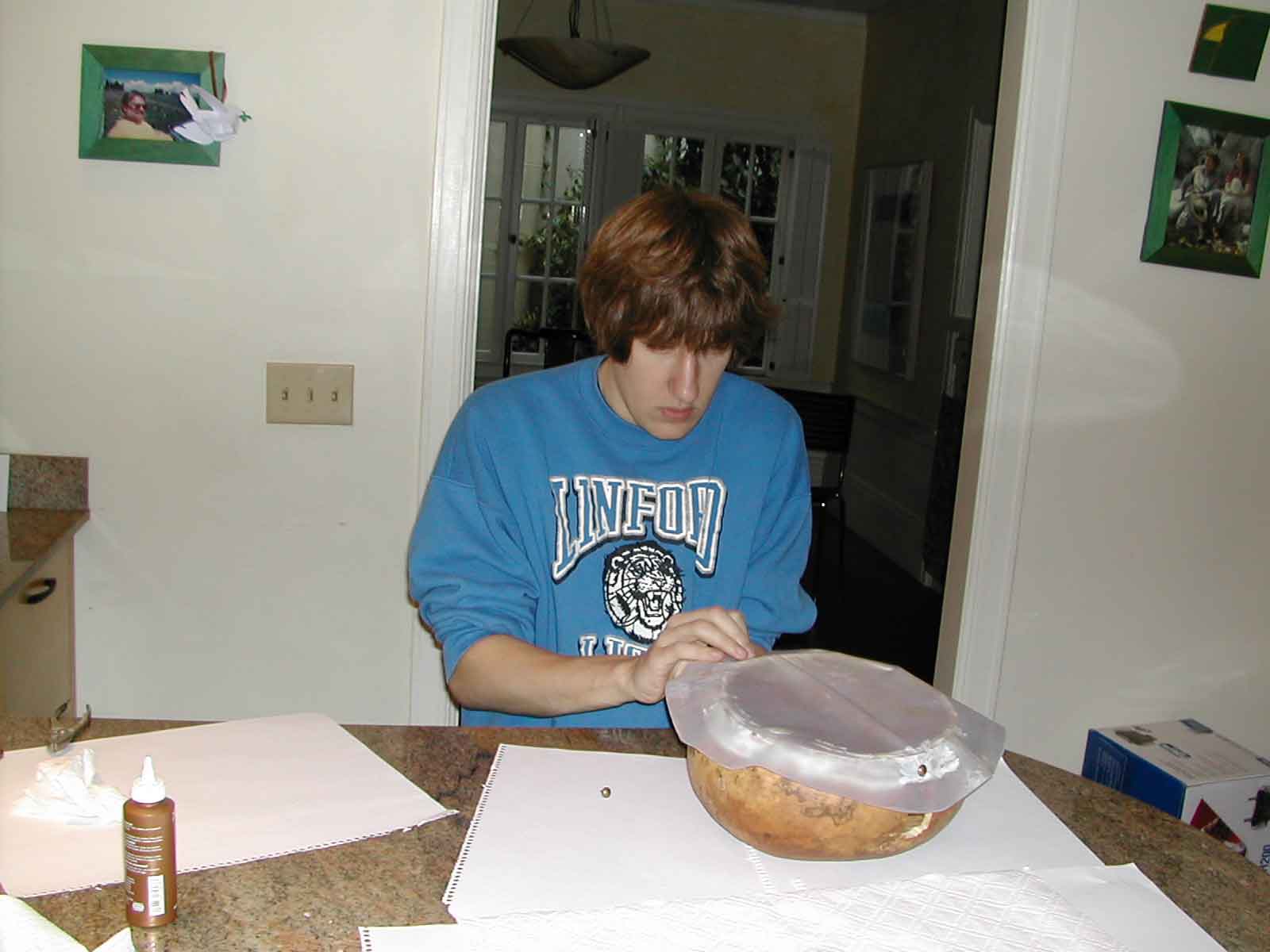
3. Next, I shoved a furniture tack through the skin and into the gourd. My mom (the photographer here) pulled the skin taught while I pushed in another tack directly across from the first. We then put in tacks at 3 o'clock and 9 o'clock, keeping the skin taught all the while. Finally, we added 12 tacks at even intervals between the first 4. The glue and the skin dried overnight. Even the lightest tapping before the skin dries completely can stretch it, which leads to a loose head and a duller sound. |
|
|
|
|
|
|
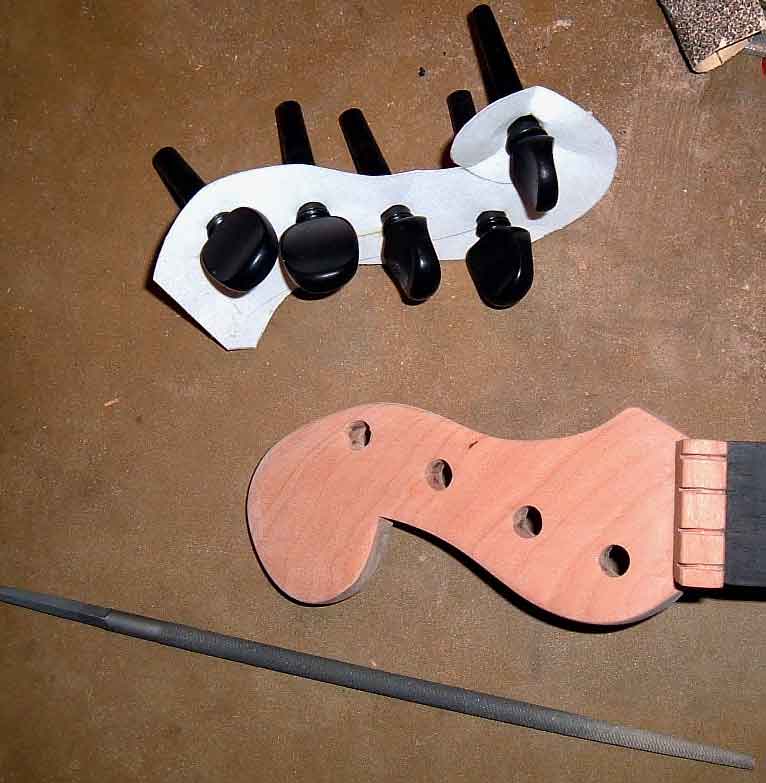
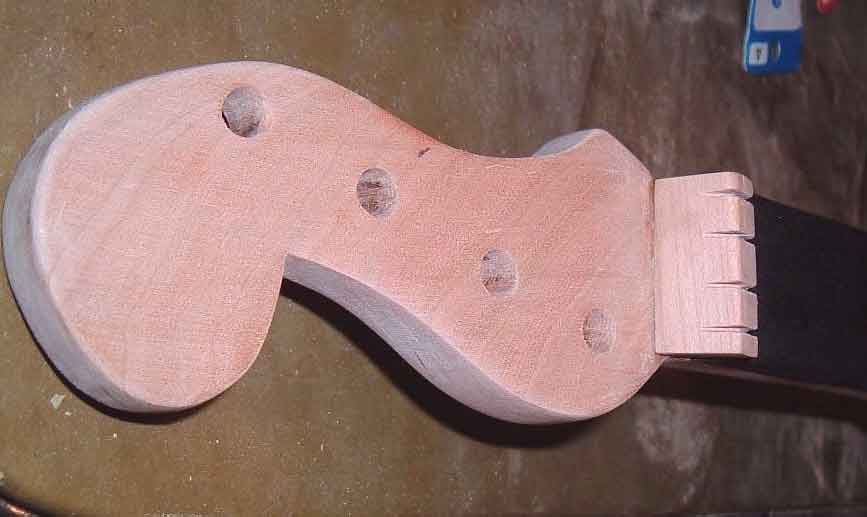
4. I drilled the tuning peg holes with a hand drill and then used a round file to taper them for a tight fit to the ebony tuning pegs. The fifth string peg hole (not pictured) goes through the fingerboard vertically at about the 7th position. |
|
|
|
|
|
 |
|
|
 |
|
|
|
|
|
5. The nut is just a piece of cherry with slots for the strings. The bottom is angled to meet the headstock, where it's attached with a drop of glue. |
|
|
|
|
|
|
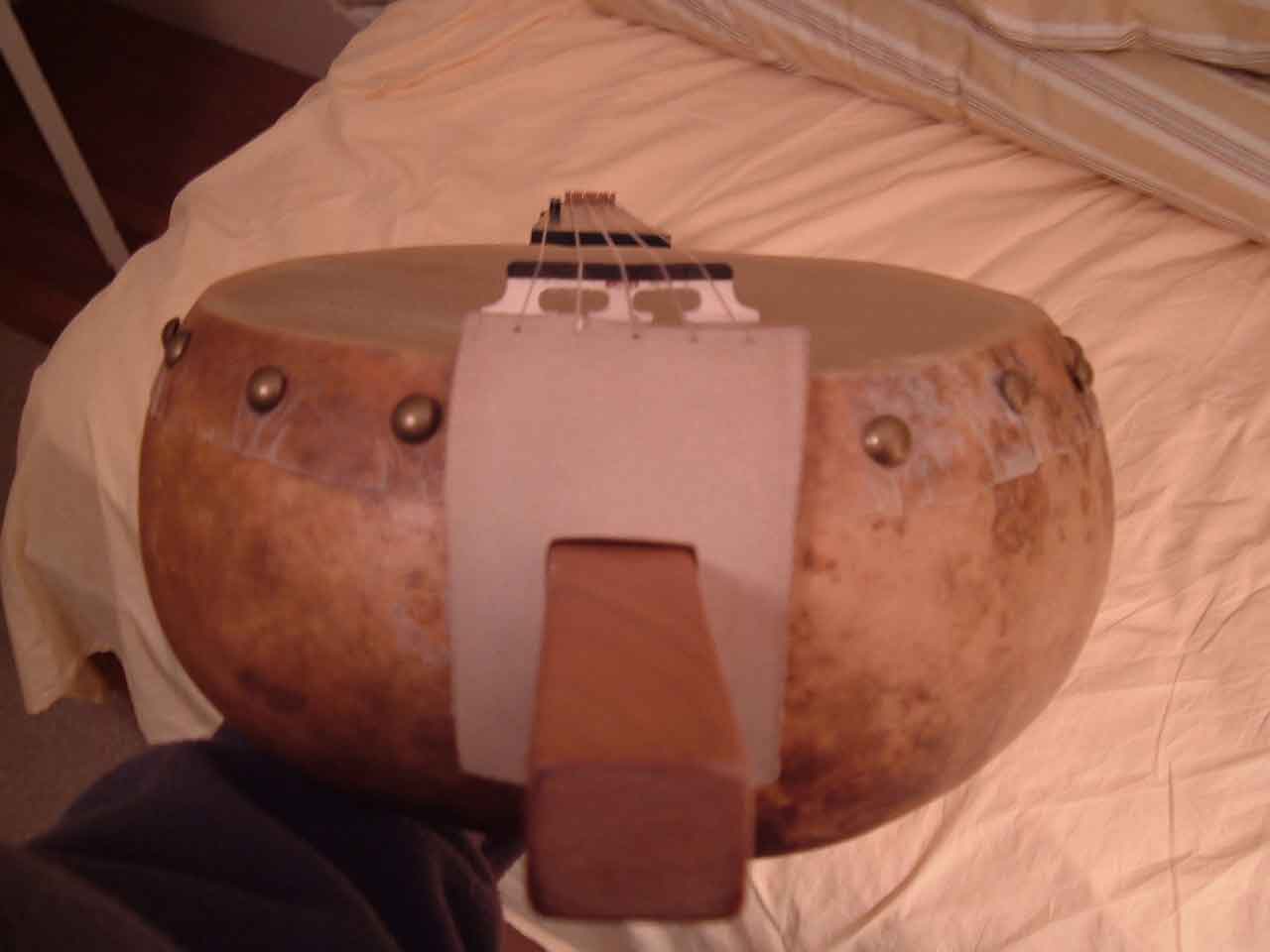
6. The tailpiece is cut from a very thick piece of leather I got from the local cobbler - it's the type of leather used on the soles of shoes. I used a hammer and nail to poke 5 holes for the strings. |
|
|
|