 |
|
|
|
|
|
|
|
|
|
|
|
|
That Shifty Dowel Stick |
|
|
|
Initially, I had planned to use a 4''x4''x48'' piece of cherry for the neck - that way, I'd be able to cut the neck and dowel stick from the same piece of wood. Unfortunately, the local lumber yards don't carry cuts that large, so I had to switch to the shorter model. Resuntantly, the dowel stick needed an extension. |
|
|
|
 |
|
 |
|
|
|
|
|
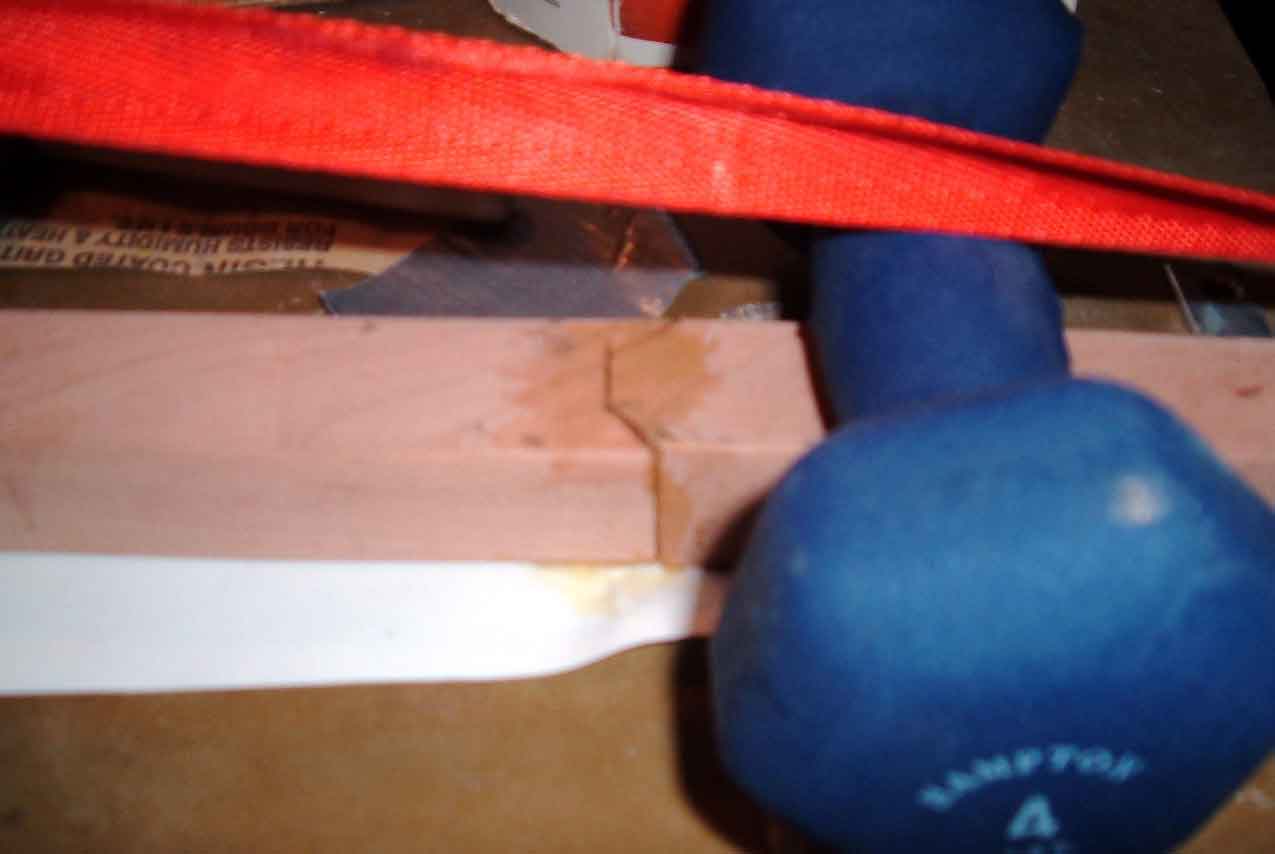
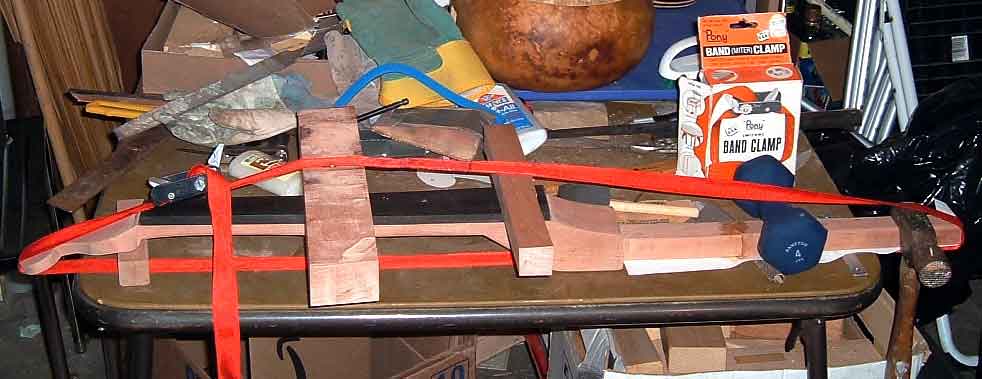
2. I employed the services of a belt clamp (with a few makeshift modifications to hold it all together). |
|
|
|
|
|
1. I started by cutting an extra piece of cherry down to size, and then angling the ends of the two pieces so they fit together firmly. A healthy coat of woodglue would hold them together, I figured. |
|
|
|
 |
|
|
|
|
|
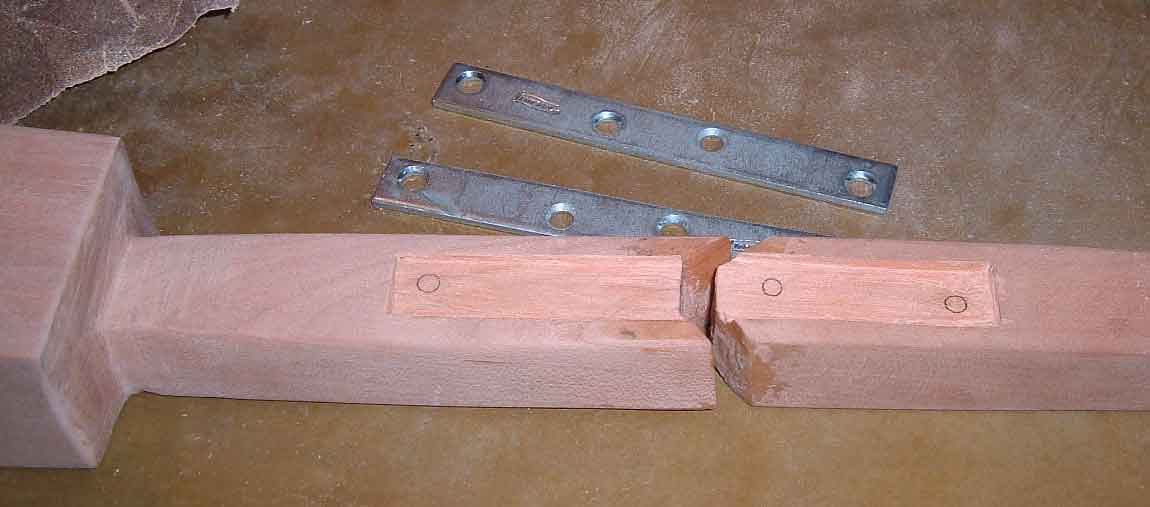
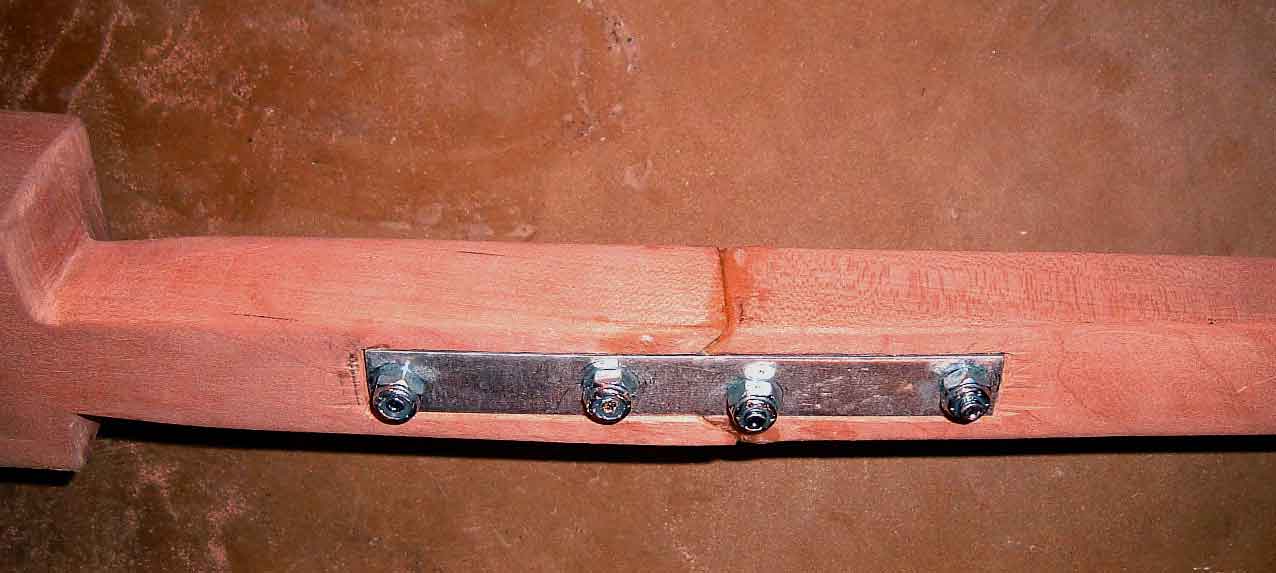
4. I drilled some holes and sunk some bolts. The braces fit flush against the dowel stick so they won't get in the way when it goes through the gourd. |
|
|
 |
|
|
|
|
|
|
 |
|
|
|
|
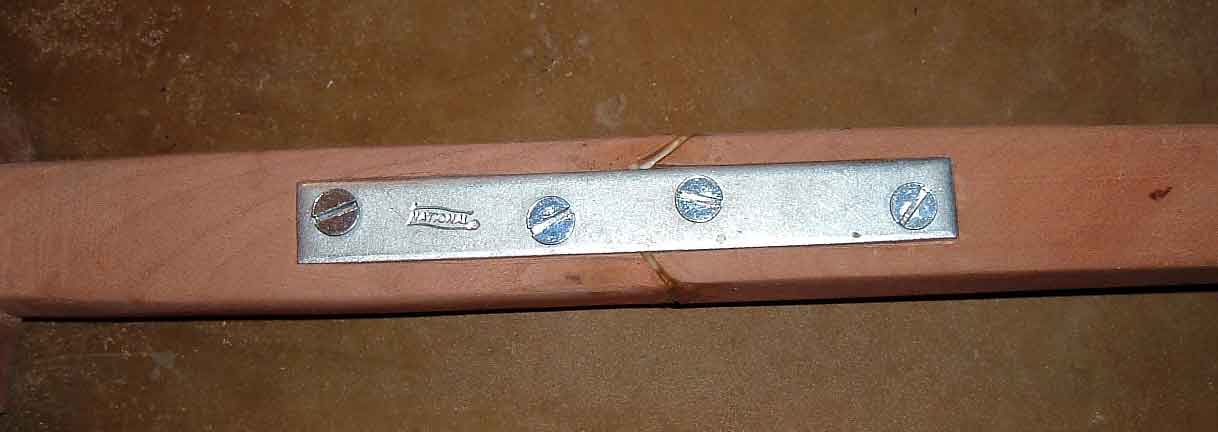
3. Well, that didn't work too well. You can imagine my expression when my dowel stick extension fell off and got stuck under the workbench. So, I found some old metal braces and carved out spaces for them on the top and bottom of the dowel stick. I could almost hear my inner caveman grunting as I pounded away with a hammer and chisel. |
|
|
|
|
|
|
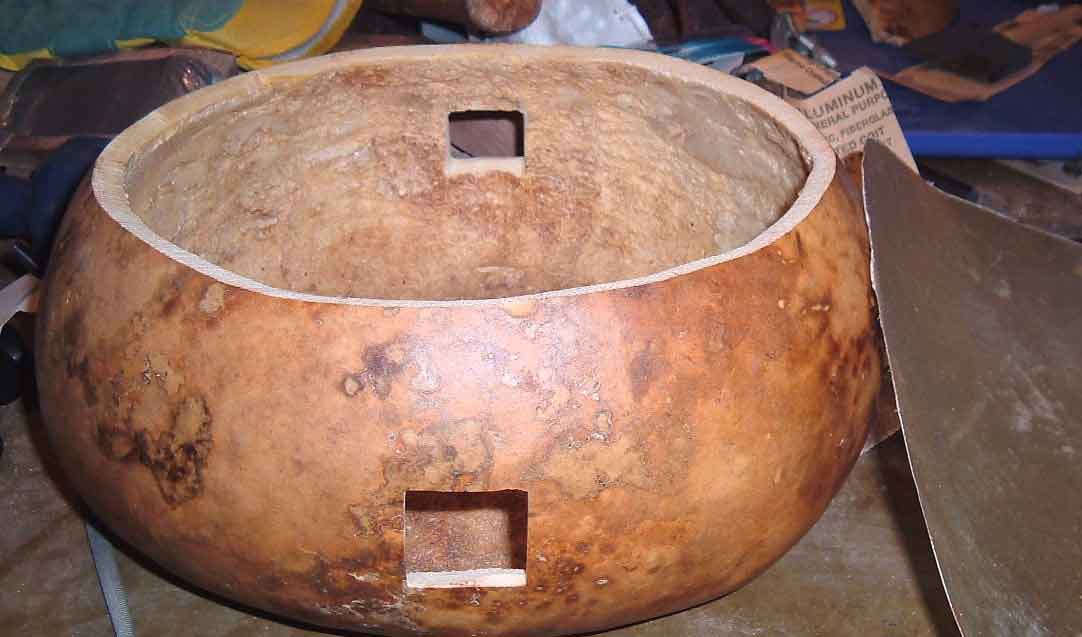
6. Here are the holes cut in the gourd to fit the tapered dowel stick. I started by drilling holes, and then filed them out for a tight fit. The goatskin for the head is on the right. |
|
|
 |
|
|
|
|
|
|
 |
|
|
|
|
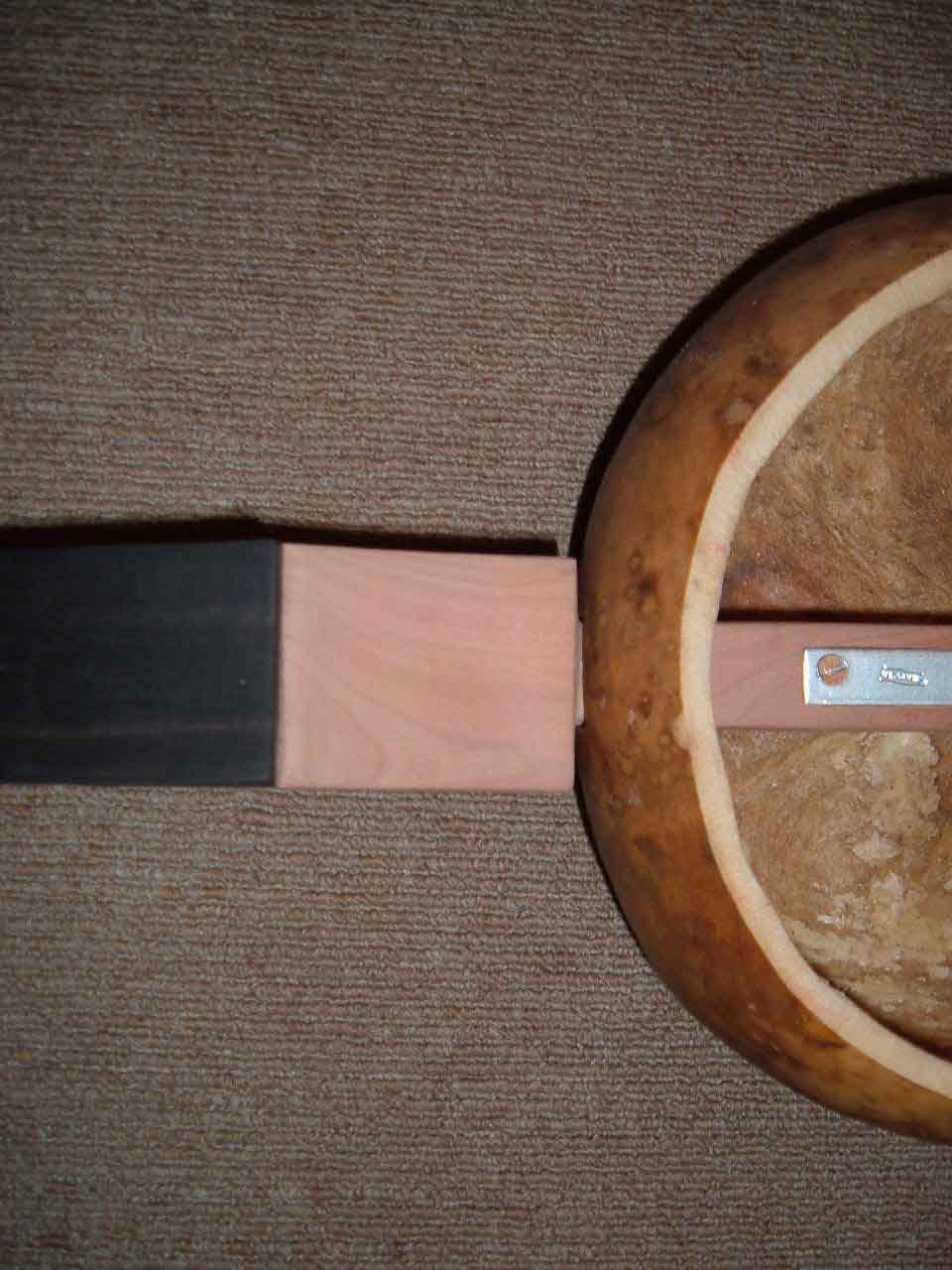
5. I'll have to make a minor adjustment in the gourd holes to account for the nuts on the bottom. |
|
|
|
|
|
 |
|
|
|
|
|
|
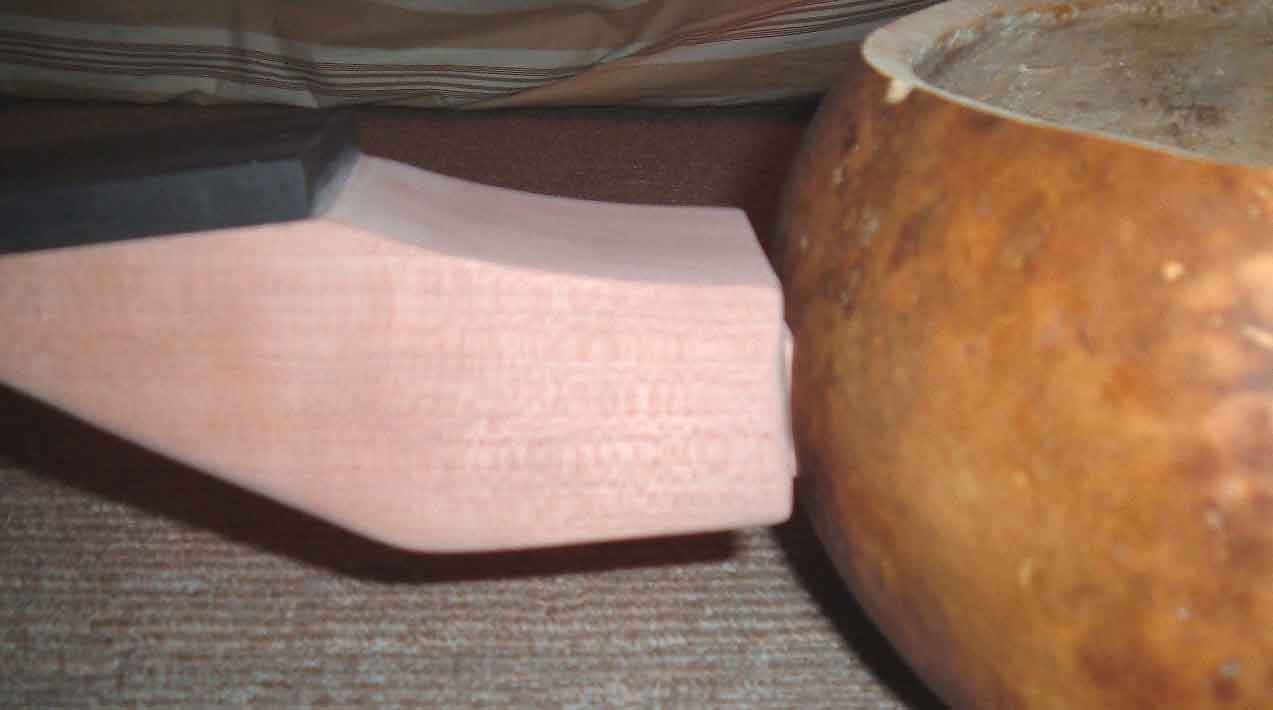
8. I had planned to fit the end of the neck more closely to the shape of the gourd, but ultimately I decided to leave it rough. |
|
|
|
|
7. The hole in the back of the gourd is slightly higher than the one in the front, which makes the fingerboard tilt downwards slightly from the surface of the head. This allows for consistent action down the fingerboard. |
|
|
|
|