
Q: Isn't it unrealistic for us to be hunting large game?
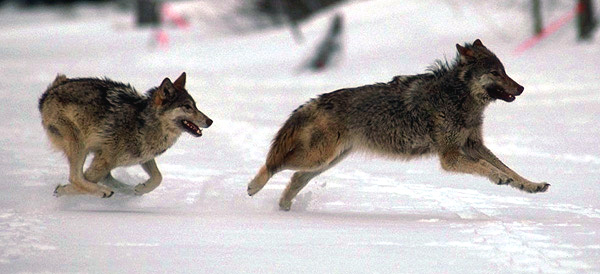
A: No. Wolves are designed to hunt and kill large animals. Their teeth are very sharp and are specifically designed to puncture, slash, cling, tear, latching on, and even to crack and crush bones. They can run between 30 and 40 mph for up to 20 minutes. Their sense of smell is very keen. A large wolf can single-handedly take down and kill an adult caribou with one crushing bite to the neck.
Q: Why are most of the animals that we hunt sick, injured, or smaller than others?
A: Wolves can kill perfectly healthy animals; however, they naturally seek out the most vulnerable animals. What's the point of unnecessary work?
Q: How much do wolves eat?
A: Wolves can eat almost 20 lbs at a feeding.
Q: Isn't it unrealistic for us to use such advanced strategy when hunting? Aren't wolves too primitive for that?
A: No. Wolves are very intelligent creatures and often use strategy and/or ambushing to outwit and trap their prey.
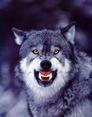
Q: Aren't wolves naturally vicious creatures that attack for no reason?
A: No. Wolves rarely attack unless threatened, rabid, or ravenously hungry. The wolf is usually very peaceful and against fighting.
Q: Is it unrealistic for us to attack other wolves?
A: No. Wolves will attack intruders to protect their home and family.
Q: Do wolves have any natural predators?
A: Yes. Man. Other than that, the wolf is at the top of the food chain. No other animals hunt wolves.
Q: Isn't it unrealistic for us to claim the entire island as our territory?
A: No. Packs hunt in territories of up to 600 square males.
Q: In the wild, wouldn't the stronger, faster wolves always lead? Wouldn't an Alpha have to step down if a stronger wolf challenged him or her?
A: Not necessarily. It depends on who the pack has more respect for, and dominance is not always established by strength and fighting.
Q: Isn't it unrealistic for the pack to allow any couple to mate?
A: No. Many packs include extra adults besides the Alphas, often siblings, who may also breed if allowed. We do, however, have restrictions, and we do not let anyone mate at anytime.
Q: Is it unrealistic for mates to divorce?
A: No. Contrary to popular belief, wolves do not always mate for life, though some do.
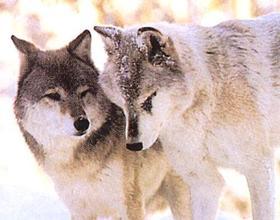
Q: Isn't it unrealistic for us to allow couples to mate at anytime?
A: Yes. Wolves breed in the spring and give birth in late spring and early summer. We, however, have to recruit players for children, and it would be hard to recruit enough players if every female gave birth at the same time. We do not, however, allow wolves to give birth in the winter or late fall.
Q: Is it unrealistic for us to kill off pup characters for whom we cannot find players?
A: No. Almost half of all cubs born in the wild die before reaching adulthood.
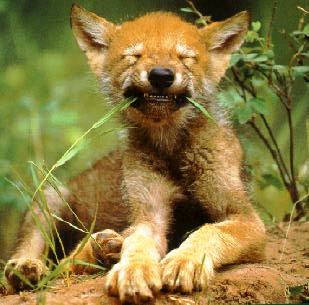
Q: If the parents are both a certain color, shouldn't the children have similar coats?
A: It depends on the species; however, for Timber wolves and Grey wolves, a wolf litter can contain pups of many hues, regardless of the parents' coloration.
Q: Do we give our pups more freedoms than a real pack would?
A: No. Pups in real packs have many priveleges and social freedoms.
Q: Can wolves have red eyes?
A: It is extremely rare for a truly albino wolf to exist.
Q: In the wild, would you see less nuzzling and more shows of dominance than in our RP?
A: Well, yes and no. Wolves in the wild constantly display their dominance in many small ways; however, wolves tend to live in harmony most of the time, rather than constantly displaying aggression and submission.
BibliographyNaturalWorlds.Org
Alaska.Net