 |
|
 |
| Bipolar Disorder and Its Play in Creativity |
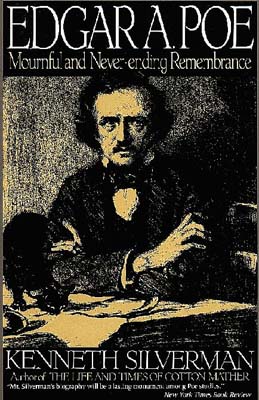
| "Quote the Raven, Nevermore" (E. A Poe The Raven). Dark, fearful, and manic in his mind are the events of his lonely life. Fame is nothing but a way to survive without going mad to a victim of Bipolar disorder. Formerly called manic depressive disorder, Bipolar afflicts only one percent of the human population. What bipolar is in its plainest form is manic, a person's mood jumping from depression to mania and back again. Yet in its milder forms, it fuels creativity (Myers 1999). Edgar Allan Poe is one of that one percent afflicted. Earlier in our English history is non other than William Shakespeare. And of course there are other less famous people that are afflicted with Bipolar disorder, among them is my friend Midnight*. In the end their creativity can either save them or break them. |
| "And the raven, never flitting, still is sitting, still is sitting / On the pallid bust of Pallas, just above my chamber door; / And his eyes have all the seeming of a demon that is dreaming, / And the lamplight o'er him streaming throws his shadow on the floor; / And my soul from out that lies floating on the floor / Shall be lifted nevermore!" (E. A. Poe The Raven) In this poem Poe tells of a lonely night in which a Raven takes to visiting the teller of the story. At first the poet is fascinated by the fact this bird can talk but then becomes irritated by the fact that the only thing the bird says is "Nevermore". Yet still he is happy to express his mind in the light of a psychological mess. |
| You see in the world of Edgar Allan Poe, the ups and downs of manic depression were a way of life. His writing was a way to express him self and a way to fight the insanity so many thought he already had. He was different in a small but large way that frightened the norm of society. Hence he is affiliated as one of the finest "gothic" writers of all time. His works were dark and gloomy, as was his mood for most of his life. His life circumstance as a young child played a large part in the development of the bipolar condition he would experience as an adult. He was orphaned at three, neglected, and by his late teens his foster father and he had had enough of each other due mostly to Poe's "moody" attitude towards life and the family (Qrisse 1998). |
| It is typical of the Bipolar disorder to commonly occur in the late teens going on into late forties. Substance abuse is also common among the bipolar community. Although he married well he continued with his alcohol abuse until the day he died. Still as yet, that did not stop Poe from becoming well educated and using that education to continue his work of creativity. |
| Another of the best examples of creativity in the world of both entertainment and literature are the works of William Shakespeare. He was Actor, writer and director of many plays and author of over one hundred Sonnets. In fact, because he had his own uniform way of writing poetry he invented what is now called the English or "Shakespearean" Sonnet. What makes him Bipolar? Simple, it is found in his life, his work, and the moods of his writings. Take his way of writing Sonnets for example; not the form but the subject matter. The first half of his sonnets are written to a young man, the other half was to a dark (and seductive) lady. What makes it so particular was the contrast of the "dark lady" to the bright blond beauty that most Sonnets of his day were written to. These blondes were symbols of purity and were often virgins. The dark lady on the other hand was anything but bright, blond and pure. She was dark, seductive, sensuous and a demon trap for any man who fell into her web of outward beauty. This view of the woman is also well reflected in Shakespeare?s Hamlet. In this play Hamlet, the prince of royal Denmark is met with the horrific fact of the death of his father and is charged with the unsaintly duty of avenging the "foul and most unnatural murder" of his late father upon the murderer; his uncle Claudius (Hamlet 1.5.31). |
| Claudius had murdered his brother to get the throne and the fair Queen Gertrude, Hamlet?s mother. The very idea of his uncle in bed with his mother makes him sick all over. Then to make matters worse, the only love of his life betrays him. Hence his opinion of the female becomes as negative as minus is to plus. Thus expressed "I have heard of your paintings too, well / enough. God hath given you one face, and you / make yourselves another. You jig and amble, and / you lisp; you nickname God's creatures and you make / your wantonness you ignorance." (Hamlet 3.1.154-158) And oh he goes on and on in his fury. Yet not too long afterwards he is happy and his speech is humorous. It is also notable to note that this play was written when Shakespeare's only son Hamnet died (New Folger Library 1992). Is there a connection? I think so. Replace the "n" with "l" and you have Hamlet. Although he did marry well, had three children and was never known to abuse any substances he wrote something that makes all of us wonder about his feeling towards life in his Will. It read "... and to my wife I leave only the second best bed in the house" Down right odd. |
| It is not uncommon for those who suffer from life circumstance to feel the need to express it in some shape or form. Whether it be in writing or by talking to other people they feel like they have to get it out of their system. In the mania state of Bipolar you can't get the afflicted to shut up. Yet in many cases, though you may not be able to understand their speech, you may not want them to shut up. Whereas you have not yet noted, it is during these over active periods of time that the afflicted can erupt in an overflow of creativity. Resulting is the work of an artist in the making. I met such a girl in person once while I was still in High School in my senior year. She quite literally talked my ear off. I learned not to mind because with time the things she said began to make sense. Not only was she talkative but she was also both a visual and performing artist. She also was a skilled poet and storyteller. But I later discovered she had a minor case of bipolar disorder. One moment she was happy and talkative, the next she would be deeply sorrowful to the point that a waterfall of tears would fall from her eyes. Other times she would go from being happy to being violently furious with every one around her. |
| Being the friend I was to her, I endeavored to find out more about her condition. I found that it had started as Major Depression just after the death of her grandmother five years prior to our meeting. She had also become the victim of Compulsive Disorder so that she scratched when she was angry. She would self inflict wounds on her arms to relieve the frustration. It was only when her therapist saw the manic mood swings that they realized she was bipolar. Because of the severity of the disorder she was also suicidal. There is no doubt in my mind that it was only through the support of us her friends that she is still alive. Part of that support was encouraging her to write her feelings down in whatever form she saw fit to express her pain and her joy. Through that she gained understanding of her problems and began solving them so that they began to diminish. |
| Unfortunately most people afflicted with bipolar disorder are unable to fully cure themselves. But like Major Depression it is treatable with medicine and therapy. Such medicines aid in balancing the moods so that they don't swing so far left and right. Therapy aids to help the afflicted with understanding the things that feed the disorder and sometimes aid in helping the person see those things for what they really are. Like Midnight who learned the part creativity played in solving her problems and helping her cope with the disorder. William Shakespeare changed our world of English through his hard-earned creativity. And in the end, though the Raven never left the mind of Edgar Allan Poe, we have the choice to close the book and forget. Or can we? |
 |
 |
| Thought bipoler disorder is a bad thing? Not always. |
 |
|
|
 |
 |