 |
| Page 33A |
 |
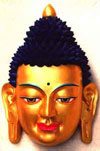
| In the seventh century, Tibetans employed subterfuge to hide their two most precious statues from a rumoured Chinese invasion. Thirteen centuries later, during the Cultural Revolution of the Sixties, nothing could protect the gold and jew-el-encrusted Jowo Mikyoe Dorjee - one of the two most revered statues - from being hacked in half. The most valuable upper half was transported to be stripped of its fabulous casing: the lower half tossed aside in Lhasa. This story tells of the extraordinary odyssey of the Tibetan search party in the early eighties to restore the Jowo Mikyoe Dorjee. In the wake of China's liberalization policy towards Tibet, a meeting on religious affairs was held in Beijing in 1981. At this meeting, the Tibetan delegates (including me) pleaded vigorously for the repatriation of Tibet's religious treasures, plundered during the Cultural Revolution and now gathering dust in China's storehouses. Unfortunately, nothing came of our request that year. However, in late 1982 the Religious Bureau of the so-called Tibet Autonomous Region sum-moned a meeting in Lhasa - attended by representatives from the Religious Association of 'TAR,' the Department for the Preservation of National Treasures, and several other official bodies. During the meeting, Baba Kalsang Namgyal, an official from the Cultural Bureau of �TAR,' announced that the authorities in Beijing had ordered the reinstatement of Tibetan religious artefacts to their places of origin. Phuntsok Yonten from the Religious Bureau of �TAR,' staff member of the Norbulingka, Karma, and I were to journey to Chengdu, Tai Yun, and Beijing to collect such items as re-mained. I was appointed to lead the team and we were to be assisted by Demo Rinpoche's daughter, Yangdon, as our in-terpreter. Yangdon now teaches at the Tibetan Children's Village, Dharamsala, Himachal Pradesh, India. This decision was the result of numerous factors: our appeal during the 1981 meeting, a series of concerted requests for the same from the Panchen Lama and several other high lamas of Amdo, Beijing's desire to lend credibility to their professed pol-icy of liberalization and religious freedom towards Tibet, etc. Right from the time I was told to go to China, I had made up my mind on the focus of our mission: the upper half of Jowo Mikyoe Dorjee. The statues of Jowo Sakyamuni and Jo-wa Mikyoe Dorjee have been revered as the nation's most sacred religious treasures since their arrival in Tibet in the early seventh century. Although the image of Sakyamuni remained almost intact at the Jokhang in Lhasa, that of Mik-yoe Dorjee had been hacked in two and the gold and jewel-encased torso carted away to China. The recovery of the up-per half of this national treasure would be of immeasurable significance and joy to all Tibetans. Immediately after the meeting, I went to the Jokhang, Lhasa's seventh century central cathedral, to trace the lower half of Jowo Mikyoe Dor-jee. I found it with the help of the Jokhang's curator Lobsang Phuntsok. Then I began to inspect it carefully, -measur-ing the diameter at the severed arms and waist, examining the metal components and contours, the texture of the preci-ous ash which filled the statue as relics so that I would make no mistake in identifying the torso in China, even if it had been badly disfigured. Baba Kalsang Namgyal approached us just before our departure to China to announce that the Chinese authorities had decreed that we were to bring back only those items that were serviceable, and that we should not bring anything from the city of Chengdu. So it was that on December 19, 1982 we left Lhasa and reached Beijing via Chengdu. In Beijing we were received by a kindly Chinese official from the Religious Bureau of China: he was to be our guide in the Chinese capital. On December 30 we were led to a crumbling and historic building called the Gu Kung (Old Palace). Around the time of Emperor Ch'ien Lung, this building had been an imperial guest house: this was told to us later by an elderly Chinese woman, Tang Lin Fang. Our curiosity was aroused by a Chinese sign over the portal of the main hall. We asked Madam Tang, a staff member of the Gu Kung and our guide in this building, to explain what it said. She explained that it read "Imperial Chapel for Long Life," and that the Tibetan statues inside it had been trans-ferred here from a foundry in 1972. Tang good-heartedly expressed her happiness that the religious treasures stored for so long in the Gu Kung would finally be restored to their original homes. On entering the spacious main hall of the Gu Kung, we were confronted by the incredible sight of hundreds of statues of all sizes, piled until they almost touched the ceiling. The doors on either side of this hall opened on to two smaller rooms that were also filled to bursting with Tibet-an religious objects. In the hall, my eyes immediately fell upon big, mutilated statues amongst the heap. Could the torso of the Jowo be one of them? It was heart-rending to see them mutilated, coated in the dust of a decade of negligence |
| The Odyssey of Jowo Mikyo Dorjee - A Search for Tibet's Holiest Buddhist Statue |
| piles, piece by piece and dusting them, I spotted what looked like a lifesize torso lying under a twisted heap. I shouted for my colleagues, and together we prised it out. Then we took it outside to the courtyard. It was so heavy that three strong men could barely lift it. Once outside, I sent my colleagues back to their work. And then I sat alone with the bust and examined it meticulously. There was thick gold plating left under the armpits. But the gold plating from the rest of the statue was missing - parted from it at some stage during the journey from Lhasa to Beijing. The chest, navel, nose and right eye all bore the scars of hammering. But a fair amount of precious ash relic was still inside. (Precious ash is produced through a complicated process of alchemy by which gold, silver and various precious stones and other metals are burned in airtight pans for a prolonged period. It is primarily used for Tibetan medicine, but also as relics for very, very holy statues.) The iron bars fortifying the inside of the torso were also there. When I moved the vertical bar, I could feel the horizontal bar across the shoulders move. The famous face was unmistakable. And the type of metal, the texture of the precious ash as well as the diameter at severed edges of the arms and waist all matched perfectly with the statue's lower portion in Lhasa. The goal of my mission was accomplished. Remembering the Panchen Lama's in-struction to ring him up immediately if I found anything important. I dialed Beijing at the number he had given me. He asked me emphatically if I was sure that there was no mistake. I assured him, explaining all the matching details. Soon after, the Panchen Lama came and inspected the torso thoroughly. He was delighted with what he saw and pronounced that we could be ninety-five percent sure that it was indeed the Jowo's missing half. When they heard about the Pan-chen Lama's impromptu visit, some Chinese officials of the Beijing Cultural Bureau and several other related depart-ments rushed to the Gu Kung, joined by some staff members of the building itself. The Panchen Lama then explained to the Chinese that in the past Tibet had two venerated Jowos, reduced to one later. Now there would again be two Jowos in Tibet, he said. He went on to say that the genuineness of China's new religious policy would be judged by their atti-tude to our mission, and that, therefore, they must help us. Then, turning to me, he complimented us on the find and urged us to continue to work hard. That evening he sent us tea, butter, meat, cheese, tsampa - a variety of Tibetan food in quantities to sustain us during our entire stay in Beijing. Sonam Norbu, originally from the Derge region in Kham, and one of the foremost Tibetan officials in Beijing, visited us often and helped us enormously. He showed great empa-thy for the Tibetan people and religion, despite the fact that he was working for the Chinese. Later, during our stay, the Panchen Lama donated fresh gold plating for the Jowo and conducted a brief consecration ceremony. He had also order-ed a special packing crate for the precious statue. From the Gu Kung alone, we packed over twenty-six tons of religious treasures in over four hundred and sixty three wooden crates. The Jowo was carried to another room where we placed it facing Tibet, and prayed to it. Statues and ritual objects made of bell and other semi-precious metals were found tossed in the basement of another derelict building known as Kong Meo, 'Confucian temple.' From there we packed six tons of crafted metals in about another hundred crates. Although we had been ordered in Lhasa not to bring back "unservice-able" items, we did not leave even a scrap behind. Now we were ready to return to Tibet. We decided to spend a few days in Beijing. During the time, I remembered that as a young man I had lamented the brevity of the story concerning the itinerary of Phagpa Lugu Shree's statue. This statue, the chief image in the Potala, had been taken by the Mongols, and had remained in some area near Amdo for some time until the Fifth Dalai Lama brought it back to the Potala. Unfortu-nately the story was not recorded extensively enough to give us clear information, which, I used to think, was a great loss to the future generations of Tibetans like me. Therefore, I decided to document the odyssey of the Jowo as compre-hensively as possible so as not to let posterity feel the way I did about the record of the statue of Phagpa Lugu Shree. The first Chinese we consulted did not seem interested in helping us. Then we turned to our old source: Madam Tang Lin Fang. She promised to introduce us to a Chinese official who, she said, could have the information we sought. A few days later we were led to a genial, old Chinese man. He told us that during the Cultural Revolution, most of the Tibetan cultural artefacts were carted to China and destroyed. The statues and ritual objects of pure gold and silver were never seen again. Those of gilded copper, bell-metal, red copper, brass, etc., were ferried to Luyen, from where they were eventually sold to foundries in Shanghai, Sichuan, Taiyun, Beijing, etc. A Precious Metal Foundry, situated about five kilometres to the cast of Beijing city, alone purchased about six hundred tons of Tibetan crafted metals. However," he continued, "in 1973 it came to the notice of Li Xiannin and Ulanfu that Tibet's religious objects were being melted down into bullion in many Chinese foundries. They ordered this to stop immediately. In July of the same year, a committee of twenty people was formed to look into this: I had been one of thay group. We then visited this to discover that out of the six hundred tons, only about fifty tons were left by then. They were also dumped most carelessly in the open air, barricaded by barbed wire. From the fifty tons, we salvaged only twenty tons since the rest of the objects were beyond repair. Then another consignment of thirty tons arrived from Tibet at the same foundry - most of the artefacts were ruined in transit. We rescued only six tons from this lot and those were the ones you found this time at the Confusion temple. I cannot tell you anything about the objects sent to foundries in other areas like Shanghai, Tianjin, Taiyun, Si- |
 |
| and disrespect. As we entered the building my colleagues and I stood frozen, our faces fallen and our emotions welling. With tears streaming down my cheeks, I reached for one statue at random. And there in my hand lay a beautiful, most sacred and historically significant image of Green Tara. I took it as a good omen for our mission. For the next few days the Gu Kung was locked for the New Year celebration. In the meanwhile, we went to a nylon mill to buy huge quantities of rags to use as pad-ding and ordered appropriate wooden crates to be made. On January 6, 1983, when the Gu Kung was opened again, we employed ten elderly Chinese to help and went once more to the storerooms. All this time, there had been only one thing on my mind: the missing half of the Jowo. Was it in one of these dusty heaps? Or had it been transmuted into bullion in one of China's foundries? Or was it right now languishing in some other part of China? Watching the old Chinese at work, removing the |
| religious artefacts in storage there, while the remaining three of us were to fly with the precious Jowo. On the seven-teenth day of the first month of the Tibetan calendar, which fell that year on March 2, 1983, we went to the Gu Kung for the last time and packed the statue of the Jowo. It was 9.00 a.m. when we laid the Jowo in its special crate. As we drove off with the statue, it started raining. This was the first rain of the year in Beijing. The rain stopped as soon as we pulled up at the airport. Such timely rainfall is considered very auspicious in our religious tradition. There were two hours to wait before the plane took off. We spent the time buying snacks and exchanging happy conversation, in the course of which I told my colleagues to remember to speak about these auspicious natural signs when were back in Tibet. "Who knows, all the deities of Tibet must be waiting for the arrival of the Jowo," I said light-heartedly. Phuntsok Yonten speculated on what his own local deity would produce for the reception. "Perhaps some strong Tibetan chang for you," I teased. While all these small talks were going on, the Panchen Lama paid us a surprise visit. He was happy with the mood of jubilance. He had come to bid farewell to the Jowo. He asked us where we had placed it. We showed him. He made offerings and prayed to Tibet's revered and historic statue. A two-hour flight took us to the Sichuan city of Chengdu. Due to some complications we could not catch the connecting flight that day. So the Jowo was housed in a temple belonging to the Religious Association of Chengdu. The monks of that temple made offerings and prayed to the Jowo in their traditional way. The next day a Chinese abbot of the Chengdu Religious Association visited us and asked to be told the story of the Jowo. I told the following: "It is popularly believed that during the lifetime of the Buddha his image was made in the form of three or four statues. The Buddha himself blessed those statues. But only two statues survive to this day. One of these two statues depicts him as an eight-year-old and the other at the age of twelve. They were presented by India to the kings of Nepal and China at some point in history, from where they eventually found their way to Tibet. The seventh century Tibetan king, Songtsen Gampo, married the Chinese and Nepalese princesses mainly, it is said, because he wanted to acquire these images as dowries for Tibet. This particular statue, Jowo Mikyoe Dorjee, is the eight-year-old image of the Buddha, and it came to Tibet as a dowry of Nepalese princess Bhrikuti Devi; the statue still in Lhasa. Jowo Sakyamuni, is the twelve-year-old image, and it was bought by the Chinese bride, prin-cess Wen Ch'eng." The abbot was awe-struck by our story and asked to know how the torso of Jowo Mikyoe Dorjee had ended up in Beijing. Time permitted me to tell only a very brief story. The next day the abbot brought a large group of Chinese monks to pray to the Jowo, and so we opened the crate. The abbot sat facing the statue while the monks placed themselves in two rows on either side of the statue. We joined the prayer, although we could not pray in the Chinese language and tradition. In a melodious voice, their prayer leader started the chant. The following morning we were visi-ted by an official from the Religious Bureau of Sichuan, accompanied by a very reputed nun called Lung Nei, president of the Sichuan Religious Association, plus the secretary and the vice-secretary of the association and some elderly nuns. The nuns chanted in Tibetan! We were flabbergasted. We asked them if a Tibetan lama had ever taught them. Yes, the nuns were disciples of Reverend Yonten Gyatso, who, in turn, was a disciple of Khangsar Rinpoche. Reverend Yonten Gyatso, a monk of the Drepung Monastery, had preached in that border area. Although the nuns did not know Tibetan, |
 |
| chuan, etc. since I did not go there." We were still in Beijing in the spring of 1983 when the Tibetan Water Hog New Year arrived. On the third day of the celebration, the Panchen Lama hosted a party in our honor to which several Chinese officials were invited. During the party, the Panchen Lama urged us to make sure that the statues retrieved from the storage in China were made accessible to the faithful in Tibet and that they did not end up in storage again. The Chinese Religious Association also gave us a party, during which the president of the association presented us two thousand yuans for the renovation of the Jowo. Almost all the Tibetans in Beijing, students and officials, visited us frequently and helped us tremendously. We were able to send about six hundred crates containing 13,537 statues on a train bound for Chengdu. Phuntsok Yonten was to go to Taiyun to check on the quantity of Tibet's |
 |
| they could read prayers from the Tibetan scriptures. They even gave us a photograph of Khangsar Rin-poche. In Chengdu, Phuntsok Yonten caught up with us to give us the devastating news that out of the hundreds of tons of Tibetan statues and other objects in Taiyun, less than one ton had survived. The rest had been melted down. At the same time, we received a cable from Lhasa, instructing us to collect about two tons of Tibetan statues and other cultural items from the district of Man Shan in Sichuan province to the south-west of Chengdu. These items, the cable instructed, were to be given over in Chamdo in eastern Tibet. In Chengdu's foundry store, there were five tons of Tibetan treasures, which we went to collect. In the beginning, the management refused to hand them over to us, claiming that they had paid the government for these items. But eventually we managed to retrieve them. We searched in this lot |
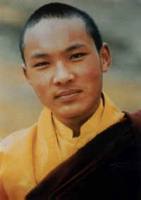 |
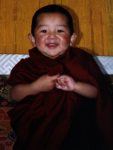
| Tibetan Buddhism gains appeal in Taiwan - (A visit to Taiwan by two Tibetan Bud-dhist monks, both believed to be the leader of the Karma Kagyu sect, points to a leap in the re-ligion's popularity.) In a common room at a Taipei County hospital last week, dozens of parents lined up with their sick children, most of whom suffer from cancer, to receive a blessing from a young Tibetan monk. The room at Chang Gung Memorial Hospital in Linkou filled up as still more people gathered. Some gripped conspicuous red envelopes while waiting patiently in line. Later, when the group of lamas decided to leave, havoc broke out as some distressed parents claimed their sick children had been overlooked in the blessing ceremony. Parents of children who had not yet received a blessing began to chase the monks, with some following them all the way to Taipei's Grand Hyatt Hotel where the monks were staying. The young monk in question was one of the two claimants to be the reincarnated Karmapa - the religious leader of a Tibetan Buddhist sect named Karma Kagyu - both of whom visited Taiwan last week. During the past |
| week, the two masters, who each claim the exclusive right to the title Karmapa and were invited by different Buddhist groups, conducted relief ceremonies for 921 earthquake victims which drew thousands. "The event marks the speedy development of Tibetan Buddhism in Taiwan," said Chiang Tsan-teng, a lecturer of religious studies at National Tsing-Hua University. Yet some observers think that the rapidly spreading popularity of Tibetan Buddhism is not necessarily good for Taiwan's religious environment. As a society steeped in the traditions of Taoism and Mahayana Buddhism - the branch of Buddhism practiced by most Chinese followers, for most of Taiwan's history Tibetan Buddhism has had little social or religious impact. According to Jigme Rinpoche who visited Taiwan last week, the introduction of Tibetan Bud-dhism can be traced back 30 years. But the religion's following began to boom only 10 years ago. "The religion is grow-ing because we have many good lamas," said 17-year-old Thaye Dorje, the Bhutan based claimant to be the Karmapa, on his visit here. "Many local Buddhists and monks went to Tibet seeking further Enlightenment, especially on the ques-tion of life and death," said Chen Yu-ting, director of the Huayu Foundation. "The excitement around Tibetan Bud-dhism began to heat up with the visit of the Dalai Lama in 1997. Tibetan Buddhism has a distinct and complete lineage, which is difficult to find in Chinese Buddhism due to the many upheavals throughout history that made preserving doc-umentation of its development impossible," Chen said. Chen and his father Chen Li-an, president of the foundation and former president of the Control Yuan, have been trying to popularize Tibetan Buddhism since 1996, the year Chen Li-an lost his independent bid in the presidential election. "Celebrities have helped popularize Tibetan Buddhism in Tai-wan," Chiang said. "After the Dalai Lama visited Taiwan, Tibetan Buddhism has been extremely popular," Chiang said. "The endorsement of politicians and powerful people gave Tibetan Buddhism a great boost. Among the celebrities are Chen Li-an and his family, Huang Chao-song, president of the China Times and Ting Nai-chu, a well-known actress. Since the Dalai Lama's visit, many Taiwanese have converted from Mahayana Buddhism to the Tibetan variety," Chi-ang said. According to Chiang, in Taipei alone, there are at least 200 Tibetan Buddhism centers in Taiwan. The year af-ter the Dalai Lama's visit, the China Times Group held a six-month exhibition on instruments and antiques of Tibetan Buddhism. The exhibition attracted more than 200,000 viewers, including President Lee Teng-hui, James Soong and John Chang. Chiang said the media has played a key role in promoting the mystique and exoticism of Tibetan Buddhism in Taiwan. According to statistics from the Mongolian and Tibetan Affairs Commission, there are more than 500,000 Tibetan Buddhists in Taiwan. Every year, over 1,000 Tibetan monks visit and preach in Taiwan. But there are not many local Tibetan Buddhism monasteries, nor local lamas. According to Lopon Rinpoche, abbot of the Tainan Karma Kargyu Temple, there are less than five temples in Taiwan and fewer than 100 Lamas. Joseph Chen, a Tibetan Buddhism re-searcher and deputy chief editor of the China Times, said Taiwan has been a chaotic society where people actively seek spiritual guidance. "Generally, Taiwanese are susceptible to many kinds of beliefs and people seem eager to accept Ti-betan Buddhism," he said. "A saying that Taiwanese worship anything seems to explain the phenomena," Chen said. "From one perspective, people's willingness to adopt Tibetan Buddhism suggests Taiwan is a liberal society in matters of religion, but on the other hand, it also suggests that the spiritual minds of Taiwanese are very fragile and immature," Chiang said. Echoing Chiang, Chen said, "Taiwanese followers tend to worship masters without verifying the authentici-ty of those masters. Furthermore, Tibetan monks too often comply with their Taiwanese followers' wishes to conduct numerous blessing rituals. As a result, blessing rituals are often emphasized over the basic two lessons of reading scrip-tures and meditation practices. Contributions to support temples or monasteries is part of the Buddhist tradition, but Taiwanese followers seem to overemphasize this part. People tend to believe donations will be rewarded with good for-tune which allows some temples to amass considerable wealth. Some Lamas even charge for a blessing ritual. And there have been many cases of 'fakes' deceiving innocent followers." Even the visiting Tibetan Lamas noticed the question-able credentials of some Lamas in Taiwan. "Here we found many monks claiming to be a Rinpoche, but we have never heard of them, nor have we formally recognized them," Tenam Lama, secretary of Tai Situpa Rinpoche, said during his visit. (By Yu Sen-lun, 2001) Disclaimer: All images and/or articles retain the original copyrights of their original owners. |
 |
 |
 |
 |
| for historically significant, very sacred, or those with valuable ingredients. Sadly we found none. Picking out only about forty cymbals, we left the rest of the items in the care of Chengdu Religious Association with instructions to distribute them to the monasteries and temples in Tibet. At a party hosted in our honor by the Chengdu Religious Association, we met Lithang Sogdrung Tulku and several other Tibetan tulkus (Tulkus are reincarnated lamas) based in Chengdu. We told the tulkus that we had left some five tons of Tibetan religious items with the association for distribution to monas-teries and temples in Tibet and that a particular big statue of the Buddha was to be given to the Lithang Monastery. The Tibetan lamas were delighted with these donations and thanked us. There were quite a number of Tibetans in Chengdu, some of them high-ranking officials in Chinese administration, and they did everything they could for us. Whether they had faith in religion or not, they certainly retained strong Tibetan feelings. On March 29 we went to Chengdu airport and spent the night there. Next morning, at 6.00 a.m. (Beijing Standard Time) we took off and half an hour later we were flying over Tibet. A great feeling of nostalgia engulfed us as we saw the familiar mountains of our homeland. Huge plumes of snow blowing from the summits of some mountains looked like the smoke from great incense offerings. Some cloud formations resembled mandalas while others looked like curling white scarves. We were certain that sever-al cars and a traditional reception with religious trumpets, white scarves, incense offerings, etc., would be waiting for the Jowo at Lhasa airport. We were wrong. Far from a splendid celebratory reception, there was not even a separate car for the Jowo. Tseling Rinpoche and Sengchen met us in the only car that had come for the reception. The statue of the Jowo and I crammed unceremoniously into their car. My colleagues had to wait for public transport. They were quite angry, and so was I. Actually, there was an important political meeting going on in Lhasa at that time and all the official vehicles were requisitioned for that purpose. When we reached the Jokhang there was a throng of thousands of devo-tees carrying scarves, smouldering incense, fresh flowers, etc., waiting to welcome the Jowo. Inside, I made straight for the altar of Jowo Sakyamuni and placed my offering of fresh flowers and fruits there . A temporary throne facing the statue of Jowo Sakyamuni had been made, and on this we reverentially placed Jowo Mikyoe Dorjee. There was over-whelming joy and emotional relief at the reunion of both the Jowos in Tibet after such a prolonged separation. Prayers were conducted for the spread of the Buddha Dharma, for the happiness of all sentient beings, and for a long and suc-cesful life of His Holiness the Dalai Lama. During the prayers, ceremonial rice and tea were served. At the end of the ritual, I was presented with a congratulatory scarf and money by the chief curator; the rest of the staff members of the Jokhang then each offered me a scarf. Rumors had been whispered from some quarters insinuating that this might not have been the real torso of the Jowo. But when the staff members of Jokhang put the two halves together, even the folds of the robe, as carved on the statue, matched perfectly, confirming without a slightest shred of doubt that there had been absolutely no mistake. Now it was time for the renovation and relic-offering. The responsibility for offering relics was entrusted to the Religious Department of Lhasa city. We were called to attend a meeting to this effect. Dur-ing the meeting, it was decided that, for the time being, simple relics would do. This is because all the Tibetans hope that the ultimate relic-offering will be done by His Holiness the Dalai Lama when he returns to free Tibet. The meeting also decided to build a new lotus seat for the Jowo. About fifteen kilos of silver and a sizeable quantity of other metals was donated by the religious institutes among whom we had distributed the statues and other objects repatriated from China. The original jewel-encrusted crown and earrings of Mikyoe Dorjee were with the department in charge of the Norbulingka treasure. We tried to recover them, but all our requests were turned down. Finally we had to make a new crown and earrings from a mixture of gold and silver. In 1985, when renovations to the Ramoche Cathedral, the original seat of Jowo Mikyoe Dorjee, were almost complete, the beloved national treasure was taken to preside, once more, over its home of thirteen centuries. (By Rinbhur Tulku.Courtesy The Department of Information and Intl Relations, Central Tibetan Admin Dharamsala, India.1987) |
| Visit our main Buddhism site. More information, images, and, NO pop-ups! |
 |
 |
| Last update: 11/30/04 |