| Page 17 |
 |
 |
| for intoxicating drinks and behaving foolishly, staying up late at night and losing the mind in frivolity, indulging in musical and theatre entertainments, gambling, associating with evil companions, and neglecting one's duties. After re-moving these four difilements, avoiding these four evil states of mind, and plugging these six holes of waste, the disci-ples of Buddha do reverence to the six directions of Truth. Now, what are these six directions of Truth? They are east for the way of parents and child, south for the way of teacher and pupil, west for the way of husband and wife, north for the way of a man and his friend, below for the way of master and servant and above for the way of disciples of Buddha. A child should honor his parents and do for them all that he is supposed to do. He should serve them, help them at their labor, cherish the family lineage, protect the family property, and hold memorial services after they have passes away. The parents should do five things for their children: - avoid doing evil, set an example of good deeds, give them an edu-cation, arrange for their marriage, and let them inherit the family wealth at a proper time. If the parents and child fol-low these rules, the family will always live in peace. A pupil should always rise when his teacher enters, wait upon him, follow his instructions well, not neglect an offering for him, and listen respectfully to his teaching. At the same time, a teacher should act rightly before a pupil and set a good example for him; he should correctly pass on to him the teach-ing he has learned; he should use good methods and try to prepare the pupil for honors; and he should not forget to protect the pupil from evil in every possible way. If a teacher and his pupil observe these rules, their association will move smoothly. The rules of friendship mean there should be mutual sympathy between friends, each supplying what the other lacks and trying to benefit the other, always using friendly and sincere words. One should keep his friend from falling into evil ways, should protect his property and wealth, and should help him in his troubles. If his friend has some misfortune, he should give him a helping hand, even supporting his family, if necessary. In this way, their friend-ship will be maintained and they will be increasingly happy together. A disciple of Buddha should see to it that his fami-ly observes the teachings of Buddha. They should cherish respect and consideration for their Buddhist teacher, should treat him with courtesy, attend to him and observe his instructions, and always have an offering for him. Then the teacher of Buddha's teaching should rightly understand the teaching, rejecting wrong interpretations, emphasizing the good, and should seek to lead believers along a smooth path. When a family follows this course, keeping the true teach-ing as its center, it will thrive happily. A man who bows in the six directions does not do so in order to escape from ex-ternal misfortunes. He does it in order to be on his guard to prevent evils from arising within his own mind. A man should recognize among his acquaintances those with whom he should associate and those with whom he should not. The ones with whom a man should not associate are those who are greedy, clever talkers, flatterers or wasters. The ones with whom he should associate are those who are helpful, who are willing to share happiness as well as suffering, who give good advice and who have a sympathetic heart. A true friend, the one with whom a man may safely associate, will always stick closely to the right way, will worry secretly about his friend's welfare, will console him in misfortune, will offer him a helping hand when he needs it, will keep his secrets, and will always give him good advice. It is very dif-ficult to find a friend like this, and, therefore, one should try very hard to be a friend like this. As the sun warms the fruitful earth, so a good friend shines in society because of his good deeds. It would be impossible for a son to repay his parents for their gracious kindness, even if he could carry his father on his right shoulder and his mother on his left shoulder for one hundred years. And even if he could bathe the bodies of his parents in sweet-smelling ointments for a hundred years, serve as an ideal son, gain a throne for them, and give them all the luxuries of the world, still he would not be able to repay them sufficiently for the great indebtedness of gratitude he owes to them. But if he leads his par-ents to Buddha and explains the Buddha's teachings to them, and persuades them to give up a wrong course and follow a right one, leading them to give up all greed and enjoy the practice of offering, then he will be more than repaying them. Buddha's blessing abides in the home where parents are held in respect and esteem. A family is a place where minds come in contact with one another. If these minds love one another, the home will be as beautiful as a flower gar-den. But if these minds get out of harmony with one another, it is like a storm that plays havoc with the garden. If dis-cord arises within one's family, one should not blame others but should examine one's own mind and follow a right path. |
| It is wrong to think that misfortunes come from the east or the west; they originate within one's own mind. Therefore, it is foolish to guard against misfortunes from the external world and leave the inner mind uncontrolled. There is a custom that has come down from ancient times that common people still follow. When they get up in the morning, they first wash their face and rinse their mouth, and then they bow in the six directions - to the east, west, north, south, above and below - wishing that no misfortune may come to them from any direction and that they may have a peaceful day. But it is different in the Buddha's teaching. Buddha teaches that we are to pay re-spect to the six directions of Truth and then that we are to behave wisely and virtuous-ly and thus prevent all misfortunes. To guard the gates in these six directions, people are to remove the defilement of the "four deeds," control the "four evil minds," and plug the "six holes" which cause the loss of wealth. By the "four deeds" it is meant killing, stealing, committing adultery and falsehood. The "four evil minds" are greed, anger, foolishness and fear. The "six holes" which cause the loss of wealth are desire |
 |
 |
 |
 |
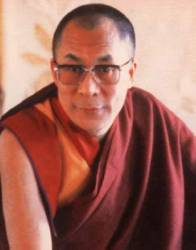
| ways and in all too short a measure. -Thomas Traherne "Whenever I touch a flower, I touch the sun and yet I do not get burned. When I touch the flower, I touch a cloud without flying to the sky. When I touch the flower, I touch my consciousness, your consciousness, and the great planet Earth at the same time.... The miracle is possible because of insight into the nature of inter-being. If you really touch one flower deeply, you touch the whole cosmos. The cosmos is neither one nor many. When you touch one, you touch many, and when you touch many, you touch one. Like Shakyamuni Buddha, you can be everywhere at the same time. Think of your child or your beloved touching you now. Look more deeply, and you will see yourself as multitudes, penetrating everywhere, inter-being with everyone and everything." Thich Nhat Hanh "If there is love, there is hope to have real families, real brotherhood, real equanimity, and real peace. If the love within your mind is lost, if you continue to see other beings as enemies, then no matter how much knowledge or education you have, no matter how much material progress is made, only suffering and confusion will ensue. Human beings will continue to deceive and overpower one another. Basically, everyone exists in the very nature of suffering, so to abuse or mistreat each other is futile. The foundation of all spiritual practice is love. That you practice this well is my only request. "The person who has a tremendous reserve of patience and tolerance has a certain degree of tranquility and calmness in his or her life. Such a person is not only happy and more emotionally grounded, but also seems to be physically healthier and to experience less illness. The person possesses a strong will, has a good appetite, and can sleep with a clear conscience. "No matter who we are with, we often think things like: 'I am stronger that he,' 'I am more beautiful than she,' 'I am more intelligent,' 'I am wealthier,' 'I am much better qualified,' and so forth we generate much pride. This is not good. Instead, we should always remain humble. Even when we are helping others and are engaged in charity work, we should not regard ourselves in a very haughty way as great protectors benefiting the weak. "Among the 6 billion human beings, the older generation, including me, is getting ready to say goodbye to this world. The youth has to carry the responsibility for the future. So, please realize your responsibility, remember your potential, and have self-confidence. Have an open mind and a sense of caring and belonging. The freshness and strength that youth has should not fade away. You must keep this enthusiasm." The Dalai Lama |
| When a monk asked, "What is the Tao (Way)? Master Unmon replied, "Walk on." Or, as Confucius says, "It does not matter how slowly you go, so long as you do not stop." A young man eagerly described what he dreamed of doing for the poor. Said the Master, "When do you propose to make your dream come true?" "As soon as the opportunity arrives." "Opportunity never arrives," said the Master. "It's here." The Buddha of Compassion, is represented in Tibetan iconography as having "a thousand eyes that see the pain in all corners of the universe and a thousand arms to reach out to all corners of the universe to extend his help." Never was anything in this world loved too much, but many things have been loved in false |
| Once there was a man of deep faith. His father died when he was young; he lived happily with his mother, and then he took a wife. At first, they lived happily to-gether and then because of a small misunderstanding, the wife and her mother-in-law came to dislike each other. This dislike grew until finally the mother left the young couple to live by herself. After the mother-in-law left, a son was born to the young couple. A rumor reached the mother-in-law that the young wife had said, "My mother-in-law was always annoying me and as long as she lived with us noth-ing pleasant ever happened; but as soon as she went we had this happy event." This rumor angered the mother-in-law who exclaimed, "If the husband's mother is chased away from the house and a happy event takes place, then things have come |
| to a pretty pass. Righteousness must have disappeared from the world." Then the mother-in-law shouted, "Now, we must have a funeral of this 'righteousness'." Like a mad woman, she went to the cemetery to hold a funeral service. A god, hearing of this incident, appeared in front of the woman and tried to reason with her, but in vain. The god then said to her," If so, I must burn the child and his mother to death. Will that satisfy you?" Hearing this, the mother-in-law realized her mistake, apologized for her anger, and begged the god to save the lives of the child and his mother. At the same time, the young wife and her husband realized their injustice to the old woman and went to the cemetery to seek her. The god reconciled them and thereafter they lived together as a happy family. Righteousness is never lost forever unless one casts it away oneself. Righteousness occasionally may seem to disappear but, in fact, it never disap-pears. When it seems to be disappearing, it is because one is losing the righteousness of one's own mind. Discordant minds often bring disaster. A trifling misun-derstanding may be followed by great misfortune. This is especially to be guarded against in family life. In family life, the question as to how the daily expenses are to be met always requires the utmost care. Every member must work hard like the diligent ants and the busy bees. No one must rely upon the industry of others, or expect their charity. On the other hand, a man must not consider what he has earned totally his own. Some of it must be shared with others, some of it must be saved for an emergency, some of it must be set aside for the needs of the community and the nation, and some of it must be devoted to the needs of the religious teachers. One should always remember that nothing in the world can strictly be called "mine." What comes to a person comes to him because of a combination of causes and conditions; it can be kept by him only temporarily and, therefore, he must not use it selfishly or for unworthy purposes. When Syamavati, the queen-consort of King Udayana, offered Ananda five hundred garments, Ananda received them with great satisfaction. The king, hearing of it, suspected Ananda of dis-honesty, so he went to Ananda and asked what he was going to do with five hundred garments. Ananda replied: "Oh, King, many of the brothers are in rags; I am going to distribute the garments among the brothers." "What will you do with the old garments?" "We will make bed-covers out of them." "What will you do with the old bed-covers?" "We will make pillow-cases." "What will you do with the old pillow-cases?" "We will make floor-covers out of them." "What will you do with the old floor-covers?" "We will use them for foot-towels." "What will you do with the old foot-towels?" "We will use them for floor-mops." "What will you do with the old floor-mops?" "Your Highness, we will tear them into pieces, mix them with mud and use the mud to plaster the housewalls." Every article entrusted to us must be used with good care in some useful way, because it is not "ours" but is only entrusted to us temporarily. |
|
|
| (These 3 images copyrighted by Ananda Afelbaum. Click on an image to visit our Tibetan Children's Villages pages. Home to 14,000+ orphans!) |
| "If you want to change the world, first try to improve and bring about change within yourself. That will help change your family. From there it just gets bigger and bigger. Everything we do has some effect, some impact. "What irritates us in the first place is that our wishes are not fulfilled. But remaining upset does nothing to help fulfill those wishes. So we neither fulfill our wishes nor regain our cheerfulness! This disconcerted state, from which anger can grow, is most dangerous. We should try never to let our happy frame of mind be disturbed. Whether we are suffering at present or have suffered in the past, there is no reason to be unhappy. "Everything has its limits. Too much consumption or effort to make money is not good. Neither is too much contentment. In principle, contentment should be pursued, but pure contentment is almost suicidal. "We should not regard a person as an authority simply on the basis of their fame, position, power, good looks, wealth, and so on, but rather because we find what they say on issues related to their particular field of expertise convincing and reliable. In brief, we do not generally take a person to be an authority on a subject simply out of respect and admiration for them as a person. Similarly, when we take the Buddha as an authority, as a reliable teacher, we do so on the basis of having investigated and examined his principal teaching, the Four Noble Truths. "It is often said that you should make a thorough examination of a potential guru (teacher), even if it takes twelve years." The Dalai Lama |
| MAHAMUDRA (is the practice and teaching that leads to the realization of One Mind) is beyond all words and symbols. But for you, Naropa, earnest and loyal, must this be said. The Void needs no re-liance; Mahamudra rests on naught. Without making an effort, but remaining natural, one can break the yoke thus gaining liberation. If one looks for naught when staring into space; if with the mind one then observes the mind; one destroys distinctions and reaches Buddhahood. The clouds that wander through the sky have no roots, no home, nor do the distinctive thoughts floating thorough the mind. Once the Self-mind is seen, discrimination stops. In space, shapes and colors form but neither by black nor white is space tinged. From the Self-mind all things emerge; the Mind |
 |
| by virtues and by vices is not stained. The darkness of ages cannot shroud the glowing sun; the long eons of Samsara ne'er can hide the Mind's brilliant Light. Though words are spoken to explain the Void, the Void as such can never be expressed. Though we say "the Mind is a bright light," it is beyond all words and symbols. Although the Mind is void in essence, all things it embraces and contains. Do naught with the body but relax; shut firm the mouth and silent remain; empty your mind and think of naught. Like a hollow bamboo, rest at ease your body. Giving not nor taking, put your mind at rest. Mahamudra is like a mind that clings to naught. Thus practicing, in time you will reach Buddhahood. The practice of Mantra and Perfections, instruction in the Sutras and Precepts, and teaching from the Schools and Scrip-tures will not bring realization of the Innate Truth. For if the mind when filled with some desire should seek a goal, it only hides the Light. One who keeps Tantric Precepts yet discriminates, betrays the vows of Awakening. Cease all ac-tivity; abandon all desire; let thoughts rise and fall as they will like the ocean waves. One who never harms the Non-abiding nor the Principles of non-distinction, upholds the Tantric Precepts. He who abandons craving and clings not to this or that, perceives the real meaning given in the Scriptures. In Mahamudra, all one's sins are burned; in Mahanu-dra, one is released from the prison of this world. This is the Dharma's supreme torch. Those who disbelieve it are fools who ever wallow in misery and sorrow. To strive for Liberation one should rely on a Guru (teacher). When your mind receives the Guru's blessing, emancipation is at hand. Alas, all things in this world are meaningless; they are but sor-row's seeds. Small teachings lead to acts. One should only follow teachings that are great. To transcend duality is the Kingly View; to conquer distractions is the Royal Practice; the Path of No-practice is the Way of Buddhas. One who treads that Path reaches Buddhahood. Transient is this world; like phantoms and dreams. Substance is has none. Grasp not the world nor your kin; cut the strings of lust and hatred; meditate in woods and mountains. If without effort you remain loosely in the "natural state," soon Mahamudra you will win and attain the Non-attainment. Cut the root of a tree and the leaves will wither; cut the root of your mind and Samsara falls. The light of any lamp dispels in a moment the darkness of long eons; the strong light of the mind in but a flash will burn the veil of ignorance. Whoever clings to mind sees not the truth of what's beyond the mind. Whoever strives to practice Dharma finds not the truth of Beyond-practice. One should cut cleanly through the root of mind and stare naked. One should thus break away from all dis-tractions and remain at ease. One should not give or take but remain natural, for Mahamudra is beyond all acceptance and rejection. Since the consciousness is not born, no one can obstruct or soil it; staying in the "Unborn" realm, all ap-pearances will dissolve into the ultimate Dharma. All self-will and pride will vanish into naught. The supreme Under-standing transcends all this and that. The supreme Action embraces great resourcefulness without attachment. The supreme Accomplishment is to realize immanence without hope. At first a yogi feels the mind is tumbling like a water-fall; in mid-course, like the Ganges, it flows on slow and gentle; in the end, it is a great vast ocean, where the Lights of Child and Mother merge into one. (Disclaimer: All images and articles retain the original copyrights of their original owners.) |
|
 |
 |
| April 18, 2004 |
|
| "We should not be too concerned with out fame or what people say about us, either bad or good, because in reality fame could not make any serious difference to one's life. Therefore, we should have our priorities right, and seek what is truly of value, what is truly of meaning to our life, not just mere fame, which is, after all, empty sounds. Some individuals sacrifice many of their material possessions, wealth, and even their lives to achieve fame. This type of obsession with seeking fame is very childish and is quite foolish. "Whether their entire life will be successful or not depends much upon the atmosphere young children feel throughout the day. In a family where there is love and compassion, the children will become happier and more successful human beings. Without love, there is a danger of spoiling or ruining their whole life. Human affection is thus most influential for children's development. "If a person has never encountered love toward himself or herself from any quarter, it is very sad. But if that person can meet even one person who will show unconditional love - simply acceptance and compassion - if he knows that he is an object of someone else's affection and love, it is bound to have an impact, and this will be appreciated. Because there is a seed in himself, this act of love will start to catalyze or ripen that seed. "You should see that all the external dirt and dust around you is basically a manifestation of the faults and stains within your mind. The most important aim is to purge these stains and faults from within your mind. Therefore, as you cleanse the environment, think that you are also purifying your mind." The Dalai Lama Our real journey in life is interior; it is a matter of growth, deepening, and of an ever greater surrender to the creative action of love and grace in our hearts. Thomas Merton |
 |
 |
| Visit our main Buddhism site. More information, images, and, NO pop-ups! |
 |