 |
|
History of The Hornet
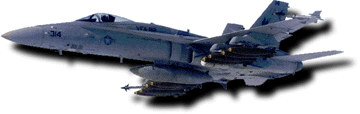
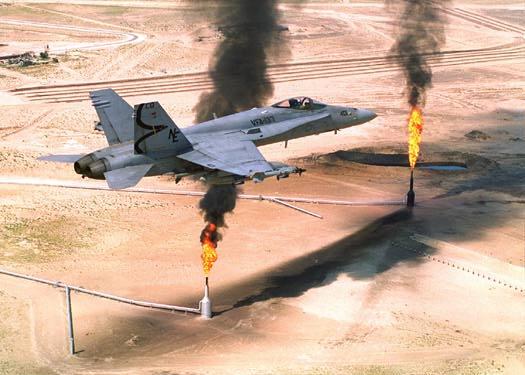
The F/A-18 Hornet is a modern jet fighter built by McDonnell Aircraft Company. The F/A-18 is based upon the experimental YF-17 designed and built by Northrop Corporation during the 1970's under contract with the U.S. Air Force. In a tight competition, General Dynamics' F-16 Falcon was ultimately chosen as the Air Force's mainstay fighter. Later, in an effort to salvage their efforts, Northrop teamed up with McDonnell Douglas to produce a new naval air combat fighter known as VFAX. McDonnell Douglas' experience was useful because of their extensive background in carrier-based fighter design. For this reason, Mcdonnell Douglas became the primary contractor with Northrop being the major subcontractor. Although the origianl idea was to design an F-18 fighter version and an A-18 attack version, it was decided to biuld a multi-role F/A-18 because the differences between the two versions were so minor. The original F/A-18A (single seat) and F/A-18B (dual seat) became operational in 1983 replacing Navy and Marine Corps F-4s and A-7s. It quickly became the battle group commander's mainstay because of its capability, versatility and availability. Reliability and ease of maintenance were emphasized in its design, and F/A-18s have consistently flown three times more hours without failure than other Navy tactical aircraft, while requiring half the maintenance time.
The F/A-18 has a digital control-by-wire flight control system which provides excellent handling qualities, and allows pilots to learn to fly the airplane with relative ease. At the same time, this system provides exceptional maneuverability and allows the pilot to concentrate on operating the weapons system. A solid thrust-to-weight ratio and superior turn characteristics combined with energy sustainability, enable the F/A-18 to hold its own against any adversary. The power to maintain evasive action is what many pilots consider the Hornet's finest trait. In addition, the F/A-18 was also the Navy's first tactical jet aircraft to incorporate a digital, MUX bus architecture for the entire system's avionics suite. The benefit of this design feature is that the F/A-18 has been relatively easy to upgrade on a regular, affordable basis.
Following a successful run of more than 400 A and B models, the U.S. Navy began taking fleet deliveries of improved F/A-18C (single seat) and F/A-18D (dual seat) models in September 1987. These Hornets carry the Advanced Medium Range Air-to-Air Missile (AMRAAM) and the infrared imaging Maverick air-to-ground missile. Two years later, the C/D models came with improved night attack capabilities. The new components included a navigation forward looking infrared (NAVFLIR) pod, a raster head-up display, night vision goggles, special cockpit lighting compatible with the night vision devices, a digital color moving map and an independent multipurpose color display.
F/A-18Cs have synthetic aperture ground mapping radar with a doppler beam sharpening mode to generate ground maps. This ground mapping capability that permits crews to
locate and attack targets in adverse weather and poor visibility or to precisely update the aircraft's location relative to targets during the approach, a capability that improves bombing accuracy. New production F/A-18Cs received the APG-73 radar upgrade radars starting in 1994, providing more precise and clear radar displays.
The F/A-18C Nigh
Attack Hornet has a pod-mounted Hughes AN/AAR-50
thermal imaging navigation set, a Loral AN/AAS-38 Nite
Hawk FLIR targeting pod, and GEC Cat's Eyes pilot's night
vision goggles.
Some 48 F/A-18D two-seat Hornets are configured as the F/A-18D (RC) reconnaissance version, with the M61A1 cannon replaced by a pallet-mounted electro-optical suite comprising a
blister-mounted IR linescan and two roll-stabilized sensor
units, with all of these units recording onto video tape.
The Hornet has been battle tested and has proved itself to be exactly what its designers intended: a highly reliable and versatile strike fighter. The F/A-18 played an important role in the 1986 strikes against Libya. Flying from USS CORAL SEA (CV 43), F/A-18s launched high-speed anti-radiation missiles (HARMs) against Libyan air defense radars and missile sites, effectively silencing them during the attacks on Benghazi facilities. On the first day of Operation Desert Storm, two F/A-18s, each carrying four 2,000 lb. bombs, shot down two Iraqi MiGs and then proceeded to deliver their bombs on target. Throughout the Gulf War, squadrons of U.S. Navy, Marine and Canadian F/A-18s operated around the clock, setting records daily in reliability, survivability and ton-miles of ordnance delivered.
The F/A-18 has proven to be an ideal component of the carrier based tactical aviation equation over its 15 years of operational experience. The only F/A-18 characteristic found to be marginally adequate by battle group commanders, outside experts, and even the men who fly the Hornet, is its range when flown on certain strike mission profiles. However, the inadequacy is managed well with organic and joint tanking assets.
Throughout its service, annual upgrades to F/A-18 weapon systems, sensors, etc. continued. The latest lot of the F/A-18C/D has grown to be far more capable (night attack, precision strike, low observable technologies, etc.) than the original F/A-18A/B; however, by 1991, it was becoming clear that avionics cooling, electrical, and space constraints would begin to limit future growth. Additionally, another operational deficiency was beginning to develop. As the F/A-18C/D empty weight increased the aircraft were returning to the carrier with less than optimal reserve fuel and/or unexpended weapons. The additional range and "bring back" is not as essential to shore based operations. F/A-18A/B/C/D aircraft will fly for years with the U.S. Marine Corps and eight international customers: Australia, Canada, Finland, Kuwait, Malaysia, Spain, Switzerland and Thailand. Although the F/A-18C/D's future growth is now limited, it will also continue to fill a critical role in the U.S. Navy's carrier battle group for many years to come and will be an excellent complement to the larger, longer range, more capable F/A-18E/F Super Hornet.
The Super Hornet can carry approximately 17,750 pounds (8,032 kg) of external load on eleven stations. It has an all-weather air-to-air radar and a control system for accurate delivery of conventional or guided weapons. There are two wing tip stations, four inboard wing stations for fuel tanks or air-to-ground weapons, two nacelle fuselage stations for Sparrows or sensor pods, and one centerline station for fuel or air-to-ground weapons. An internal 20 mm M61A1 Vulcan cannon is mounted in the nose.
Carrier recovery payload is increased to 9,000 pounds, and its engine thrust from 36,000 pounds to 44,000 pounds utilizing two General Electric F414 turbo-fan engines. Although the more recent F/A-18C/D aircraft have incorporated a modicum of low
observables technology, the F/A-18E/F was designed from the
outset to optimize this and other survivability enhancements.
The Mcdonnell Douglas F-18 flew for the first time on November 18th, 1987. The F/A-18 is a larger and broader version of the YF-17 adding greatly improved performance. The F/A-18 is powered by two GE F404 engines producing 16,000lbs of thrust each making the airplane's maximum velocity Mach 1.8.
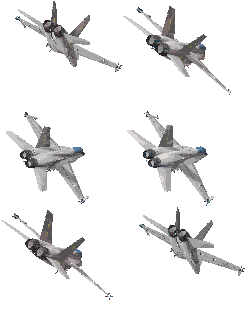
F/A-18E/F "Super Hornet"
The multi-mission F/A-18E/F "Super Hornet" strike fighter is an
upgrade of the combat-proven night strike
F/A-18C/D. The Super Hornet will provide the battle group
commander with a platform that has range, endurance, and ordnance carriage capabilities
comparable to the A-6 which have been retired.
The F/A-18E/F aircraft are 4.2 feet longer than earlier Hornets,
have a 25% larger wing area, and carry 33% more internal fuel
which will effectively increase mission range by 41% and
endurance by 50%. The Super Hornet also incorporates two
additional weapon stations. This allows for increased payload
flexibility by mixing and matching air-to-air and/or air-to-ground
ordnance. The aircraft can also carry the complete complement
of "smart" weapons, including the newest joint weapons such as
JDAM and JSOW.
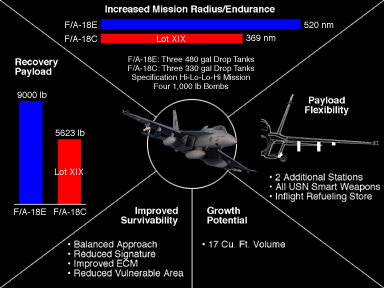
Although 41% interdiction mission range increase may be the most notable F/A-18E/F improvement, the ability to recover aboard with optimal reserve fuel and a load of precision strike weapons, is of equal importance to the battle group commander. The growth potential of the F/A-18E/F is more important to allow flexible employment strategies in future years. If an electronically scanned array antenna or another installation-sensitive sensor or weapon system becomes available, the F/A-18E/F has the space, power and cooling to accommodate it. Although the more recent F/A-18C/D aircraft have incorporated a modicum of low observables technology, the F/A-18E/F was designed from the outset to optimize this and other survivability enhancements. The all-F/A-18C/D/E/F air wing brings an increase in capability to the carrier battle group while ensuring the potential to take advantage of technological advances for years to come.
Features of the F/A-18 E/F Super Hornet:
Roll-out of the first Super Hornet occurred in September 1995, and it flew for the first time in November 1995, ahead of schedule and nearly 1,000 pounds under specified weight. In January 1997, the Super Hornet successfully conducted its initial sea trials on board the Navy's newest aircraft carrier, USS JOHN C. STENNIS (CVN 74).
The Navy is planning to procure a minimum of 548 Super Hornets, and possibly as many as 1,000. These numbers could vary depending on the progress of the Joint Strike Fighter Program. As part of the Quadrennial Defence Review (QDR) production of the Super Hornet was cut from 1000 to 548 units. Production of the aircraft commenced in FY 1997, and it is expected to attain initial operational capability (IOC) in FY 2001. Twelve aircraft were funded in FY 1997; procurement numbers increase to 20 in FY 1998, 30 in FY 1999, and reach a final maximum rate of 48 per year in FY 2001.