| GOODSTUFF'S LUNAR STUFF |
|
 |
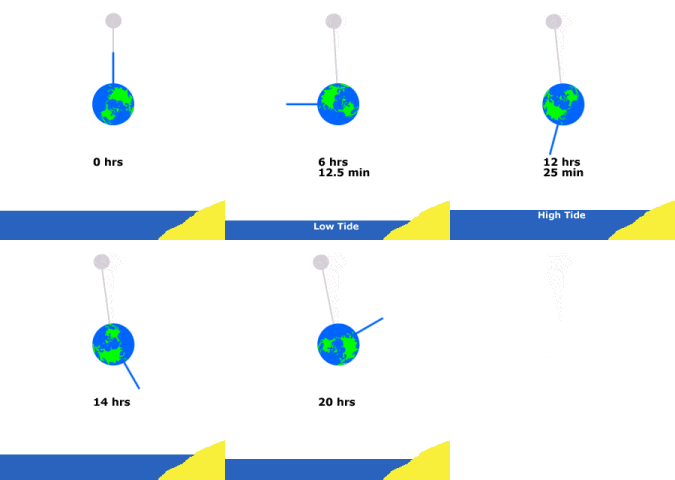 |
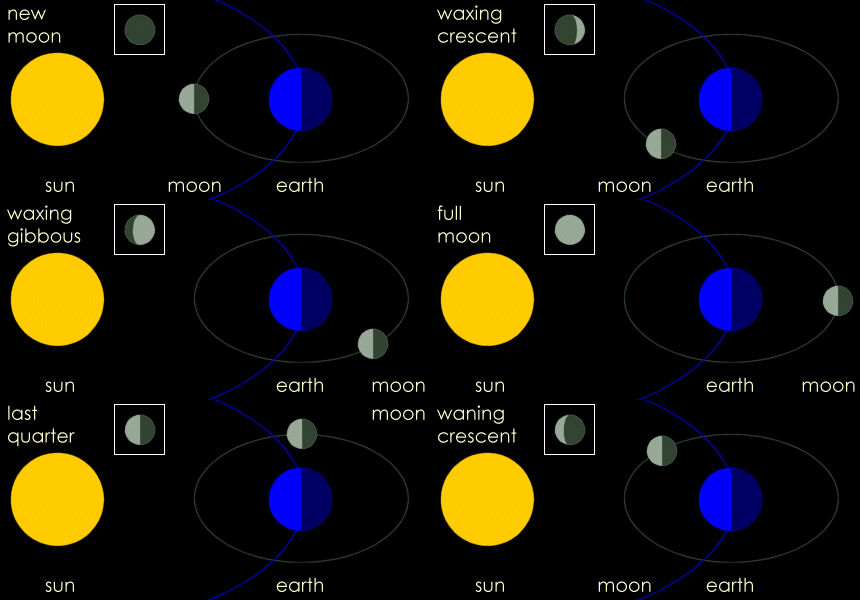
| The gravitational forces between the Earth and the Moon cause some interesting effects. The most obvious is the tides. The Moon's gravitational attraction is stronger on the side of the Earth nearest to the Moon and weaker on the opposite side. Since the Earth, and particularly the oceans, is not perfectly rigid it is stretched out along the line toward the Moon. From our perspective on the Earth's surface we see two small bulges, one in the direction of the Moon and one directly opposite. Because the Earth rotates much faster than the Moon moves in its orbit, the bulges move around the Earth about once a day giving two high tides per day. |
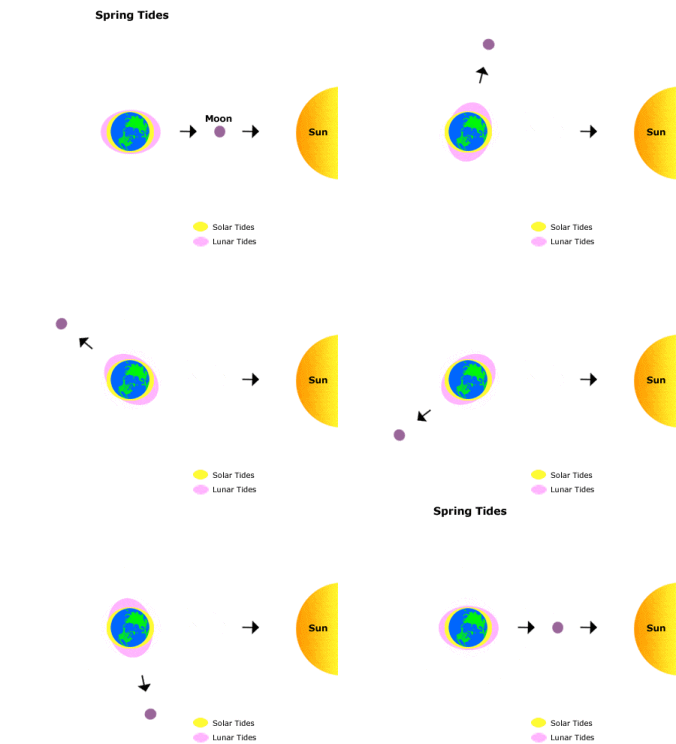 |
| Together, the gravitational pull of the moon and the sun affect the Earth�s tides on a monthly basis. When the sun, moon, and Earth are in alignment (at the time of the new or full moon), the solar tide has an additive effect on the lunar tide, creating extra-high high tides, and very low, low tides � both commonly called spring tides. One week later, when the sun and moon are at right angles to each other, the solar tide partially cancels out the lunar tide and produces moderate tides known as neap tides. During each lunar month, two sets of spring and two sets of neap tides occur |
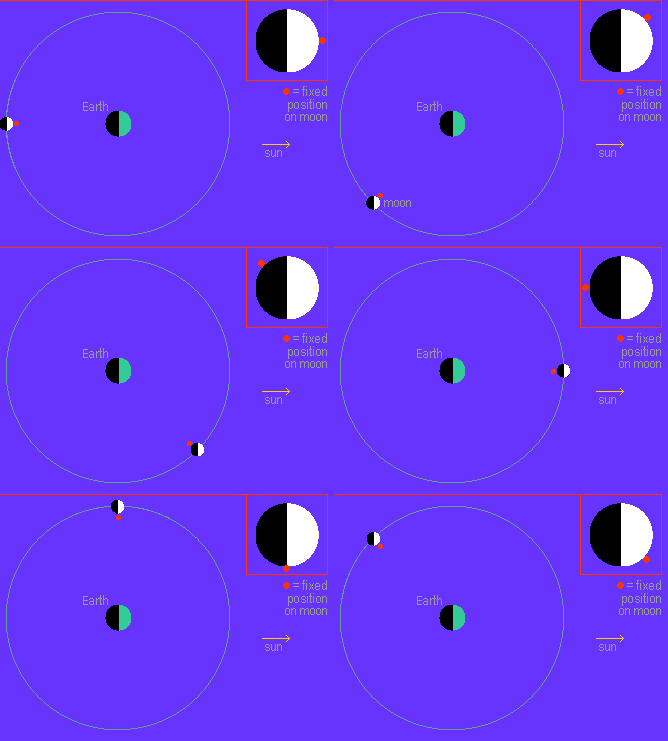 |
| The earth and moon rotate on their axis at the same speed. (in phase with each other). That is why we can�t see the far side of the moon, also incorrectly called the �dark side of the moon� |
 |
 |
 |
 |
