 |
|
|
|
|
|
|
|
|
|
|
|
|
|
|
|
|
|
|
|
|
|
|
|
|
|
|
|
|
|
|
|
your puppy |
|
Sammy |
|
|
Home |
|
about the breed |
|
|
education |
|
|
|
|
|
|
|
|
 |
|
|
|
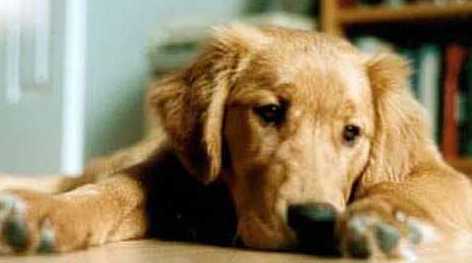
Your Golden Retriever is not a puppy anymore. Now, what comes next? |
|
|
 |
|
|
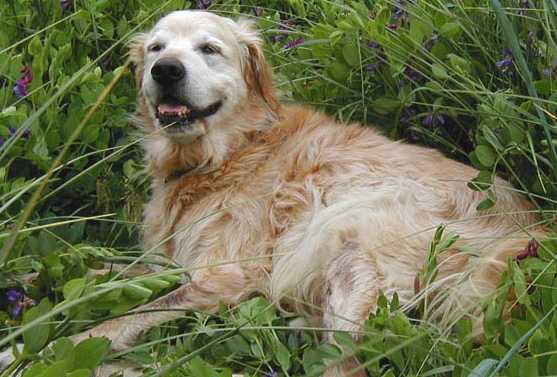
If your adult Retriever was raised within your own household, there's not a lot to tell you about your dog that you don't already know. You'll have managed to teach him some rules and tricks and you and your dog are a team.
Surely you will have noticed, that at the age of about 18 months, even the livelier exemplars among the Golden Retriever breed have calmed down a bit and most are not into destructive games any longer. Or at least not all the time, that is :-) This is the right time for you to redecorate your home!
|
|
|
|
|
|
If you decide to take on a fully grown Retriever though, one of the many lost and abandoned rescue dogs which are held in dog shelters, often for years, until someone finally adopts them, you might be thankful for some advice... |
|
|
|
Well, here are a few useful tips for you ! |
|
|
|
First, and before you take a rescue dog into your home, you should be absolutely sure he is really wanted and will stay there for the rest of his life. Taking on an abandoned dog, which has been deeply hurt in the past and which has lost its trust towards people only to hand it back after a while for some reason, is the worst that could happen to it and might destroy it.
Usually, you will not know what the dog had to endure in the past. It might have been hit and treated really badly. In any case, it had lost its home, its family and might decide not to fully trust you yet at the beginning. |
|
|
|
 |
|
|
|
|
|
You need to be patient with the dog. Don't force him to anything. Give him time! |
|
|
|
The dog might decide to keep some distance at the beginning. If he keeps hiding behind the sofa, let him do so. If he runs away from you or barks at you whenever you come close, leave him alone for a while. Let him be in the same room as you and the rest of the family though, but leave him in peace.
It might seem that he's not interested in you at all, but be sure, HE'S WATCHING YOU...! |
|
|
|
Don't shout. Don't play loud music or frighten the dog with sudden movements. |
|
|
|
If he's stressed, he'll need to calm down. Lively toddlers who pull his ears and try to ride on him like on a horse for example might be rather disturbing in such a case. Even small children can be told to be careful and very gentle with the dog... at least in the first few weeks before you all get used to each other. Of course you shall not tiptoe around your own house, just make sure there's a calm and positive atmosphere that encourages him to open up and gives him a sense of safety in your home. |
|
|
|
Stay with him. Take him with you, wherever you go. Show him that you care. |
|
|
|
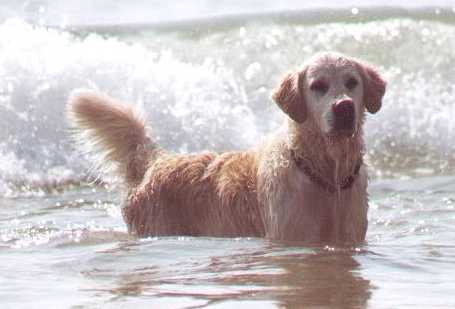
Take him outside, go to the park with him or walk through the fields. Find a pond for him to swim in. Have loads of fun together. Play with him, if he likes - if not, just let him run about and enjoy himself. |
|
|
|
When you go shopping, don't tie him up outside - not even if he can see you in the shop. Leave another family member with him, someone that he's already used to as well. If you have to leave him outside on his own, rather leave him in the car than tying him up somewhere. Even if he seems easy going, deep inside he surely feels very insecure and unsure, at least for some time. |
|
|
|
Remember: Whatever he's doing or not doing - be patient with him (and with yourself). Shouting at him - or even hitting him - must be an absolute taboo. |
|
|
|
 |
|