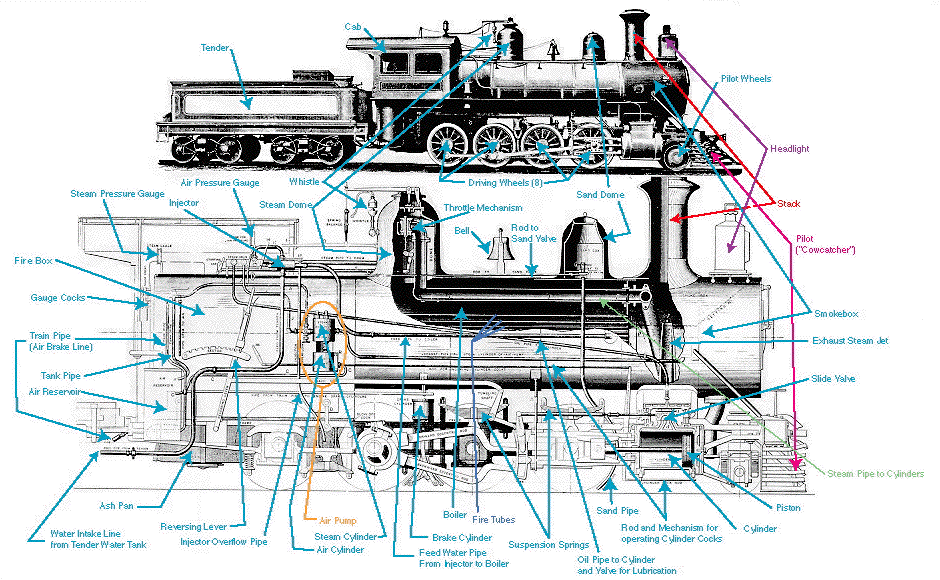
Almost any machine powered by steam depends on a supply of some combustable substance. It also depends on a supply of water. On many steam locomotives, the fuel for the fire and the water is carried in the tender. The tender is a separate car from the locomotive itself, but is usually semi-permanently coupled to the locomotive. The tender for the locomotive in the above diagram is shown as part of the small insert view of the outside of the locomotive. Tenders could be uncoupled from their locomotives, but even in the era of the locomotive shown here, there are such items as the water line from the locomotive to the tender that would have to be disassembled. As time went on, even more complicated items were added, such as mechanical stokers for moving coal from the tender to the locomotive, steam lines from the locomotive to the tender to provide heat for passenger cars or to provide power to booster steam engines on the wheels of the tender, and other items. As the link between locomotive and tender became more complicated, the less likely the two were to be separated. Baldwin's diagram of this locomotive is particularly useful because the 1880's featured such items as air brakes. The air pump is on the right side of the locomotive, and is therefore featured in the above view of the right side. It is circled with a dark orange oval. It is directly powered by steam, and is fairly simple: the single steam piston connects to the air piston with a single piston rod. When steam expands in the steam cylinder air is compressed in the air cylinder.
