Class:2A
Number:36 Years:14 years old
Eamil:[email protected]
[email protected] Favourite:collect model aircarft and Rocket
Nationalty:Hong Kong China
-----------------------------
�w��P�ڭӺ����洫link
�ڭ�logo�� A380 ar I love'in it�I�I

My fd'slink:

Macy ga

-----------------------------


First Fly (Airbus A380-800)The airbus A380 manufactured by Airbus S.A.S.is a double-decker, four engined airline capable of flying 850 passengers in a high density format or 555 passengers in a typical three-class configuration. The aircarftis scheduled to commence flight tests in March 2005 with deliveries to start in 2006. The A380,known for many years during its development phase as the Airbus A3XX,will be the lasgest airline in the world by a substantial margin when it enters service The A380 was unveiled in a lavish ceremony in Toulouseb,France,on January 18,2005.Its Manufacturer's serial number (MSN) was 001 with the registration F-WWOW. The new Airbus will initially be sold in two versions:A380-800,a full double-decker configuration, with the ability to carry 555 passengers,in a three-class configuration, or up to 800 passengers in a single economy configuration,for 8,000 nautical miles(14,800km),and the A380-800F dedicated freighter, to carry 150tons for 5,600 miles(10,400km) In a first step, the front and rear sections of the fuselage are loaded on an Airbus RORO ship, Ville de Bordeaux, in Hamburg, northern Germany, whence they are shipped to the United Kingdom. There the huge wings, which are manufactured at Filton in Bristol and Broughton in north Wales, are transported by barge to Mostyn docks, where the ship adds them to its cargo. In Saint-Nazaire, western France, the ship trades the fuselage sections from Hamburg for larger, assembled sections, some of which include the nose. The ship unloads in Bordeaux. Afterwards, the ship picks up the belly and tail sections in Cadiz, southern Spain, and delivers them to Bordeaux. From there, the A380 parts are transported by barge to Langon, and by road to Toulouse, where the A380s are assembled before being flown to Hamburg to be furnished and painted.
such it in--------- http://www.aviationexplorer.com/a380_facts.htm

 A380 First Fly Video


The Boeing 747, which is also known as the jumbo jet , is the second largest passenger airliner after the Airbus A380. Until the first commercial flight of the A380 in 2006, however, it remains the largest passenger aircraft in commercial service. The four-engine 747, produced by Boeing Commercial Airplanes, uses a two-deck configuration, the small upper deck is usually used for business-class passengers. A typical three-class layout accommodates about 400 passengers while a one-class layout accommodates a maximum of 600 passengers. The hump created by the upper deck has made the 747 a highly recognisable icon of air travel. The 747 flies at high-subsonic speeds (typically 0.85 Mach or 565 mph or 909 km/h) and features intercontinental range (8,430 statute miles, or 13,570 km, for the 747-400 version), in some configurations sufficient to fly New York-Hong Kong (roughly a third of the globe) non-stop. In 1989 a Qantas 747-400 flew non-stop from London to Sydney, a distance of 11,185 miles, in 20hrs 9min: this was a delivery flight with no passengers or freight aboard. By May 2004 , a total of 1381 aircraft have been built or ordered in various 747 configurations, making it a profitable product for Boeing. The 747 was born from the explosion of air travel in the 1960s. The era of commercial jet transportation, led by the enormous popularity of the Boeing 707, had revolutionised long distance travel and made possible the concept of the "global village." Boeing had already developed a study for a very large airplane while bidding on a US military contract for a huge airlifter. Boeing lost the contract to Lockheed 's C-5 Galaxy but came under pressure from its most loyal airline customer Pan Am to develop a giant passenger plane which would be over twice the size of the 707. In 1966 Boeing proposed a preliminary configuration for the airliner, to be called the 747. Pan Am ordered 25 of the initial -100 series. The design was a full length double decker, but due to issues with evacuation routes this idea was scrapped in favor of a wide-body design.

 The 15,740km (8500nm) ultra long range A340-500 and stretched 372 seat A340-600 are new variants of the Airbus A340 family, and are currently the world's longest range airliners.
Compared with the A340-300, the A340-600 features a 9.07m (35ft 1in) stretch (5.87m/19ft 3in ahead of the wing and 3.20m/10ft 6in behind), allowing it to seat 372 passengers in a typical three class arrangement. This gives Airbus a true early model 747 replacement and near direct competitor to the 747-400, with similar range, but, Airbus claims, better operating economics (per seat).
The A340-500 meanwhile is stretched by only 3.19m (10ft 6in) compared with the A340-300, and so seats 313 in three classes, but it has a massive range of 15,740km (8500nm), which makes it the longest ranging airliner in the world, capable for example of operating Los Angeles-Singapore nonstop.
The two new A340 models share a common wing. The wing is based on the A330/A340's but is 1.6m (5.2ft) longer and has a tapered wingbox insert, increasing wing area and fuel capacity. Both models feature three fuselage plugs. The other change to the A340 airframe is the use of the A330-200 twin's larger fin and enlarged horizontal area stabilisers. To cope with the increased weights the centre undercarriage main gear is a four wheel bogie, rather than a two wheel unit.
Both new A340s have a high degree of commonality with the A330 and other A340 models. They feature Airbus' common two crew flightdeck, but with some improvements such as LCD rather than CRT displays and modernised systems.
The A340-500 is powered by four 236kN (53,000lb) thrust Rolls-Royce Trent 556 turbofans, and the A340-600 by the 249kN (56,000lb) thrust Trent 556.
The commercial launch for the A340-500/600 was at the 1997 Paris Airshow, the program's industrial launch was in December that year when Virgin Atlantic ordered eight A340-600s and optioned eight. First flight of the A340-600 was made on April 23, 2001. After a 1600 hour flight test program, certification was received on May 29, 2002. Virgin Atlantic took delivery of its first A340-600 at the 2002 Farnborough International Airshow, and began commercial services in August.
The A340-500 made its first flight on February 11, 2002, and was certificated on December 3 after 400 hours of flight test.
The 15,740km (8500nm) ultra long range A340-500 and stretched 372 seat A340-600 are new variants of the Airbus A340 family, and are currently the world's longest range airliners.
Compared with the A340-300, the A340-600 features a 9.07m (35ft 1in) stretch (5.87m/19ft 3in ahead of the wing and 3.20m/10ft 6in behind), allowing it to seat 372 passengers in a typical three class arrangement. This gives Airbus a true early model 747 replacement and near direct competitor to the 747-400, with similar range, but, Airbus claims, better operating economics (per seat).
The A340-500 meanwhile is stretched by only 3.19m (10ft 6in) compared with the A340-300, and so seats 313 in three classes, but it has a massive range of 15,740km (8500nm), which makes it the longest ranging airliner in the world, capable for example of operating Los Angeles-Singapore nonstop.
The two new A340 models share a common wing. The wing is based on the A330/A340's but is 1.6m (5.2ft) longer and has a tapered wingbox insert, increasing wing area and fuel capacity. Both models feature three fuselage plugs. The other change to the A340 airframe is the use of the A330-200 twin's larger fin and enlarged horizontal area stabilisers. To cope with the increased weights the centre undercarriage main gear is a four wheel bogie, rather than a two wheel unit.
Both new A340s have a high degree of commonality with the A330 and other A340 models. They feature Airbus' common two crew flightdeck, but with some improvements such as LCD rather than CRT displays and modernised systems.
The A340-500 is powered by four 236kN (53,000lb) thrust Rolls-Royce Trent 556 turbofans, and the A340-600 by the 249kN (56,000lb) thrust Trent 556.
The commercial launch for the A340-500/600 was at the 1997 Paris Airshow, the program's industrial launch was in December that year when Virgin Atlantic ordered eight A340-600s and optioned eight. First flight of the A340-600 was made on April 23, 2001. After a 1600 hour flight test program, certification was received on May 29, 2002. Virgin Atlantic took delivery of its first A340-600 at the 2002 Farnborough International Airshow, and began commercial services in August.
The A340-500 made its first flight on February 11, 2002, and was certificated on December 3 after 400 hours of flight test.

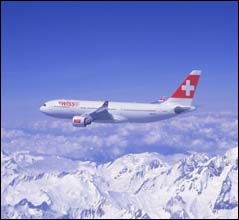 Mit dem Airbus A330 und dem Schwestermuster A340 gelang es der Firma Airbus im Jahre 1987 in den Markt der Langstreckenflugzeuge einzudringen. Dieser Markt wurde bis dato von der Boeing 767 und nicht zuletzt der 747, dem so genannten Jumbo-Jet, dominiert. Die A330 wurde gemeinsam mit dem A340 entwickelt. Die Basisversionen A340-300 und A330-300 sind �u�erlich bis auf die Anzahl der Triebwerke (4 bei der A340, 2 bei der A330) identisch.
Als Entwicklungsgrundlage nahm man den Rumpf des Airbus A300 und verlgerte ihn. Die Pilotenkanzel orientierte sich an der der A320. So wurde das Flugzeug insgesamt eine Mischung aus den technischen Neuerungen der Airbus A320-Familie, sowie dem Rumpfquerschnitt der A300/A310. Dank der nlichkeit des A330-Cockpits mit dem der A320-Familie und dem der A340 ist f�r die Umschulung der Piloten nur wenig Zeit erforderlich. Mehrere Fluggesellschaften setzen ihre Piloten daher sowohl auf den Flugzeugen der A320-Familie als auch auf A330 und A340 ein. Bisher bietet Airbus als einziger Hersteller eine solch weitgehende Kommunalit innerhalb der Produktpalette an.
Bis zum 16. Mz 2006 waren 571 Flugzeuge dieses Typs bestellt und 396 St�ck ausgeliefert. Dies schl�sselt sich auf in 321 Bestellungen und 209 Auslieferungen der k�rzeren A330-200, sowie 250 Bestellungen und 187 Auslieferungen der A330-300 (Quelle: Orders & Deliveries auf der Airbus-Website. Der Airbus A330 ist mit zwei Pratt & Whitney Strahltriebwerken ausgestattet und f�r den Langstreckenbetrieb ausgelegt. Die neueste Version ist die A330-300X. Sie hat sogar bei US-Fluggesellschaften Erfolg (Northwest Airlines; US Airways). Die k�rzere Version, die A330-200, misst 59 Meter, wrend die lgere Version, die A330-300, etwas mehr als 63 Meter misst.
Seit Dezember 2004 wird die A350 vermarktet, die urspr�nglich als Weiterentwicklung der A330 geplant war, mittlerweile jedoch laut Airbus zu 90% andere Teile als die A330 verwenden wird, jedoch bei nach wie vor gleichem Rumpfquerschnitt. Der Erstflug ist f�r 2009, die Aufnahme des Liniendiensts f�r 2010 geplant.
Mit dem Airbus A330 und dem Schwestermuster A340 gelang es der Firma Airbus im Jahre 1987 in den Markt der Langstreckenflugzeuge einzudringen. Dieser Markt wurde bis dato von der Boeing 767 und nicht zuletzt der 747, dem so genannten Jumbo-Jet, dominiert. Die A330 wurde gemeinsam mit dem A340 entwickelt. Die Basisversionen A340-300 und A330-300 sind �u�erlich bis auf die Anzahl der Triebwerke (4 bei der A340, 2 bei der A330) identisch.
Als Entwicklungsgrundlage nahm man den Rumpf des Airbus A300 und verlgerte ihn. Die Pilotenkanzel orientierte sich an der der A320. So wurde das Flugzeug insgesamt eine Mischung aus den technischen Neuerungen der Airbus A320-Familie, sowie dem Rumpfquerschnitt der A300/A310. Dank der nlichkeit des A330-Cockpits mit dem der A320-Familie und dem der A340 ist f�r die Umschulung der Piloten nur wenig Zeit erforderlich. Mehrere Fluggesellschaften setzen ihre Piloten daher sowohl auf den Flugzeugen der A320-Familie als auch auf A330 und A340 ein. Bisher bietet Airbus als einziger Hersteller eine solch weitgehende Kommunalit innerhalb der Produktpalette an.
Bis zum 16. Mz 2006 waren 571 Flugzeuge dieses Typs bestellt und 396 St�ck ausgeliefert. Dies schl�sselt sich auf in 321 Bestellungen und 209 Auslieferungen der k�rzeren A330-200, sowie 250 Bestellungen und 187 Auslieferungen der A330-300 (Quelle: Orders & Deliveries auf der Airbus-Website. Der Airbus A330 ist mit zwei Pratt & Whitney Strahltriebwerken ausgestattet und f�r den Langstreckenbetrieb ausgelegt. Die neueste Version ist die A330-300X. Sie hat sogar bei US-Fluggesellschaften Erfolg (Northwest Airlines; US Airways). Die k�rzere Version, die A330-200, misst 59 Meter, wrend die lgere Version, die A330-300, etwas mehr als 63 Meter misst.
Seit Dezember 2004 wird die A350 vermarktet, die urspr�nglich als Weiterentwicklung der A330 geplant war, mittlerweile jedoch laut Airbus zu 90% andere Teile als die A330 verwenden wird, jedoch bei nach wie vor gleichem Rumpfquerschnitt. Der Erstflug ist f�r 2009, die Aufnahme des Liniendiensts f�r 2010 geplant.
 The Boeing 777 is a family of long range widebody twin engine airliners built by Boeing Commercial Airplanes. It carries between 305 and 550 passengers and has a range spanning from 5,600 to 8,870 nautical miles (10,400 to 16,400 km). Its first flight was in 1994.
Distinguishing features of the 777 include the set of six wheels on each main landing gear, its perfectly circular fuselage cross section, and the blade like rear tailcone.
In the 1970s Boeing unveiled its new models to replace and expand its then current line up. They were the twin engined 757 , to replace the venerable 727; the twin engined 767 to challenge the Airbus A300 and the 777 trijet to compete with the DC-10 and the Lockheed TriStar L-1011.
It was a trijet airplane based on a re-winged 767 design, with two main variants: a transcontinental airplane transporting 175 on trips up to 5,000 km (2,700 nautical miles) and an intercontinental version capable of flying over 8,000 km (4,320 nautical miles) with the same passenger load.
The twinjets were launched and the 777 trijet was cancelled. Boeing's choice to not proceed with the 777 was influenced by the design complexities of trijet aircraft, the absence of an engine with thrust in the range of 40,000 lb f (178 kN), and the success of the 757 and 767, particularly with the benefit of ETOPS regulations of the 1980s.
Boeing had a big gap in its product line between the 767-300ER and the 747-400 in terms of size and range, and realized the potential of such an airplane. The DC-10 and Lockheed Tristar, being of 1960s design, were also ripe for replacement. In the meantime, Airbus developed the A330 and A340 to fulfill that requirement.
The initial proposal from Boeing was simply to enlarge the 767, resulting in the 767-X concept. It was similar to a 767 but with a longer fuselage and larger wings seating about 340 passengers and with a maximum range of 7,300 nautical miles (13,500 km).
The airlines were unimpressed with the 767-X. They wanted short to intercontinental range capability, cabin cross section similar to the 747, a fully flexible cabin configuration and an operating cost lower than any 767 stretch. The result was a new design, the 777 twinjet.
The design phase of the 777 differed from all previous Boeing jetliners. For the first time, the airlines and their passengers had a role in the development of the plane. The "Working Together" philosophy, as Boeing called it, meant that the 777 was their most customer oriented aircraft yet.
The 777 was also the first commercial aircraft to be designed 100% by computer. No paper drawings were ever produced; everything was created on a 3D CAD software system known as CATIA. This allowed a virtual 777 to be assembled in cyberspace, allowing engineers to examine for interferences, and to test if the many thousands of parts would fit together properly before costly physical prototypes were manufactured.
The Boeing 777 is a family of long range widebody twin engine airliners built by Boeing Commercial Airplanes. It carries between 305 and 550 passengers and has a range spanning from 5,600 to 8,870 nautical miles (10,400 to 16,400 km). Its first flight was in 1994.
Distinguishing features of the 777 include the set of six wheels on each main landing gear, its perfectly circular fuselage cross section, and the blade like rear tailcone.
In the 1970s Boeing unveiled its new models to replace and expand its then current line up. They were the twin engined 757 , to replace the venerable 727; the twin engined 767 to challenge the Airbus A300 and the 777 trijet to compete with the DC-10 and the Lockheed TriStar L-1011.
It was a trijet airplane based on a re-winged 767 design, with two main variants: a transcontinental airplane transporting 175 on trips up to 5,000 km (2,700 nautical miles) and an intercontinental version capable of flying over 8,000 km (4,320 nautical miles) with the same passenger load.
The twinjets were launched and the 777 trijet was cancelled. Boeing's choice to not proceed with the 777 was influenced by the design complexities of trijet aircraft, the absence of an engine with thrust in the range of 40,000 lb f (178 kN), and the success of the 757 and 767, particularly with the benefit of ETOPS regulations of the 1980s.
Boeing had a big gap in its product line between the 767-300ER and the 747-400 in terms of size and range, and realized the potential of such an airplane. The DC-10 and Lockheed Tristar, being of 1960s design, were also ripe for replacement. In the meantime, Airbus developed the A330 and A340 to fulfill that requirement.
The initial proposal from Boeing was simply to enlarge the 767, resulting in the 767-X concept. It was similar to a 767 but with a longer fuselage and larger wings seating about 340 passengers and with a maximum range of 7,300 nautical miles (13,500 km).
The airlines were unimpressed with the 767-X. They wanted short to intercontinental range capability, cabin cross section similar to the 747, a fully flexible cabin configuration and an operating cost lower than any 767 stretch. The result was a new design, the 777 twinjet.
The design phase of the 777 differed from all previous Boeing jetliners. For the first time, the airlines and their passengers had a role in the development of the plane. The "Working Together" philosophy, as Boeing called it, meant that the 777 was their most customer oriented aircraft yet.
The 777 was also the first commercial aircraft to be designed 100% by computer. No paper drawings were ever produced; everything was created on a 3D CAD software system known as CATIA. This allowed a virtual 777 to be assembled in cyberspace, allowing engineers to examine for interferences, and to test if the many thousands of parts would fit together properly before costly physical prototypes were manufactured.

 The 767 is to be replaced in the Boeing lineup by the 787.
 The Boeing 757 is a medium-range transcontinental commercial passenger airplane manufactured by Boeing Commercial Airplanes. It was designed for Eastern Airlines and British Airways to replace the Boeing 727 and entered service in 1983. Production of the 757 ended in October 2004 after 1050 had been built.
The 757 (originally designated "7N7") was designed by Boeing to complement the 767 on less dense routes. It has transatlantic range, and was one of the earliest ETOPS -rated airliners. As it needs to fly high and far, it is fitted with relatively high-thrust engines. For better economics, the passenger capacity is increased by 50 over the 727. The 757 uses many of the same components as the widebody 767, and aircrews and maintenance personnel can quickly be cross-trained from one type to the other. The 757 maintains the same fuselage diameter as the previous 707, 727, and 737. The 757 was discontinued just after crossing the 1000-produced mark. The 737-900 fulfills Boeing's marketing niche previously occupied by the 757, though does not have the same range.
Indeed, the 757 was preferred by airlines which needed to traverse long, thin routes, chiefly transcontinental and transatlantic routes. It was also desired by airlines flying from "hot and high" climates, such as Mexico City. The 757's resale value has increased since the discontinuation of new production. In fact, a December 29, 2004 order from Continental Airlines for Boeing's new 787-8 and currently-produced 737-800 airliners included ten used 757-300s.
The 757 is the first Boeing airliner launched with non-US engines, Rolls-Royce RB211-535. Later, however, the Pratt & Whitney PW2000 was also offered as an option.
It has been manufactured in two basic variants. The 757-200 is shorter and has a longer operating range than the 757-300. The -100 was to be a variant but was not built.
The Boeing 757 is a medium-range transcontinental commercial passenger airplane manufactured by Boeing Commercial Airplanes. It was designed for Eastern Airlines and British Airways to replace the Boeing 727 and entered service in 1983. Production of the 757 ended in October 2004 after 1050 had been built.
The 757 (originally designated "7N7") was designed by Boeing to complement the 767 on less dense routes. It has transatlantic range, and was one of the earliest ETOPS -rated airliners. As it needs to fly high and far, it is fitted with relatively high-thrust engines. For better economics, the passenger capacity is increased by 50 over the 727. The 757 uses many of the same components as the widebody 767, and aircrews and maintenance personnel can quickly be cross-trained from one type to the other. The 757 maintains the same fuselage diameter as the previous 707, 727, and 737. The 757 was discontinued just after crossing the 1000-produced mark. The 737-900 fulfills Boeing's marketing niche previously occupied by the 757, though does not have the same range.
Indeed, the 757 was preferred by airlines which needed to traverse long, thin routes, chiefly transcontinental and transatlantic routes. It was also desired by airlines flying from "hot and high" climates, such as Mexico City. The 757's resale value has increased since the discontinuation of new production. In fact, a December 29, 2004 order from Continental Airlines for Boeing's new 787-8 and currently-produced 737-800 airliners included ten used 757-300s.
The 757 is the first Boeing airliner launched with non-US engines, Rolls-Royce RB211-535. Later, however, the Pratt & Whitney PW2000 was also offered as an option.
It has been manufactured in two basic variants. The 757-200 is shorter and has a longer operating range than the 757-300. The -100 was to be a variant but was not built.
 The newest members of the Boeing 737 family - - the 737-600/-700/-800/-900 models -- continue the 737's pre-eminence as the world's most popular and reliable commercial jet transport. The 737 family has won orders for more than 6,000 airplanes, which is more airplanes than The Boeing Company's biggest competitor has won for its entire product line since it began business.
The 737 - a short-to-medium-range airplane - is based on a key Boeing philosophy of delivering added value to airlines with reliability, simplicity and reduced operating and maintenance costs.
The Next-Generation 737 models build on the strengths that made the 737 the world's most successful commercial airliner, while incorporating improvements and value-added technology designed for the 21st century.
Advanced technology winglets allow airlines to save on fuel, extend its range, carry more payload and reduce engine maintenance costs. Blended winglets are wing tip extensions which provide several benefits to airplane operators. The winglet option increases the Next-Generation 737's lead as the newest and most technologically advanced airplane in its class.
The passenger cabin on the Boeing Next-Generation 737s has a new look, providing passengers with comfortable, aesthetically pleasing surroundings.
The newest members of the Boeing 737 family - - the 737-600/-700/-800/-900 models -- continue the 737's pre-eminence as the world's most popular and reliable commercial jet transport. The 737 family has won orders for more than 6,000 airplanes, which is more airplanes than The Boeing Company's biggest competitor has won for its entire product line since it began business.
The 737 - a short-to-medium-range airplane - is based on a key Boeing philosophy of delivering added value to airlines with reliability, simplicity and reduced operating and maintenance costs.
The Next-Generation 737 models build on the strengths that made the 737 the world's most successful commercial airliner, while incorporating improvements and value-added technology designed for the 21st century.
Advanced technology winglets allow airlines to save on fuel, extend its range, carry more payload and reduce engine maintenance costs. Blended winglets are wing tip extensions which provide several benefits to airplane operators. The winglet option increases the Next-Generation 737's lead as the newest and most technologically advanced airplane in its class.
The passenger cabin on the Boeing Next-Generation 737s has a new look, providing passengers with comfortable, aesthetically pleasing surroundings.

 The versatility and reliability of the Boeing 727 -- first trijet introduced into commercial service -- made it the best-selling airliner in the world during the first 30 years of jet transport service. The jet age essentially began in 1952 with the introduction of the British-designed de Havilland Comet. Several jetliners, including the Boeing 707, were developed before the 727, but none came close to its sales record.
Production of the 727 extended from the early 1960s to August 1984 -- a remarkable length of time, considering the original market forecast was for 250 airplanes. As it turned out, 1,831 were delivered. Twenty years later, when the last 727 was delivered, this versatile fleet was carrying 13 million passengers each month. As of January 2001, nearly 1,300 of the reliable aircraft were still in service.
On Jan. 13, 1991, the first 727 built -- which had been in continual service with United Airlines since 1964 -- finally made its last commercial flight and was donated to the Museum of Flight in Seattle.
Introduced into service in February 1964, the 727 trijet became an immediate hit with flight crews and passengers alike. With a fuselage width the same as the 707 (and the later 737 and 757), it provided jet luxury on shorter routes. With sophisticated, triple-slotted trailing edge flaps and new leading-edge slats, the 727 had unprecedented low-speed landing and takeoff performance for a commercial jet and could be accommodated by smaller airports than the 707 required.
The versatility and reliability of the Boeing 727 -- first trijet introduced into commercial service -- made it the best-selling airliner in the world during the first 30 years of jet transport service. The jet age essentially began in 1952 with the introduction of the British-designed de Havilland Comet. Several jetliners, including the Boeing 707, were developed before the 727, but none came close to its sales record.
Production of the 727 extended from the early 1960s to August 1984 -- a remarkable length of time, considering the original market forecast was for 250 airplanes. As it turned out, 1,831 were delivered. Twenty years later, when the last 727 was delivered, this versatile fleet was carrying 13 million passengers each month. As of January 2001, nearly 1,300 of the reliable aircraft were still in service.
On Jan. 13, 1991, the first 727 built -- which had been in continual service with United Airlines since 1964 -- finally made its last commercial flight and was donated to the Museum of Flight in Seattle.
Introduced into service in February 1964, the 727 trijet became an immediate hit with flight crews and passengers alike. With a fuselage width the same as the 707 (and the later 737 and 757), it provided jet luxury on shorter routes. With sophisticated, triple-slotted trailing edge flaps and new leading-edge slats, the 727 had unprecedented low-speed landing and takeoff performance for a commercial jet and could be accommodated by smaller airports than the 707 required.
 The twinjet Boeing 717 is Boeing Commercial Airplanes smallest commercial airliner. It entered service in September 1999, making it one of the newest airliners on the market, and yet one of the oldest - the 717 is a renamed McDonnell Douglas MD-95, which itself was based on the venerable Douglas DC-9 that first flew in 1965. On January 14, 2005, the Boeing Company announced that it will discontinue production of the 717 in 2006. This will end the long history of McDonnell Douglas commercial aircraft in Long Beach, CA.
Boeing had apparently skipped the "717" model designation when the 727 became the airliner which followed the 707. But "717" had, in fact, been used by the company to refer to the military version of the 707, which the U.S. Air Force redesignated the KC-135 Stratotanker. This left "717" available until the MD-95 was rebranded.
The twinjet Boeing 717 is Boeing Commercial Airplanes smallest commercial airliner. It entered service in September 1999, making it one of the newest airliners on the market, and yet one of the oldest - the 717 is a renamed McDonnell Douglas MD-95, which itself was based on the venerable Douglas DC-9 that first flew in 1965. On January 14, 2005, the Boeing Company announced that it will discontinue production of the 717 in 2006. This will end the long history of McDonnell Douglas commercial aircraft in Long Beach, CA.
Boeing had apparently skipped the "717" model designation when the 727 became the airliner which followed the 707. But "717" had, in fact, been used by the company to refer to the military version of the 707, which the U.S. Air Force redesignated the KC-135 Stratotanker. This left "717" available until the MD-95 was rebranded.
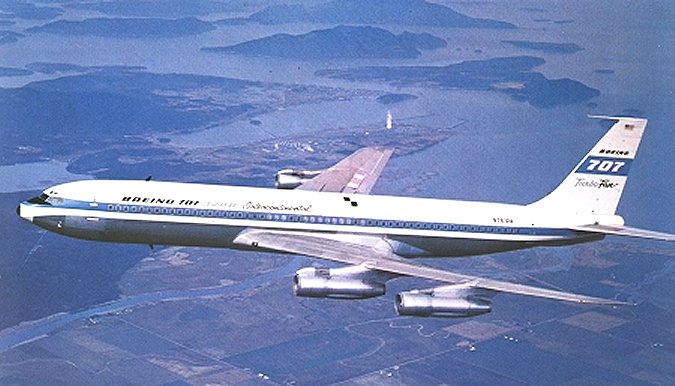
 The 707 was based on a prototype Boeing aircraft known as the 367-80. The "Dash 80", as it was called within Boeing, cost $16 million to develop and took less than two years from project launch in 1952 to rollout on May 14, 1954. The prototype was the basis for both the KC-135 Stratotanker, an air tanker used by the United States Air Force, and the 707. This was powered by the Pratt & Whitney JT3C engine which was the civilian version of the J57 used on the many military aircraft of the day incluing the F-100, F-101, F-102, and the B-52. A late and costly decision was to widen the fuselage by 6 inches (150 mm) compared to the original 367-80 and KC-135 so as to be a bit wider than the Douglas DC-8.
Pan Am was the first airline to operate the 707; the aircraft's first commercial flight was from New York to Paris on October 26, 1958. American Airlines operated the first transcontinental 707 flight on January 25, 1959. Many other airlines followed, and the 707 quickly became the most popular jetliner of its time, edging out its main competitor, the Douglas DC-8.
The 707 was based on a prototype Boeing aircraft known as the 367-80. The "Dash 80", as it was called within Boeing, cost $16 million to develop and took less than two years from project launch in 1952 to rollout on May 14, 1954. The prototype was the basis for both the KC-135 Stratotanker, an air tanker used by the United States Air Force, and the 707. This was powered by the Pratt & Whitney JT3C engine which was the civilian version of the J57 used on the many military aircraft of the day incluing the F-100, F-101, F-102, and the B-52. A late and costly decision was to widen the fuselage by 6 inches (150 mm) compared to the original 367-80 and KC-135 so as to be a bit wider than the Douglas DC-8.
Pan Am was the first airline to operate the 707; the aircraft's first commercial flight was from New York to Paris on October 26, 1958. American Airlines operated the first transcontinental 707 flight on January 25, 1959. Many other airlines followed, and the 707 quickly became the most popular jetliner of its time, edging out its main competitor, the Douglas DC-8.

