|
|
¢ Skin Care Tips |
 |
Caring for Parched Skin (Part I)
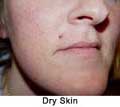 Scaly,
flaky skin that feels tight and itchy? Skin looks smooth but is actually rough
to touch? Cheeks have fine lines that disappear when applied with moisturizing
creams and lotions? Do you know what this common skin condition is called?
Health professionals label it with the term "xerosis";
everyone else describe it as "dry skin". Scaly,
flaky skin that feels tight and itchy? Skin looks smooth but is actually rough
to touch? Cheeks have fine lines that disappear when applied with moisturizing
creams and lotions? Do you know what this common skin condition is called?
Health professionals label it with the term "xerosis";
everyone else describe it as "dry skin".
A Barrier Against Water Loss
Water
retention is important so that skin remains moist and supple. In other words,
water is important so that the skin won't get "thirsty". For a thirsty
skin becomes a dry one!
Good thing the skin has a natural defense against water loss
to help maintain moisture and suppleness! This defense is known as the
"hydro-lipid system".
The hydro-lipid
system is made up of sebum, lipids, and natural moisturizing factors.
Sebum, produced by the sebaceous glands, is an oily substance that
protects and lubricates the hair and the skin. Lipids, meanwhile,
are the result of the breakdown of cells from the granular layer, one of the
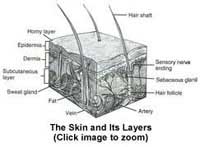
four layers of the
epidermis. Finally, natural moisturizing factors
are those free amino acids and natural body chemicals such as lactic acid, urea
and salts that can be found in the horny layer (stratum corneum), the outermost
layer of the epidermis.
(See special article
about the skin)
 Actually,
people lose water through the skin on a daily basis. There are two factors
behind this loss: first, through perspiration from the sweat glands; and second,
through dehydration of body cells that come up to the skin's surface. This loss
of water through either way is just but normal. However, there are several
factors that may increase skin's water deficiency, thus making it dry. Actually,
people lose water through the skin on a daily basis. There are two factors
behind this loss: first, through perspiration from the sweat glands; and second,
through dehydration of body cells that come up to the skin's surface. This loss
of water through either way is just but normal. However, there are several
factors that may increase skin's water deficiency, thus making it dry.
So Why Does the Skin Dry Up?
As we had mentioned, there are
several factors that intensify the skin's dehydration. These include:
 External Factors
 Harsh
weather conditions (cold, dry, and windy weathers). Dry indoor climate (like
poor ventilation). Excessive sun exposure (like sun bathing). Heating as well as
air conditioning systems. Chemicals, detergents, soaps and solvents.
Excessive contact with water. All these factors interfere with the skin's
barrier function by reducing the skin's natural moisturizing factors. As a
result, skin may peel, flake and thicken. Harsh
weather conditions (cold, dry, and windy weathers). Dry indoor climate (like
poor ventilation). Excessive sun exposure (like sun bathing). Heating as well as
air conditioning systems. Chemicals, detergents, soaps and solvents.
Excessive contact with water. All these factors interfere with the skin's
barrier function by reducing the skin's natural moisturizing factors. As a
result, skin may peel, flake and thicken.
Aging
As years add up, people's skin
lose its capacity to retain moisture. This is because sebaceous and sweat glands
deteriorate as people grow older. Also, the body's production of certain
compounds, like sterol esters and triglycerides that are important parts of
oils and fats, are reduced thereby increasing the chances of developing dry
skin. These are the reasons why dry skin is most common among the elderly.
However, babies and
young people are also prone to dry skin, because their oil producing glands are
not yet fully developed.
By the way, if you're a male, your chances of
getting dry skin as you grow older is slimmer than that of women. Accordingly, the
activity of sebaceous glands in males still remain strong even in their 80s,
whereas females' level of sebaceous activity in their 60s are only at
60% (and this even lowers after a decade more!).
Genetics
If your mom, dad, grandma,
grandpa, or anyone related to you biologically or genetically suffers from dry
skin, you're also susceptible to the condition.
Health
Problems.
Dry skin may also be a
manifestation of several illnesses, such as: Zinc or essential fatty acid
deficiency; hypothyroidism (the thyroid glands don't produce enough thyroid
hormone); kidney failure (end-stage kidney disease); HIV; obstructive gallbladder disease;
and, Sjögren's syndrome (a chronic disease wherein white blood cells damage
moisture-producing glands).
 People prone to allergies (i.e.
those who are likely to have atopic dermatitis, asthma, and hay fever) may also
suffer from dry skin. Diabetes may also help in the development of dry skin, because
many diabetic people also have autonomic neuropathy, the term given to the "group of
symptoms caused by damage to nerves supplying the
internal body structures that regulate functions such as blood pressure, heart
rate, bowel and bladder emptying, and digestion"
(Medline Plus Online, 2006). People prone to allergies (i.e.
those who are likely to have atopic dermatitis, asthma, and hay fever) may also
suffer from dry skin. Diabetes may also help in the development of dry skin, because
many diabetic people also have autonomic neuropathy, the term given to the "group of
symptoms caused by damage to nerves supplying the
internal body structures that regulate functions such as blood pressure, heart
rate, bowel and bladder emptying, and digestion"
(Medline Plus Online, 2006).
To be
continued...
** This is the
first of a two-part special of "Skin Care Tips". Watch out for our next issue
as we will be giving away tips on the proper way of taking care of dry skin.
We'll see you!
|
G
Think About This |
|
|
The Skin, Our Fortress
Do
you know that the skin is the largest organ of the body? Being the largest
organ, the skin totally covers up people (that's literally and figuratively
speaking!). It serves as our fortress against the harsh outside world.
(Click
here to see special article on the skin)
 From the inside, your delicate organs, muscles,
nerve cells, etc. etc. are cushioned by the skin. Plus, the skin constantly and
diligently maintains the balance of water and salt in the body so that you may
remain healthy. From the outside, it is the skin that protects against harmful
earthly elements as well as unwanted visitors such as bacteria and viruses. From the inside, your delicate organs, muscles,
nerve cells, etc. etc. are cushioned by the skin. Plus, the skin constantly and
diligently maintains the balance of water and salt in the body so that you may
remain healthy. From the outside, it is the skin that protects against harmful
earthly elements as well as unwanted visitors such as bacteria and viruses.
The skin also serves as an "early warning device",
making you constantly alert and quick to respond to dangers from the outside
(signaled by pain) that may damage your insides!
However,
under much stress, people’s body systems and the way they regulate and replenish
the skin is affected. If this happens, people become more vulnerable to health
problems that may affect not only the skin but our internal body mechanisms as
well. Is that the right way to repay your skin, the fortress that keeps you
healthy?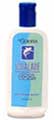
Treat your skin right!
Use only the right skin care products
that will take care of your skin just as it takes care of you. Use products that
will
nurture it, like Godiva Squalene Cool Anti-Stress
Lotion that helps
prevent damage to stressed skin. Apply every night to help soothe better your
skin that had been stressed all day.
|
_ Tell Us What You Think |
|
|
| We would love to hear what you think of this
issue of Godiva Skin Care Journal.
And of course, if you have any suggestions for upcoming issues that you'd like
to share with us, please send those too! Just e-mail us at:
[email protected] or
[email protected].
|
|
