|
|
N Skin Care Alert |
 |
Beware: Here Comes the Sun!!!
Did you know that SPF (which stands
for Sun Protection Factor) only measures the protection a product can
give against UVB rays? It does not determine the
effectiveness of a product against UVA rays.
The Sun Is No Fun! Really!
 Okay,
let's get this straight: I am not, in any way, trying to be a spoilsport. In
fact, I love having a blast under the sun, like going to the beach during
summer. But hey, reality bites, and in this case, the sun’s rays bite
(literally)! There’s the fact that the sun emits ultraviolet (UV) rays proven by A LOT of clinical studies to have adverse effects on the skin. Okay,
let's get this straight: I am not, in any way, trying to be a spoilsport. In
fact, I love having a blast under the sun, like going to the beach during
summer. But hey, reality bites, and in this case, the sun’s rays bite
(literally)! There’s the fact that the sun emits ultraviolet (UV) rays proven by A LOT of clinical studies to have adverse effects on the skin.
How does the sun damage the skin? Let’s
clear things further by knowing more about the three types of UV lights emitted
by the sun -- UVA, UVB, and UVC -- and their varying effects on the skin.
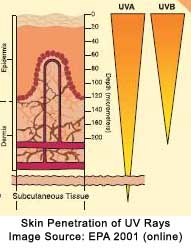
UVA
is the lowest energy range of UV radiation from the sun. At first, UVA was
thought to be harmless, but later on, it was found that UVA can penetrate the
skin deeply and as such, can alter the skin’s structure by damaging collagen and
elastic fibers. As a result, skin becomes prone to wrinkling, sagging, and
developing sun spots. Worse, much UVA exposure may eventually weaken the skin’s defense system, making it susceptible to
infections and even skin cancer!
UVB,
meanwhile, is responsible for sunburn. Prolonged exposure to UVB may lead to
photoaging as well as trigger the development of skin cancer.
Finally, UVC is predicted to be the most damaging to the skin. The good news,
though, is that UVC is already screened by the ozone layer and does not yet
penetrate the Earth’s atmosphere.
“Nah, I use a sunscreen that has a
high SPF value, thus I can already stay under the sun for a long period of
time!”
Unfortunately, using a high-factor sunscreen won’t ensure you of superior skin
protection against damaging UV rays, more so double your sun time!
According to Daniel McKenzie, M.D., a dermatologist at Saddleback Memorial
Medical Center in Laguna Hills, California, a SPF 30 sunscreen only gives 2%
more protection than a SPF 15 product. That is, products rated with SPF 15 can
shield against 94% of UVB rays; SPF 30, 96%; and, SPF 40, 97%. Besides, the risk
of allergic reactions is higher in very high-factor products!
And
take note: SPF only tells the estimated protection you can get from a product
before your skin gets “sunburn”. It doesn’t tell the sunscreen’s effectiveness
against damaging UVA rays!
In addition, the US FDA no longer allows labeling of sunblock higher than SPF
30.
To
ensure you get broad spectrum protection, look for “physical blocker”
ingredients like Zinc Oxide or Titanium Dioxide. Like a mirror,
Zinc Oxide and Titanium Dioxide reflect UV rays away from the skin by forming a
“barrier” just above the skin’s surface.
The Best Sunscreen
The best sunscreen products are those that
can give broad spectrum protection, or protection against both
UVA and UVB rays. Godiva Green Tea Sunblock
and Godiva Safe Sea Sunblock can
give you broad spectrum protection!
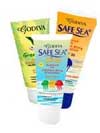 For
daily sun protection, use Godiva Green Tea Sunblock
(SPF 25), which has Zinc Oxide plus Green Tea Extract to
protect against DNA damage. Meanwhile, Godiva Safe Sea
Sunblock (SPF 30), which has Titanium Dioxide, is the WORLD’S ONLY
sunscreen lotion that defends against marine stingers (like jellyfish, sea lice,
and coral). Both Godiva Green Tea Sunblock and Godiva Safe Sea Sunblock are
wtare resistant, so they do not wear off easily and can last throughout the day. For
daily sun protection, use Godiva Green Tea Sunblock
(SPF 25), which has Zinc Oxide plus Green Tea Extract to
protect against DNA damage. Meanwhile, Godiva Safe Sea
Sunblock (SPF 30), which has Titanium Dioxide, is the WORLD’S ONLY
sunscreen lotion that defends against marine stingers (like jellyfish, sea lice,
and coral). Both Godiva Green Tea Sunblock and Godiva Safe Sea Sunblock are
wtare resistant, so they do not wear off easily and can last throughout the day.
So
be wise in buying sunscreen products! Choose only those which can give you
superior skin protection against the ALL harmful UV rays the sun. Choose
Godiva Green Tea Sunblock and
Godiva Safe Sea Sunblock today!
|
G
Did You Know That...? |
|
|
Jellyfish sting
is dangerous!!!
Did you know that jellyfish sting is harmful? Jellyfish leave quite nasty marks.
These include long red streaks, redness, blisters, ulceration, swelling,
possible secondary infection and scarring. Some unfortunate bathers can develop
severe allergic reactions and may even have life-threatening symptoms,
especially if they receive multiple stings or come into contact with the
dangerous Box Jellyfish.
 The
good news is, it is now possible to protect yourself against the stings of most
jellyfish and other marine stingers like sea lice, sea nettle, coral and sea
anemone. Thanks to Godiva Safe Sea Sunblock,
you can head for the beach without worries! The
good news is, it is now possible to protect yourself against the stings of most
jellyfish and other marine stingers like sea lice, sea nettle, coral and sea
anemone. Thanks to Godiva Safe Sea Sunblock,
you can head for the beach without worries!
Benefits of Godiva Safe Sea Sunblock:
- SPF 30
- Water
resistant
- Has
Titanium Dioxide for broad UV
spectrum protection.
|
_ Tell Us What You Think |
|
|
|

