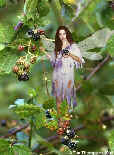
There are so many different faeries. The faeries you probably know of are tiny faeries that you see by the beam of light they shine. Large wings, small bodies, clothing that allow them to blend into the background of their natural home. But there are more!
The Pillywiggins--These are the faeries you are most familiar with. These faeries are a cross between elves, flowers and insects. They have insect and flower parts, such as a wings, flowers colors and antennules. They flutter, frolic, dance and take care of the fauna and flora in gardens.
The Laumes--Six feet three inches, motherly and dress in white and have flaming red eyes. They can walk through walls and materialize to get to where they are going. They come up with the mist to take babies away to a happier place, shielding the child from an unhappy life. They would replace the baby with a straw doll and within 24 hours, the parents should cut off its head or else the doll would come to life. One story describes a man doing this after his son was almost taken away, and when he cut off the head, blood spurted out.
Melusine--Very tall woman with a serpent for the lower part of her body and devil's wings on her back. A French faerie cousin to mermaids. She built many buildings and whenever those buildings changes ownership, her piercing cry can be heard.
Fallen Faeries--She looks like a normal woman, young and pleasant, but the other half of her body and face are of an old decrepit corpse. They are being punished by the good faeries and are blasphemous women who can throw a petty curse but nothing else. They soon will become ogres. Only a few try to make amends for their bad deeds.
Faerie Godmothers--Come on, do I really have to explain to you these creatures? They can be seen in old fairy tale stories, helping out a poor maiden find her Prince Charming. Some carry magic wands and others use scissors or spinning-wheels. They usually influence the fate of a child, spinning their life and then cutting the string when their life is to end.
Washerwomen/Singers of the Night--All look like normal woman except for the leader who is usually taller. At night, they sing in ponds or stagnant waters, washing sinner's souls. When the women wring a transparent piece of clothe, it takes the form of a human and moans and cries can be heard. Inside is rumored to be the damned souls as the women cleanse their hearts. |