
Gnat Ranch

Grey Badger


|
|
|
|
|
|
|
|
|
|
|
|
|
|
|
|
|
|
|
|
|
|
|
|
|
|
|
|||||||||||||||||||||||||
| About Gnat Ranch |
|||||||||||||||||||||||||
|
|||||||||||||||||||||||||
| Principle Philosopy: With innovative thinking, careful planning, and sweat equity, goals can be achieved with little negative impact to the environment. Grey Badger |
|||||||||||||||||||||||||
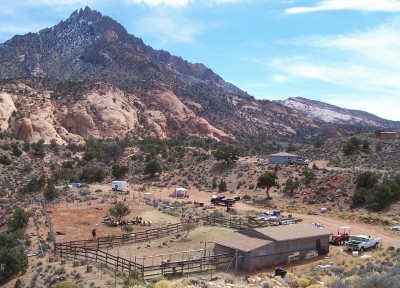
| Gnat Ranch was established in 1993 with a goal to develop a livestock operation with the least negative impact on the local environment. For inspiration, we looked at the history of southeastern Utah because we also wanted the ranch to look as if it had been here for generations. | |||||||||||||||||||||||||
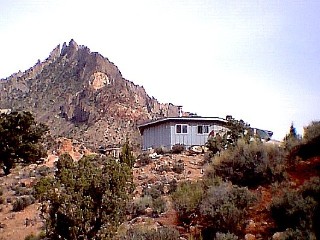
| The Navajo hogan is an eight-sided dwelling that is easy to cool in the summer and to heat in the winter. We built a traditional sized hogan that is 10 feet on a side and with the front door facing east. That's as far as we went with tradition. Instead of a cedar box for the spirit hole in the center of the roof, we used a heavy steel ring to support the ends of the rafters. We have a wood floor rather than dirt like the real old hogans. Our indoor bathroom has a composting toilet. The gutters collect rain water, which we store in a holding tank for our needs. | |||||||||||||||||||||||||
|
|||||||||||||||||||||||||
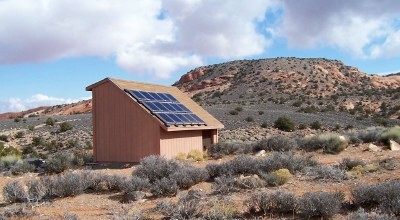
| We are our own power company with a small wind/solar power plant, which allows us to have an energy efficient refrigerator, electric lights, and a computer for communication. The freezer and the cookstove are propane while the woodstove is used for heating. We have a small gasoline generator to keep the batteries at full charge on the rare occasions we drag out the power tools for a big project. Being our own power company makes us conscious of our choices in electronics. "How much power does it use?" and "Is the convenience worth the power consumption?" are questions frequently asked. We do have one habit that we refuse to give up; oil lamps. By 10:00 PM, all electric lights are off and the oil lamp is burning. It's very calming after a hectic day. | |||||||||||||||||||||||||
|
|||||||||||||||||||||||||
|
|||||||||||||||||||||||||
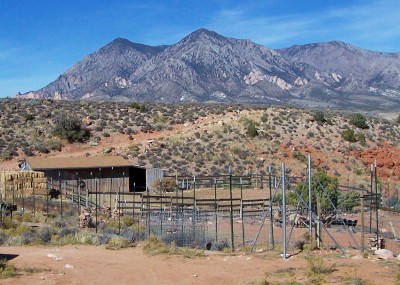
| A pole barn provides shelter for our critters should they choose to use it. It's large enough to house the critters and store some items on a temorary basis. We plan to store the tractor in there if we ever run out of uses for it. | |||||||||||||||||||||||||
| Our goal to have the least negative impact has been met satisfactorily so far. We don't have to go very far to watch the birds, especially the raptors. Desert bighorn sheep stop by once in a while to see what we are doing. They are particularly fond of watching our jeans dry on the clothesline. These are two examples of the increase of wildlife in our area giving us a clue that our presence in not disrupting the local ecology. | |||||||||||||||||||||||||
| To look as if we have been here for generations has far exceeded our expectations. Our careful choice of color schemes has fooled history professors and archeologists. The best confirmation came from two independent sources. We asked a pilot who flew over the ranch what the hogan looked like from the air. He said, "What hogan?" A relative sent a satellite image of the ranch asking us to confirm the site since all she could see was the white horse trailer. Even we had to look hard to identify the buildings. | |||||||||||||||||||||||||
| What is a ranch without livestock? We chose sheep. But not just any sheep. We chose Navajo-Churros, a rare and endangered breed, because... | |||||||||||||||||||||||||
|
|
||||||||||||||||||||||||