
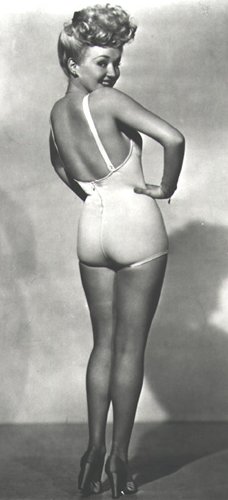
Not just any picture of Betty, but THIS picture, was probably the #1 pin-up of World War II. She got painted on the nose of bombers, and tens of thousands of GI's or Marines, far from home, listened to American songs broadcast by Tokyo Rose, and gazed wistfully at such pictures as this.
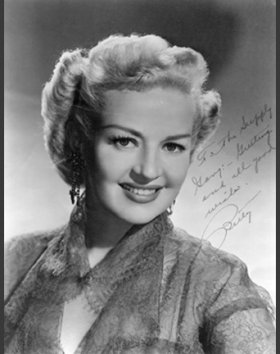
Women only come in one basic model, and they looked good in 1944 also.
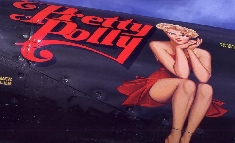
Betty's pretty shape probably inspired some of this WW II bomber nose art.
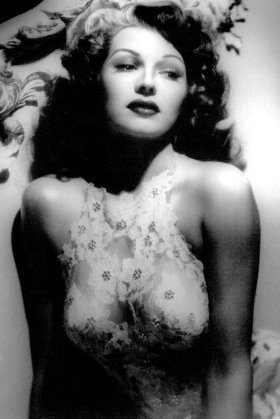
. . . was nothing to sneeze at either. And the picture, while good, does not show her flaming red hair.
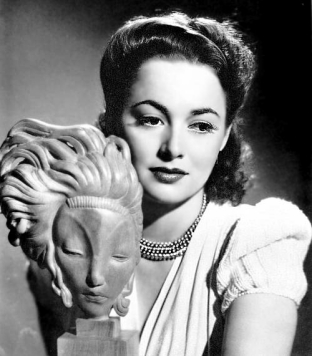
. . . was specifically requested by the historian of a vets organization as one of the "real" pin ups of WW II. He explained that in 1944 Olivia was pretty young and "fresh," but some actresses like Barbara Stanwyck were a bit "mature" for 20-yr-old soldiers. Olivia's most famous role was in "Gone with the Wind," but she made many other pictures.
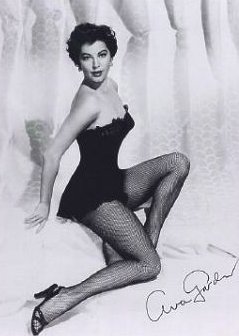
. . . with a darker look, a "drop dead" figure, and a sultry screen manner, Ava Gardner could probably have outmatched most of the so-called screen sex symbols today.
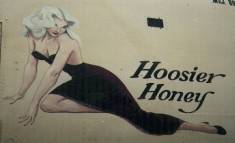
When you consider these pin-ups were stuck up on fighter control panels, jeep dashboards, stuck in helmet liners, and generally carried by American fighting men all over the globe - - - well, it's not hard to see where the inspiration came for the bomber nose art . . . now, is it?
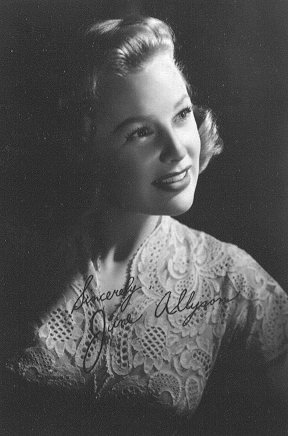
A filmography of June's career shows she was just getting started in the early 1940's. She was young and fresh to the G.I.'s. Furthermore, unlike some torchy siren, she was more "normal" to them-- the "girl next door." She was much admired by the American soldiers of World War II.