Webmaster's Warning:
Some of the descriptions below may upset younger readers.
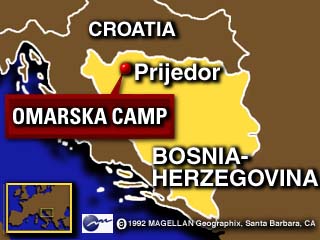
Choreographed chaos. Prior to the takeover of Prijedor, Serbs has sold old or faulty weapons to frightened Muslims, then took down their names. Later, those Muslims were executed for harboring "illegal" weapons. Prijedor's fate was sealed when, after the quiet takeover, about 150 non-Serbian citizens tried to take back the town center. Yugoslav Army, paramilitary and local units advanced street by street with tanks and small arms. Non-Serbs who survived were arresed, carted off to camps or killed. Homes were looted and razed. The chaos, carefully choreographed, would be repeated across Bosnia.
Even rape was organized. While some rapes were wanton or opportunistic, war-crimes reports charge that most were the result of a systematic campaign of terror. The Luka camp, near the town of Banja Luka, had specific "rape rooms," witnesses said. At the Viktor Bubanj Yugoslav Army barracks near Sarajevo, rooms were divided for oral and vaginal sex attacks. Camp commanders, local police, military officials, civilians and even local politicians either participated in the assaults or were aware of them, according to witnesses. Among the perpetrators who were mentioned in the United Nations reports: members of Arkan's paramilitary force.
Like every other element of the campaign, the rapes formed a pattern. Numerous Bosnian (sic: Muslim or Croat, Serbs do not refer to themselves as Bosnian) were raped so that they would bear Serbian babies. In some cases, physicians routinely examined female prisoners to see if they were pregnant. If they were, they got better treatment. Some women were raped by 10 or more men, war-crimes reports state, some until they died from beatings. Sheer terror was part of the method. In Kula Butmir, in Sarajevo, a father had both of his legs broken as Serbian guards forced him to watch his wife and two daughters, ages 8 and 13, repeatedly raped and then killed. Each daughter had her throat cut in front of the father. He survived, only to hang himself.
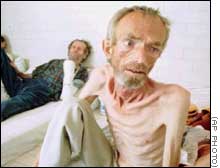
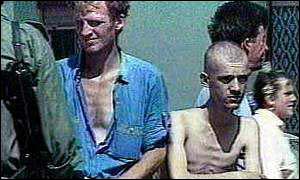
The detention camps where these and other atrocities occurred may provide some of the most usable evidence for prosecutors now charged with bringing war criminals to justice. Some of the worst camps were near Prijedor. Omarska, Keraterm and Trnopolje call to mind the camps of the Holocaust, if not by the number of inmates, then by the horrors that occurred within their post-and-wire perimeters. Investigators say that Omarska and Keraterm were "de facto death camps." Trnopolje served as a staging area for deporting women, children and the elderly. Rapes, beatings and other tortures were commonplace there, investigators say. Men were forced to rape women or other men. Some men were forced to bite off, or tear off with their hands, the testicles of fellow inmates; if they refused and many did, they were shot.
Or starved. At Keraterm, the daily food ration was a piece of bread and a spoonful of cabbage or beans. Detainees wasted away to skin and bones. Up to 13,500 persons may have been detained in these camps alone, and hundreds certainly died there before the horrors came to the world's attention in August 1992.