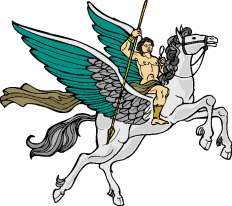

Erechtheum - temple from the middle classical period of Greek art and architecture, built on the Acropolis of Athens between 421 and 405BC. The Erechtheum contained sanctuaries to Athena Polias, Poseidon, and Erechtheus. The requirements of the several shrines and the location upon a sloping site produced an unusual plan. From the body of the building porticoes project on east, north, and south sides. The eastern portico, hexastyle Ionic, gave access to the shrine of Athena, which was separated by a partition from the western cella. The northern portico, tetrastyle Ionic, stands at a lower level and gives access to the western cella through a fine doorway. The southern portico, known as the Porch of the Caryatids see caryatid from the six sculptured draped female figures that support its entablature, is the temple's most striking feature; it forms a gallery or tribune. The west end of the building, with windows and engaged Ionic columns, is a modification of the original, built by the Romans when they restored the building. One of the east columns and one of the caryatids were removed to London by Lord Elgin, replicas being installed in their places
.
most ornate of the classic orders of architecture. It was also the latest, not arriving at full development until the middle of the 4th cent. B.C. The oldest known example, however, is found in the temple of Apollo at Bassae (c.420 B.C. The Greeks made little use of the order; the chief example is the circular structure at Athens known as the choragic monument of Lysicrates 335 B.C.. The temple of Zeus at Athens started in the 2d cent. B.C. and completed by Emperor Hadrian in the 2d cent. A.D. was perhaps the most notable of the Corinthian templesThe Temple of Athena Nike - part of the Acropolis in the city of Athens. The Greeks built the Temple of Apollo at Didyma, Turkey about 300 BC. The design of the temple was known as dipteral, a term that refers to the two sets of columns surrounding the interior section. These columns surrounded a small chamber that housed the statue of Apollo. With Ionic columns reaching 19.5 m 64 ft high, these ruins suggest the former grandeur of the ancient temple
.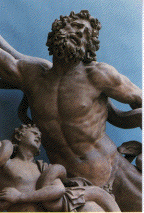
Sculpture moved in two directions. It moved away from the classical toward experimentation, with new forms and subjects. It also went back to the classical with aspects of certain favored works. The Pergamene Style developed as a form of expressionism that sought to ellicit specific emotions. Friezes using this style show figures breaking out of boundaries and invading the space in front of them.was much more theatrical, involving complex interactions of space and balancing opposing forces in 3-dimensional space. Dramatic contrasts of light and shade playing over complex forms set off figures in high relief because of deep undercutting. One characteristic of these sculptures was that they showed extreme expressions of pain, stress, wild anger, fear, and despair. The figures impose themselves on the spectator, demanding a response. TheNike of Samothrace is a good example
.