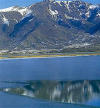
 in north-western Greece, won two Greek biologists the prestigious Goldman environmental prize. Protected by more national, European and international laws than any site in Greece, Mikri Prespa, which falls almost entirely within Greek territory, is one of the most biologically rich and diverse regions in EuropeAt an altitude of 850 meters, the lake is home to 260 bird species�including rare and threatened species�and the world's largest colony of the endangered
Dalmation pelican.
in north-western Greece, won two Greek biologists the prestigious Goldman environmental prize. Protected by more national, European and international laws than any site in Greece, Mikri Prespa, which falls almost entirely within Greek territory, is one of the most biologically rich and diverse regions in EuropeAt an altitude of 850 meters, the lake is home to 260 bird species�including rare and threatened species�and the world's largest colony of the endangered
Dalmation pelican.
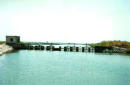 In 1974, Prespa was declared a National Park and wetland of international importance under the Ramsar convention, but by the 80s, intensive bean cultivation and use of commercial fertilizers and pesticides in the area had begun to undermine its intricate ecosystem.
An informal Friends of Prespa organization formed in 1987 eventually led to the formation of the Society for the Protection of Prespa (SPP), now an effective umbrella organization coordinating efforts by locals, government, other NGOs and international wildlife protection organizations with a holistic approach to the area.
In 1974, Prespa was declared a National Park and wetland of international importance under the Ramsar convention, but by the 80s, intensive bean cultivation and use of commercial fertilizers and pesticides in the area had begun to undermine its intricate ecosystem.
An informal Friends of Prespa organization formed in 1987 eventually led to the formation of the Society for the Protection of Prespa (SPP), now an effective umbrella organization coordinating efforts by locals, government, other NGOs and international wildlife protection organizations with a holistic approach to the area.
They have their work cut out for them, but the population of Dalmation pelicans has increased four-fold and is no longer threatened by extinction. Locals are also playing a key role in the development of the area, through sustainable agriculture, responsible fishing and modest eco-tourism activity.
 Tradition and culture blossomed alongside the natural beauty and with this came tourism which today makes Keri one of the highest quality tourist destinations on the island as it combines all the desirable elements of nature, tradition and culture.