The Communities
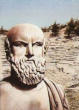 Aeschylus is a greek dramatist the eariest of the citys great tragic poets. He was born in the city of Eleusis, near the athens in 525 BC and died in 456. he fought succesfully against the Persian at Marathon in 490 BC.. As the predecessor of Sophocles and Euripides, he is the founder of Greek tragedy.
, at Salam�s in 480 BC, and possibly at Plataea in the following year. He made at least two trips, perhaps three, to Sicily, where on his final visit he died at Gela. A monument was later erected there in his memory.
It was a major step for drama when Aeschylus introduced the second actor. He also attempted to involve the chorus directly in the action of the play. Aeschylus is said to have written about 90 plays. His tragedies, first performed about 500 BC, were presented as trilogies, or groups of three, usually bound together by a common theme, and each trilogy was followed by a satyr drama (low comedy involving a mythological hero, with a chorus of satyrs). The titles of 79 of his plays are known, but only 7 have survived.
Aeschylus is a greek dramatist the eariest of the citys great tragic poets. He was born in the city of Eleusis, near the athens in 525 BC and died in 456. he fought succesfully against the Persian at Marathon in 490 BC.. As the predecessor of Sophocles and Euripides, he is the founder of Greek tragedy.
, at Salam�s in 480 BC, and possibly at Plataea in the following year. He made at least two trips, perhaps three, to Sicily, where on his final visit he died at Gela. A monument was later erected there in his memory.
It was a major step for drama when Aeschylus introduced the second actor. He also attempted to involve the chorus directly in the action of the play. Aeschylus is said to have written about 90 plays. His tragedies, first performed about 500 BC, were presented as trilogies, or groups of three, usually bound together by a common theme, and each trilogy was followed by a satyr drama (low comedy involving a mythological hero, with a chorus of satyrs). The titles of 79 of his plays are known, but only 7 have survived.
Euripides work, which was quite popular in his own time, exerted great influence on Roman drama. In more recent times he has influenced English and German drama, and most conspicuously such French dramatists as Pierre Corneille and Jean-Baptiste Racine.
He was born in 480 BC and died in 406 BC.Euripides represented the new moral, social, and political movements that were taking place in Athens towards the end of the 5th century BC.
It was a period of enormous intellectual discovery, in which "wisdom" ranked as the highest earthly accomplishment. Euripides was the youngest of the three principal fifth-century tragic poetsHis plays began to be performed in the Attic drama festivals in 454 BC, but it was not until 442 BC that he won first prize.
This distinction, despite his prolific talent, fell to him again only four times. Aside from his writings, his chief interests were philosophy and science.
Anaxagoras had just proven that air was an element, and that the sun was not a divinity but matter.
New truths were being established in all departments of knowledge, and Euripides, reacting to them, brought a new kind of consciousness to the writing of tragedy.
His interest lay in the thought and experience of the ordinary individual rather than in the experiences of legendary figures of the heroic past.