Sculptures
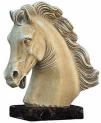 Zeus's Olympia and Apollo's Delphi. While the Olympic games, highlighting civilized competition among Greeks, may claim precedence, the oracle at Delphi provided an essential meeting place for the exchange of information and ideas. In this, Delphi became associated with Greek moral and intellectual ideals, as evidenced by the mottos on Apollo's temple there: 'Know Thyself' and 'Everything In Moderation'.As the Aegean area was emerging from the Dark Age, two sites served to forge the cultural unity of the Greek world: Apollo's transition from the arrow-hurling, angry deity of the Iliad to the spokesman for self-knowledge and moderation speaks poignantly of the classical Greek legacy.
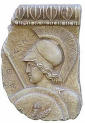 During the time, he spoke through oracles to the suppliants from throughout the Greek world--and beyond. A later sculptural depiction of the omphalos is displayed in the Delphi Museum.Apollo lived at Delphi for nine months of the year Apollo's sanctuary was built onto a hillside, with a spectacular view down to the gulf of Itea, the arrival point for many visitors.
Delphi was considered the center of the universe, which was represented by the omphalos, the navel.
During the time, he spoke through oracles to the suppliants from throughout the Greek world--and beyond. A later sculptural depiction of the omphalos is displayed in the Delphi Museum.Apollo lived at Delphi for nine months of the year Apollo's sanctuary was built onto a hillside, with a spectacular view down to the gulf of Itea, the arrival point for many visitors.
Delphi was considered the center of the universe, which was represented by the omphalos, the navel.
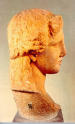 The traveler journeyed up to the Altis (the sacred area,) but there would often be a long wait before the last climb, within the sacred area, to Apollo's temple. One had to appeal to the priests governing the site to make a request of Apollo. Then, before entering Apollo's sanctuary, one cleansed at the sacred spring.The entrance to the Altis, at the lower end of the sanctuary, marks the start of the sacred way, a switchback path that leads up to the temple.