Here is a selection of some of of my very favourite photographs. They are mostly from Cornwall or Carnac in Brittany, where I was disappointed to find that the alignments are all fenced off, a bit like Stonehenge. Tsk...
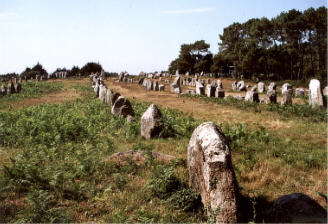 This is a photo of part of the Menec alignment at Carnac. Brittany has a justifiable reputation for it's megalithic monuments, literally thousands of standing stones which date from the neolithic period (5000-2000 BCE). The people who built this alignment, and others similar to it, were already growing crops, rearing livestock, making pottery and were extremely skilled at working stones and flint, to make tools and weapons. The purpose of the alignments remains a mystery. Many theories have been offered, including the idea that the stones of Carnac are just one part of a massive lunar observatory which spans much of the Morbihan region of Brittany...
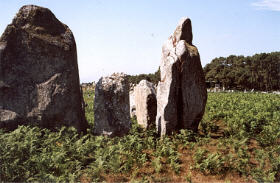 Some other archaeological boffins, like Baldrick, have deduced that our ancestors erected these monuments for religious reasons. They are thought to have worshipped the sun, or at least, the sun was the chief symbol of their gods and goddesses. I'd go for both lunar and solar significance, as the ability to predict eclipses would have been like magic to these simple savages. But then what do I know? Which leads us neatly on to the other big question...How the jillock did they shift the things? Again, archaeological evidence would seem to suggest big lorries made out of logs tied together, which the people used by putting their feet through the bottom and running along. I think this is unlikely. These people were skilled and they probably used big rollers and pulley systems, then held them in place by digging pits filled with smaller rocks. It wasn't like the flintstones you know.....
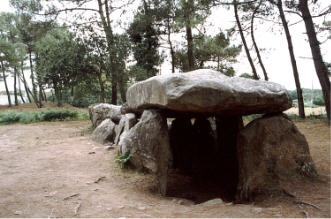 This picture shows the megalithic burial chambers of Mane Kerioned situated near Carnac. The tumulus, known as La butte aux fees, or the "fairies' mound", originally covered three passage graves. Most of the earth has been removed over the years, although one of the graves is still half buried. The inside of the graves show some quite spectacular carvings, with stylised designs including snakes and axes, and goddess figures to protect the deceased. Before you ask, no, I didn't get any photos of these superb carvings I speak of, as the battery on my Dad's flash packed up when we went inside the tomb...Still, they're well worth a look if you can find them. Clue: They're right next to the car park, you don't need to go on a mile long wild goose chase through all the woods like we did. But we did get to nose at some very posh French people's houses. Nice.
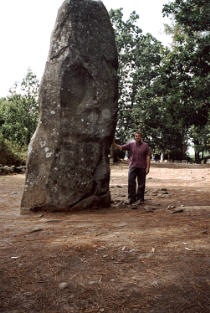 This is me next to a whopping great menhir known as "Le Geant". The size of menhirs, or single standing stones, varies greatly, even up to 20 metres in height in some cases, such as the great menhir at Locmariaquer, which got smashed into bits by either an earthquake, or a bolt of lightening, depending on who you ask. The largest menhirs still standing are between 10 and 12 metres high and can weigh in excess of 80 tonnes. They were probably put in place by building a steep embankment next to the hole dug for the menhir, and then sending the stone down the embankment on wooden rollers and rocking it into place. Imagine that. Go on. Menhirs made of wood may have existed, and were probably a lot less hassle than stone ones. You can just make out the graffiti which some thoughtful people had decided to spray on to this ancient monument.