Magic
Disclaimer
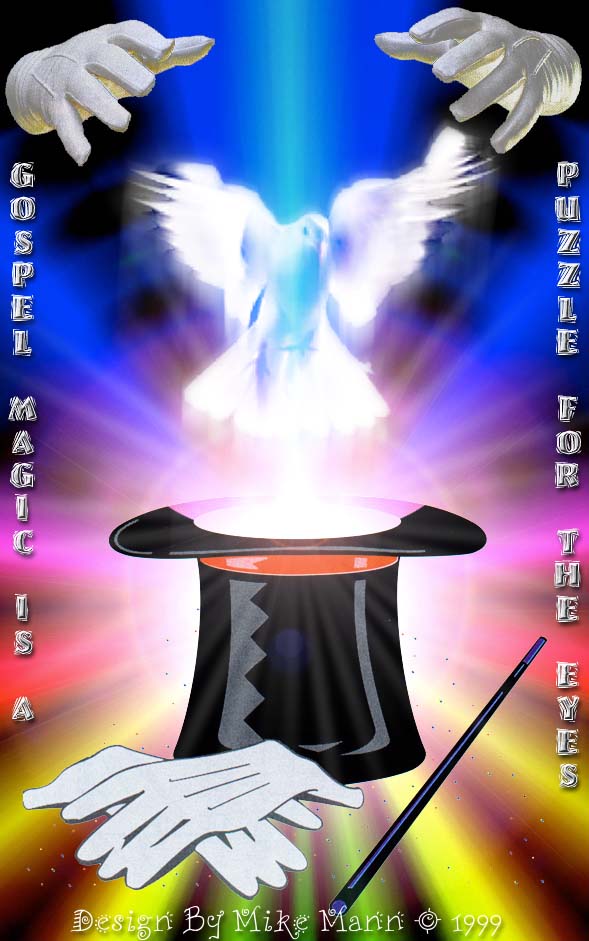
Gospel
magic is a puzzle for the eyes, an object lesson with a blessed surprise!
We have for many
years used illusions as object lessons to reinforce Bible lessons that we teach.
We have belonged to the Fellowship of Christian Magicians, a national
organization with several thousand members. We sometimes use the word magic or
magic-trick when working with children because many children don't understand
the word illusion. We once used the word illusion throughout a performance.
Everything had gone well, with a good response from the audience. One child
raised his hand afterwards and asked politely, "but when are we gonna see
the magic?" The child had not comprehended the word illusion. When we told
the child we had just finished the trick, he still didn't understand what an
illusion was.
The following is
a definition of the word magic, as we perform and as you see on television:
A
definition of magic that is found in Webster's Dictionary is the art of
producing illusions by sleight of hand, etc. A definition of an illusion is a
false perception or conception of what one sees, where one is, etc.
All magic
involves theatrics.
Theatrics
are a dramatic or comic performance for the purpose of entertainment.
Magic therefore
is theatrical illusion, which is the art of entertainment using misdirection,
sleight of hand, and props. A person sees something that looks impossible happen
before their very eyes, if the magician has successfully concealed his means of
doing the trick. Any normal person can do any magic trick if that person has
learned the secret behind the trick. Magicians pay each other for the gimmicks
or instructions to how the trick works. Factories around the world produce and
sell many of these copyrighted tricks. A person only has to pay the price of the
trick to know the secret. Knowing the secret or the gimmick alone does not make
a good magician. Hundreds of hours of practice behind the scenes and than many
performances in front of audiences are what it takes to be able to properly
present the illusion without the audience seeing the gimmick or figuring out the
secret behind the trick.
Magicians do not
tell how their tricks are done because if everyone knows the secrets behind the
tricks, then the amazement of seeing something seemingly impossible happen is
gone. The trick or tricks become dull and the magician is out of a job, along
with the craftsman in the factory that, produced the trick. If all secrets to
all tricks were known, then there would be no magicians, because the
entertainment value would be no more.
Today the word "magic" is
associated with illusion. Modern Stage Magic should never be confused with black
magic which is, by Webster's definition magic with an evil purpose; or sorcery.
Strong’s Concordance defines sorcery as drug use. See (pharmakeia)
where the
word pharmacy comes from.
From Strong’s Bible Concordance:
Strong's
Number 5331
Transliterated
pharmakeia
Phonetic
far-mak-i'-ah
Text
from 5332; medication ("pharmacy"),
i.e.
(by extension) magic (literally or figuratively) --sorcery, witchcraft.
We have nothing
to do with sorcery, witchcraft, or anything else. We merely use illusions as
visual puzzles to hold an audience’s interest while we convey the Gospel
message.
Remember:
Magicians are some of the most honest people in the world in that it’s understood
they're going to trick you before they do, unlike many politicians
and some used car salesmen.