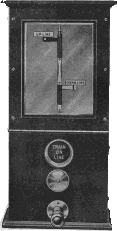
-B) THE TIME WHEN THE SWITCHES ARE ALTERED MUST BE ENTERED IN THE TRAIN REGISTER BOOK, THUS:
SWITCHED IN AT... ... ... ... ... ... ... ... ... ... ... SWITCHED OUT AT... ... ... ... ... ... ... ... ... ... ... .
-C) THE SIGNALMAN MUST RECORD IN THE TRAIN REGISTER THE FULL NAMES OF THE BOX (ES) HE IS WORKING WITH, AND AT THE TIME E COMMENCES TO WORK WITH THEM. THE BOX IN THE UP DIRECTION MUST BE ENTERED IN THE PAGE FOR UP TRAINS, AND THE BOX IN THE DOWN DIRECTION FOR DOWN TRAINS.
-D) EXCEPT WHERE INSTRUCTIONS TO THE CONTRARY ARE ISSUED BY THE DIVISIONAL SUPERINTENDENT OR DISTRICT TRAFFIC MANAGER WHEN A TRAIN CALLS AT A STATION WHILE THE BOX IS SWITCHED OUT, THE SIGNALS MUST BE PLACED AT DANGER FOR ITS PROTECTION.
�WHERE THE SIGNALS ARE NOT REQUIRED TO BE PUT TO DANGER WHEN A TRAIN IS STOPPED AT A STATION FOR AN ORDINARY PERIOD, THEY MUST NEVERTHELESS BE PLACED TO DANGER IF THE TRAIN REMAINS STATIONARY FOR AN UNUSUALLY LONG TIME FROM WHATEVER CAUSE IN ACCORDANCE WITH RULE 178 (C).
-E) WHERE THE ARM REPEATER AND THE BLOCK TELEGRAPH INDICATOR FOR THE CORRESPONDING LINE ARE INTERLINKED THE SIGNALMAN, BEFORE SWITCHING IN, MUST ASCERTAIN WHETHER THE BLOCK INSTRUMENT IS PEGGED, AND IF SO, WHAT INDICATION IS BEING GIVEN, AS IT WILL NOT BE POSSIBLE FOR �LINE CLEAR� TO BE PEGGED BY A SIGNALMAN SWITCHING IN UNLESS THE DISTANT SIGNAL HAS FIRST BEEN PUT TO CAUTION. IF NECESSARY, IT CAN AGAIN BE LOWERED.
�A SPECIAL SWITCH IS PROVIDED IN SOME INSTANCES TO ENABLE THE SIGNALMAN TO SWITCH IN THE TELEPHONE FOR THIS PURPOSE.
�In the event of any failure of the block instruments, bells or gongs, so that the necessary signals cannot be sent and received in the ordinary way, the following instructions must be observed: �
-A) (i) A train must not in any circumstances be allowed to pass a signalbox into that section of the line where the failure exists (whether the failure has occurred to the instruments for one or both directions) without having been previously brought to a stand and the driver and rear guard, also the driver of an engine assisting in rear, if any, advised of the failure. The signalman must, before handing over the train staff or ticket to the Driver, or Drivers, instruct them to proceed cautiously through the section.
(ii) The signalman at whose box the block instruments, bells or gongs that have failed must advise the signalman at the other end of the section of the failure by speaking instrument. Where speaking instruments are not available, THE DRIVER OF THE FIRST TRAIN CAUTIONED MUST BE HANDED A COPY OF FORM 4981 PROPERLY FILLED UP AND SIGNED, AND INDICATING THAT THE INSTRUMENTS, BELLS OR GONGS HAVE FAILED, AND BE INSTRUCTED TO STOP AT THE BOX IN ADVANCE AND HAND THE FORM TO THE SIGNALMAN THERE.
(iii) When the bells or gongs only, or bells, gongs and block instruments, have failed and a speaking instrument is available WITH THE BOX IN ADVANCE, the signalman must, unless instructions to the contrary are given, send the necessary bell signals as messages on the speaking instrument, for example: �
Is line clear for*... ... ... ... ... ... ... ... ... ... ... ... ... ... ... ... ... ... ...
Line is clear for*... ... ... ... ... ... ... ... ... ... ... ... ... ... ... ... ... ... ... ..
SECTION CLEAR, BUT STATION OR JUNCTION BLOCKED FOR*... ... *Description of train to be given.
*Train Entered Section ... ... ... ... ... ... ... ... ... ... ... ... ... ... ... ... ...
*Train out of section... ... ... ... ... ... ... ... ... ... ... ... ... ... ... ... ... .
�And any other block telegraph signals.
�A signalman sending signals as above described must satisfy himself that he is speaking to the signalman who should receive the communication.
�When the bells or gongs only have failed, the block instruments must be worked in conjunction with the speaking instruments.
�When the block instruments only have failed, the bell or gong signals must be given in accordance with the Regulations.
�A train must not be allowed to enter the section until the �Is Line Clear?� signal has been accepted by the signalman in advance.
(iv) When the bells or gongs have failed, and speaking instruments are not available, OR WHERE SUCH INSTRUMENTS ALSO HAVE FAILED, a train must not be allowed to follow another train until the time usually taken by the preceding train to clear the section, after allowing for the train having been stopped, has elapsed, but in no case with an interval of less than three minutes. Where a tunnel intervenes in a block section, an interval of not less than ten minutes must be allowed between two trains, unless the signalman can satisfy himself that the tunnel is clear.
�A SIMILAR COURSE TO THAT SHOWN IN THE PRECEDING CLAUSES MUST BE FOLLOWED IN CASE THE SIGNALMAN AT �A� CANNOT GET ANY OF HIS SIGNALS ACKNOWLEDGED BY �B� AND HAS NO NOTICE OR IMITATION OF ANY KIND THAT �B� HAS RECEIVED THEM. THE DRIVER OF THE NEXT TRAIN GOING TOWARDS �B�, IN SUCH CASE, BESIDES BEING STOPPED AND TOLD TO GO CAUTIOUSLY, MUST BE INSTRUCTED TO EXPLAIN THE CIRCUMSTANCES TO THE SIGNALMAN AT �B�. THE DRIVER HAVING DONE THIS, MEANS MUST BE TAKEN, IF NECESSARY, BY SENDING A MAN BACK OR OTHERWISE, TO INFORM THE SIGNALMAN AT �A� OF THE CAUSE. IF THE INSTRUMENTS ARE IN ORDER AT �B� THE �TESTING� SIGNAL MUST BE GIVEN TO THE SIGNALMAN THERE, AND IF THIS IS REPLIED TO WORKING BY BLOCK TELEGRAPH MUST BE RESUMED.
(v) In the event of a failure as indicated in paragraph (iii) the driver of the first train travelling on an adjoining line must be advised of the circumstances, and instructed to proceed cautiously through the section.
�In cases where trains on one line have to be worked in accordance with paragraph (iv), all trains on the next adjoining line or lines must be stopped and the driver instructed to proceed cautiously. Trains on the next adjoining line need not, however, be stopped and cautioned on this account when the failure occurs on a line not worked in accordance with the Block Regulations.
(vi) When trains are being signalled inn accordance with paragraph (iii), all signals sent on the bell, gong or speaking instrument, must, unless instructions issued to the contrary are given, be recorded, whether the ordinary block signals are usually recorded or not, and when trains are being worked in accordance with paragraph (iv), the departure time of each train must be recorded.