



Willem Dafoe
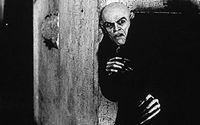
 Nominated
for: Best Supporting Actor
Nominated
for: Best Supporting Actor
Breif Biography:
Willem
Dafoe doesn't see
himself as a 20-million-dollar man. He eschews the Hollywood limelight,
jealously guards his privacy, and when he's not making films, lives to
create notably odd characters in avant-garde theatre pieces. His roles
over the years have been actors' dreams —
Raised
in Wisconsin, Dafoe is the second-youngest of eight children who all look
and sound alike. But the similarities end there: Willem was the only Dafoe
to follow an artistic bent, while the rest of the brood took the well-trod
professional route, becoming lawyers, nurses, and doctors. Dafoe's acting
career got off to a rather infamous start with an appearance in a so-called
soft-porn video, an endeavor for which high school disciplinarians rewarded
the young "thespian" with a suspension. (For his part, Dafoe defended
his work in a video magazine: "I was profiling three people in the school
that were out of the ordinary.") Drama courses at the University of Wisconsin
failed to hold his interest, so Dafoe set out for the big city —
Dafoe and LeCompte eventually broke from the Performance Group to become founding members of the now-celebrated Wooster Group, home also to offbeat monologist Spalding (Swimming to Cambodia) Gray. The group's unique multimedia-deconstructionist style of theatre prepared Dafoe well for some of the more diverse roles he's played throughout his career. Dafoe remembers one piece, Hula, in particular: "I had to dance while wearing nothing but a cellophane grass skirt, sometimes with my penis painted green." In another, he portrayed a chicken heart. ("You get under a red tent and make it pulsate.") After dozens of shows, he made his film debut as a featured extra in Michael Cimino's ill-conceived Heaven's Gate. Bouncing back from what turned out to be one of the biggest cinematic bombs of all time wasn't easy, but Dafoe managed to do just that with his subsequent role as a poet-biker in Kathryn Bigelow's The Loveless. In 1985, he landed his first sizable role in William Friedkin's To Live and Die in L.A., in which he imbued his memorably twisted counterfeiter with a depth and viciousness lacking in most screen villains. A year later, he earned a breakthrough (and Oscar-nominated) role as the messiah-like Sergeant Elias in Oliver Stone's Platoon. The image of the betrayed sergeant fallen to his knees and peppered with bullets as his own men leave him behind remains indelibly etched in the minds of American moviegoers.
Non-mainstream
performances in mainstream films followed: Alan Parker cast Dafoe as a
straight-laced F.B.I. agent in 1988's Mississippi Burning, and
the following year, Stone tapped him to play a bitter disabled veteran
in Born on the Fourth of July. That same year, Dafoe found himself
in the headlines due to his title-role assignment in one of the most controversial
films of all time: Martin Scorsese's The Last Temptation of Christ.
There are few actors that could, or would, walk that kind of razor's edge
—
It's been quite some time since Dafoe has had to make a film for the money, so he's had the luxury of being discriminating in his choice of roles: "I don't get paid seven million for the movies I do, and when I'm top banana, they're not big studio movies. . . . I can switch hit, I can go and make a small movie, I can make a big movie." He definitely has divided his efforts between big and small projects: In the early '90s, he played the loathsome Bobby Peru in David Lynch's Wild at Heart, a redemptive drug dealer in Light Sleeper, T.S. Eliot in Tom & Viv, and a lawyer who finds himself crotch-deep in some very nasty Madonna-related business in Body of Evidence. In recent years, Dafoe has popped up as the ill-intentioned Caravaggio in the sweeping 1996 epic The English Patient; continued his mean streak by playing the heavy in the execrable Speed 2: Cruise Control; co-starred alongside Nick Nolte and Sissy Spacek in writer-director Paul Schrader's shattering adaptation of the Russell Banks novel Affliction; and visited the virtual-reality realm in the David Cronenberg sci-fier eXistenZ.
Pictures:
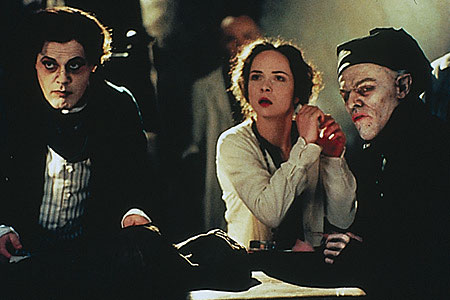
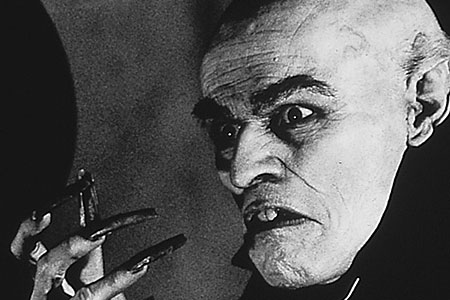
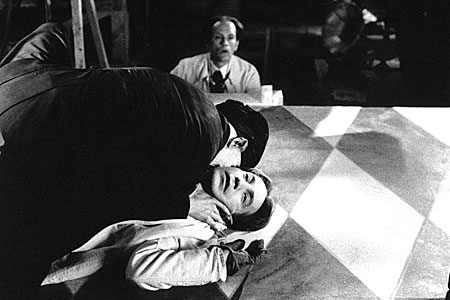
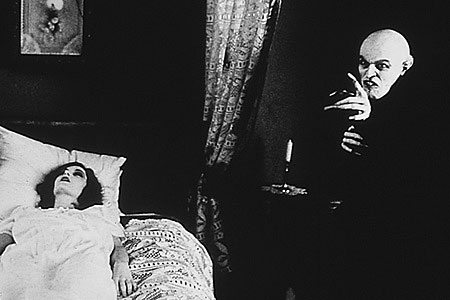
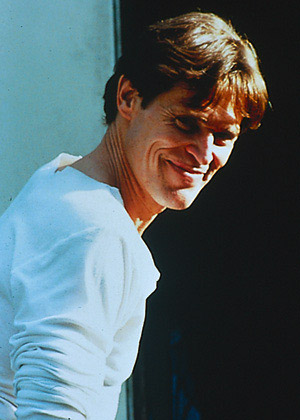
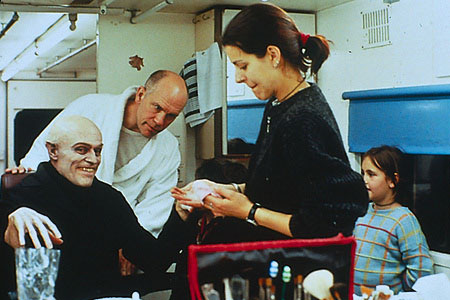
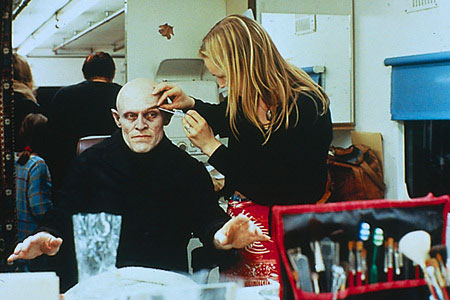
Makeup effects:
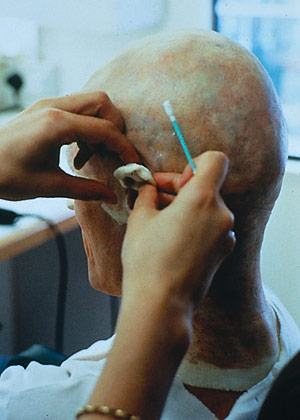
 |
Weirdness is not my game. I'm just a square boy from Wisconsin.
- Willem Dafoe-