
A very important biological fluid in which a buffer plays an important role in is maintaining pH in blood plasma. As we all know (or at least I would hope you know) we have blood in our bodies. In all multicellular organisms, the fluid within the cell and the fluids surrounding the cells have a characteristic and nearly constant pH. This pH is maintained in a number of ways, and one of the most important is through buffer systems.
In blood plasma, the carbonic acid and hydrogen carbonate ion are used. In this type of buffer, carbonic acid (H2CO3) is the hydrogen ion donor (the acid) and hydrogen carbonate ion (HCO-3) acceptor (the base).
H2CO3 H + <--> HCO3
* The pH of arterial blood plasma is 7.40.
The concentrations of hydrogen carbonate ions and of carbonic acid are controlled by two independent functioning systems. Carbonic acid concentration is controlled by respiration, that is through the lungs. Carbonic acid is in balance with dissolved carbon dioxide gas.
H2CO3<-->CO2 + H2O(1) ( this is how we will get the carbonic acid)
In the lungs, excess dissolved carbon dioxide is exhaled as carbon dioxide gas.
CO2(aq)<-->CO2(g)
* Any excess hydrogen carbonate ions are excreted in your urine.
A normal metabolism releases mainly acidic materials. These acids react with the hydrogen carbonate ion and that forms carbonic acid.
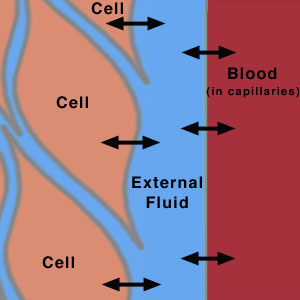
- In order to maintain the proper chemical composition inside the cells, the chemical composition of the fluids outside of the cells must be kept constant. In biology this dependability is known as homeostasis. The body has many ways of maintaining homeostasis however, the most significant way that the pH of the blood is kept stable (well for the most part) is by buffers dissolved in the blood. Organs also play a role in maintaining homeostasis by enhacing the function of the buffers. The kidneys are a huge help by removing excess chemicals from the blood.
- The pH of the blood should ideally be maintained at 7.4. If the pH gets too low, below 6.8 or gets higher than 7.8, death may very well occur. Luckily, we have buffers in the blood to protect against larger changes in the pH that could be fetal!! If your blood becomes too acidic buffers help make it not so acidic. If your blood is not acidic enough buffers help make it more acidic. Buffers are amazing and they make living possible.