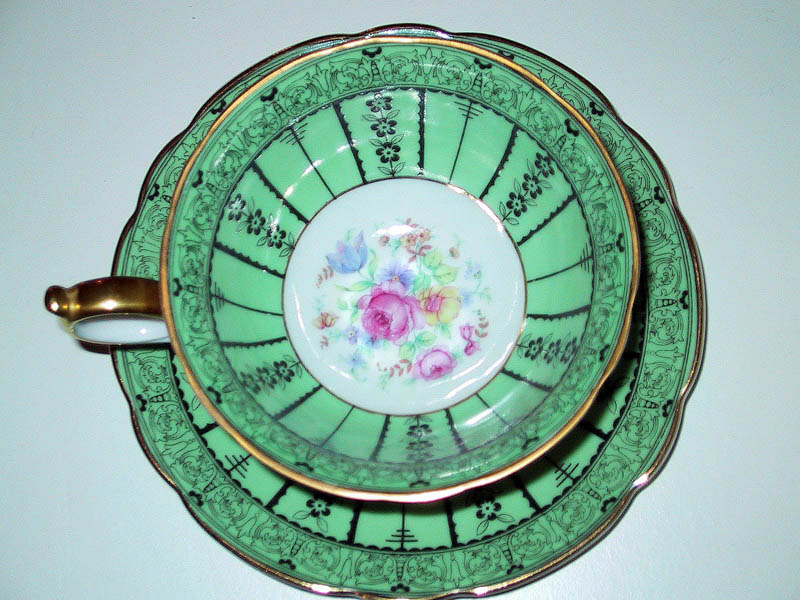
The Tradition of Tea Time
The concept of tea as a formal affair began as an upper-crust social ritual in the Victorian era. It is a delicate affair that brings out the civilized beings in all of us. High Tea originated as a British working class tradition. The "high" referred to the way it was taken, sitting atop stools in a tea shop or standing at a counter or buffet table. It was a cross between afternoon tea and supper, and for many it was the main meal of the day.
Afternoon Tea
Afternoon Tea is normally served in the late afternoon, between lunch and dinner. It functions as a snack as well as a get-together, and the menu usually includes scones, cookies, and bread and preserves. Normally, invitations are extended ahead of time, as this is a time for seeing old friends as well as for making new ones.
Usually, the hostess], pulls out all the stops when preparing the presentation of the food and tea. If possible, a silver service is used (although classy-looking silver-plate is acceptable). An alternative is an elegant china tea set. For either, china cups and saucers are a necessity. These can be of a set, or creatively mismatched, as long as they look good together. The exception to using china would be for a homey, country-style tea, for which one would use an earthenware pot and sturdy cups or even mugs.
The most important aspect of a tea is the presentation of the table. A linen or damask tablecloth is a must, with lace being an elegant alternative, and matching (or complimentary) cloth napkins are preferable to paper.
A vase of flowers adds a lovely touch, particularly if the flowers are freshly cut from the garden (although flowers from a florist are perfectly acceptable). Here, you can feel free to be creative. Pansies, sweet williams, violas, and sweet peas are a quaint, charming choice, and in keeping with a Victorian-style tea, while roses and irises lend a touch of drama to the presentation. For a country-style tea, you may prefer to use sunflowers or nasturtiums, and to put them in an earthenware beaker instead of a crystal or porcelain vase.
Present the food in an interesting way -- this should be central to the table presentation. Consider a three-tiered serving tray, china plates, small silver trays, or a shallow wicker basket (particularly for a country-style tea). If you're serving cake, a cake stand is far prettier than just a plate. Consider serving jams, preserves, and butter in small cut-glass or porcelain bowls.
I don't consider myself an anglophile, neither am I a nut for things Victorian.� But years ago I discovered and then eagerly embraced the rituals of teatime.� It's not about envying the English or pining for the past.� Afternoon tea is, simply put, one of the best ideas I've ever stumbled across. In our hectic world, who doesn't need to slow down a bit?� I love preparing and serving tea to friends, but it's also a gift I give to myself. If you enjoy the taste of hot tea and all you want is a quick cup, you already know how to fill a mug with tap water, drop in a teabag, and microwave it for a couple of minutes.� Yes, that will quench your thirst, but if you don't already know that "having tea" is not just a physical respite but a mental and even an emotional one, I'm going to make it my mission to enlighten you. I don't know a lot about the Japanese Tea Ceremony, but I do know that for the participants, it's not so much about drinking a hot beverage, but recharging spiritually.� The elaborate preparation, both on the part of the host and the guest, is meant to encourage calm reflection. There's something in that.� After all, you can't gulp down a piping-hot beverage.� So even if you've been ripping through a busy day, you are forced to change gears, to slow down and sip.� It takes a few minutes to prepare a cup of tea, and then a few more minutes to drink it.� But anyone can find ten minutes somewhere,� whether it's immediately after a busy day at work, or during that golden time when your toddler is finally down for her nap! The Japanese tea masters were onto something. The deliberate act of preparing and then drinking tea slows down busy minds and encourages relaxation.� We're hearing a lot of medical claims these days about the benefits of drinking tea, but I can't help wonder whether those findings don't have more to do with the attitudes of tea drinkers�than the physical properties of tea. So drinking tea will reduce your chance of having a stroke, will it? Perhaps. But maybe medical science should take into account that most people who habitually drink tea readily confess they do so because sipping tea is relaxing. Could that have anything to do with lowering the risk of stroke, do you think? "I came by yesterday," a friend complained to me recently, "but you weren't home. And I really needed a cup of tea!" This woman is a dear friend and I know she�needed to talk about some tough things that are going on in her life. But why was she so "desperate" for a cup of tea? It wasn't the drink she was thirsty for, it was the ritual that has been woven into the fabric of our friendship. She knew we would chat about mundane things while I heated water and spooned fragrant tea leaves into a teapot. By the time�I set a pretty cup and saucer before her and filled it with the soothing beverage, she would have begun to relax a little. Then we'd talk seriously and of course I'd pray with her. And she would leave my house feeling recharged. Isn't it interesting what you can start�with a comforting cup of tea?
Popular Tea Types For Tea Service
English Breakfast:
The prototype of this most popular of all teas was developed over a hundred years ago by the Scottish Tea Master Drysdale in Edinburgh. It was marketed simply as "Breakfast Tea". It became popular in England due to the craze Queen Victoria created for things Scottish (the summer home of Victoria and Albert was the Highland castle of Balmoral). Tea shops in London, however, changed the name and marketed it as "English Breakfast Tea". It is a blend of fine black teas, often including some Keemun tea. Many tea authorities suggest that the Keemun tea blended with milk creates a bouquet that reminds people of "toast hot from the oven" and maybe the original source for the name. It should be offered with milk or lemon. (One never serves lemon to a guest if they request milk-the lemon is never used. It would curdle the milk.) It may also be used to brew iced tea.
Irish Breakfast:
The Irish have always been great tea drinkers, and they drink their tea brewed very strong. In fact, there is a common tea saying among the Irish that a "proper cup of tea" should be "strong enough for a mouse to trot on." Along the same line, the Irish believed there were only three types of tea fit to drink. The first and best of quality was in China with the Chinese, of course. The second best was sent directly to Ireland. The third and lowest in quality was sent to the English. Irish Breakfast because of its robust flavor is usually drunk only in the morning (except for the Irish who drink it all day). Usually it is blended from an Assam tea base. Because of its full taste, it is served with lots of sugar (loose is considered correct here-sugar cubes are an English matter) and milk (milk, NEVER CREAM, is served with tea. Cream is too heavy for tea and belongs with coffee. The milk is always served at room temperature, never cold, as it cools the tea too quickly).
Caravan:
This excellent tea was created in imperial Russia from the teas brought overland by camel from Asia. Because the trade route was dangerous and supplies unsteady, Russian tea merchants blended the varying incoming tea cargoes, selling a blend rather then a single tea form. It was usually a combination of China and India black teas. Like the Irish, the Russian favored this tea all day long, but modern tea drinkers seem to prefer it at breakfast and with elegant afternoon tea fare. It is served with milk and sugar. Russian are fond of very sweet tea, often adding honey and jam to their national beverage. Lemons studded with cloves may also be offered correctly.
Earl Grey:
Earl Grey (1764-1845) was an actual person who, though he was Prime minister of England under William IV, is better remembered for the tea named after him. Tea legends say the blend was given to him by a Chinese Mandarin seeking to influence trade relations. A smoky tea with a hint of sweetness to it, it is served plain and is the second most popular tea in the world today. It is generally a blend of black teas and bergamot oil.
How to Make
a
Perfect
Pot of Tea
Here's
the equipment you'll need:
Not too tricky so far, right? Now before we get
started, let's talk about the water.
It must be very, very hot in order for the tea to steep properly. But don't boil the "life" out of it, or your tea will taste flat. Take the pan or teakettle off the heat just before it breaks into a rolling boil. (You know, when the water makes those cute little bubbles on the edges of the saucepan.)
And now we'll make the
tea:
Additional notes:
Send eMail to - Joseph Lynn Oliver