|
Home | Archive | Links | Join Discussion! | Send Message | About CellNEWS |
 |
|||
|
First UK Stem Cell Line Generated at King’s College Wednesday, 13 August 2003
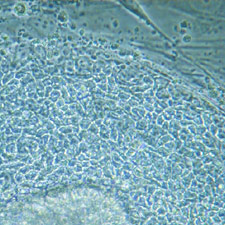
The potential therapeutic value of hES in the treatment of many chronic debilitating diseases has captured the public and professional imagination, but these cells are rare and traditionally difficult to grow. However, King’s College London researchers based at Guy’s Hospital have reported in Reproductive Biomedicine Online that they have generated new hES lines thanks to a different approach to hES derivation. Dr. Stephen Minger of King’s College London says: ‘We are very excited about this development. Human embryonic stem cells are found in the earliest stages of development and are capable of giving rise to all the different types of cell in the body. This means their possible therapeutic uses are almost endless and could help in the fight against diseases ranging from diabetes to Parkinson’s.’ Dr. Minger also told the BBC: ‘The things we're most interested in are Type 1 diabetes and Parkinson's disease. We already know that putting cells into patients with those diseases works but there's a significant shortage of transplantable material.’ ‘So our idea is to try to change these cells specifically into cells that make dopamine or cells that make insulin,’ he said.
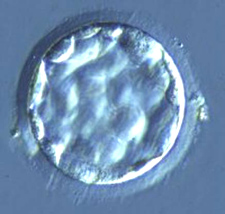
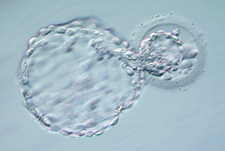
The research has been made possible by some patients undergoing preimplantation genetic diagnosis (PGD) at the Assisted Conception Unit, Guy’s and St Thomas’ Hospital, London. After genetic testing, embryos found to be unaffected by the specific serious genetic disorder for which they are at risk, are replaced into the patient in the hope of establishing a pregnancy free of the genetic disease. The remaining embryos, which may carry the disease-causing genes, are unsuitable for replacement and would normally be allowed to perish. It is cells from these early embryos (at the blastocyst stage at day five consisting of 60 – 100 cells) that were used for the generation of the stem cell lines.
Patients who donated embryos to the research went through an interview process with their doctor and discussed the specific types of research that would take place. The group were one of the first two labs in the UK to be granted a license by Human Fertilisation and Embryology Authority (HFEA) to generate hES cells. The license was granted in March 2002, just days after the House of Lords report recommended that embryonic stem cell research of this kind could go ahead.
The new hES cell line, derived at King’s College in London looks likely to be the first deposited in Europe’s new UK based stem cell bank based in Hertfordshire, England, which was launched last year. Stem cells were first grown from human embryos over four years ago. To date, there have been only around a dozen lines of hES cell lines generated from human embryos available to researchers in the world. It is essential for the larger goal of cellular replacement therapy for human diseases that additional hES cell lines are grown. The creation of an UK source for the cells will make access in Europe much easier. Professor Peter Braude of King’s College London, part of the stem cell team, said: ‘The UK stem cell bank is an idea worth supporting as it will allow maximum research by use of as few embryos as possible. We are proud of the particular way that our lines have been generated. We believe that the derivation has been wholly ethical, as the blastocysts used would otherwise have been discarded.’ Professor Braude told BBC Radio 4's Today programme that a ‘bank’ of stem cells will greatly help research in the UK. Stem cells need to be grown and verified to find out their real potential and this is difficult with a limited number of embryos, he said. The researchers are part of a King’s College London stem cell consortium involved in all aspects of stem cell biology. They are the largest group in the UK and are investigating diabetes, heart disease, Parkinson’s disease, spinal cord injuries, allergy, blindness and more. Source: Press release from King's College, London 13 August, 2003. |
||||
|
|
|
^^ Back to top | Home | Archive | Links | Join Discussion! | Send Message | About CellNEWS | |
|
|
|
|
