Home | Archive | Links | Join Discussion! | Send Message | About CellNEWS


On this page:
EU to Fund Stem Cell Research Despite Split
MEPs Back Research On Stem Cells
EU Clarifies Stem Cell Rules
European Commission Publishes Survey of Member State Approaches to Stem Cell Research
European Commission Proposes Guidelines For ES Cell Research
European Commission Discusses Human Embryonic Stem Cell Funding
EU as Conservative as US On Cloning Ban


EU Lawmakers Back Rules for Stem Cells
Reuters
- Wed Apr 25, 2007

European lawmakers backed new rules for stem cell and other advanced medical therapies on Wednesday, despite opposition from a key member of the European Parliament.

The European Union legislature rejected so-called ethical amendments to the regulation that will create a centralized process for approving new tissue and cell engineering therapies.
.................

Some background:
Embryo-cell vote spotlights MEPs' ethics
EU parliament set for clash over stem cell research
MEP defends stance on EU gene therapy rule


L.
Ed.
CellNEWS
07-04-26


EU to Fund Stem Cell Research Despite Split
Wednesday, 03 December 2003

European Union research ministers again failed Wednesday to agree on whether to spend EU money on research with new embryonic stem cells during a last-ditch attempt to resolve the issue before a moratorium expires at the end of the year.

EU Research Commissioner Philippe Busquin called the failure to reach a deal "very unfortunate". Busquin said he already had applications for grants and "the Commission will try to deal with them wisely."

His spokesman, Fabio Fabi, said a lack of agreed guidelines means the European Commission and EU governments will have to scrutinise each proposal to use EU funds on a "case by case basis" after the moratorium ends Dec. 31, 2003.

It is at present unclear whether the Irish government, which takes over the rotating EU presidency from Italy on Jan. 1, 2004, will try again to reach a deal.

Germany, Austria and Italy reiterated their strong opposition to spending EU money on embryonic stem cell research, certain forms of which are illegal in several EU countries. The three had enough votes to block the proposal.

Portugal also opposed the Commission's proposal but had offered a compromise calling for a cut off date to prevent more embryos from being produced and used for stem cell research. Portugal suggested restricting the use of stem cells from surplus embryos — extras resulting from in vitro fertilisation — by setting a Dec. 3, 2003 date after which the cells could not be harvested from these embryos.

Other countries, such as Britain, Greece, Sweden, Finland and the Netherlands, were against setting a cut off date.

"If you set a date today for stem cell lines, you put a brake on research", Philippe Busquin said.

Britain, Sweden and the Netherlands supported Busquin’s proposal, which states only that the embryos must have existed before June 27, 2002. These countries already have a more advanced stem-cell research.

Officials said no further talks were foreseen to try and get a deal this year.

After the talks broke up, EU Research Commissioner Philippe Busquin said he would go ahead with funding once the moratorium expires at the end of the year.

"The moratorium was to get the Commission to make proposals. If these proposals aren't approved, what should the Commission do?" Busquin told a news conference.

Of the EU's 17 billion Euro (US$20.58 billion) research budget for 2002-2006, stem cell scientists are likely to receive an amount not exceeding 50 million Euro, diplomats said.


READ MORE:
EU to Fund Stem Cell Research Despite Ethics Split
Reuters - Wednesday, 03 December 2003
EU Fails to Agree on Stem Cell Funding
AP - Wednesday, 03 December 2003


L.
Ed.
CellNEWS
03-12-03

Top


MEPs Back Research On Stem Cells
Wednesday, 19 November 2003

The European Parliament voted Wednesday to allow EU money to be used to fund research using stem cells taken from human embryos. The assembly's opinion sends a message to European Union ministers who are due to decide next month whether to lift a moratorium that prevents EU cash from going to such experiments.

Parliament voted 298-241, with 21 abstentions, for a report which recommends releasing EU funds for experimenting on cells from human embryos, no more than 14 days old, left over from infertility treatments. They backed the European Commission proposals to lift the current ban imposed in some EU states where using human embryos in research is banned.

But the final decision on whether to allow to fund research will rest with EU trade and industry ministries.

The European Union's research budget is worth $23.83 billion for the period 2003-2006 - second only to its budget for farming subsidies.

The European Parliament's vote is not binding, but it will be a positive signal to Europe's biotech companies - who are concerned that they could lose out to countries in the Far East like Korea, China and Singapore.


L.
Ed.
CellNEWS
03-11-19

Top


EU Clarifies Stem Cell Rules
Thursday, 06 November 2003

Two separate votes in committees of the European Parliament on Tuesday (November 4) have smoothed the path for EU funding and support for human embryonic stem cell research. Although some member states of the European Union allow such funding from national budgets, funding from the EU budget is currently on hold.

The Parliament’s Environment Committee adopted a second reading (Agreement closer on human tissues and cells) of proposals on quality and safety standards for human tissues and cells. Proposed amendments seeking to ban human embryonic stem cell research were comprehensively defeated.

The EU Industry Committee voted in favour (EU funding of stem-cell research to be allowed under strict conditions) of amending a European Commission proposal allowing the research to be financed from the EU’s Sixth Framework Programme budget. Most of a series of amendments seeking to impose significantly more strict conditions on the use of stem cell research were rejected during a debate described by a spokesman as "highly charged and emotional."

In a separate move to aid understanding of the complex status of human stem cell research in the European Union, the European Commission has published an up-to-date survey of different member states’ regulatory approaches to the research.

The survey reports that the procurement of stem cells from excess "supernumerary" embryos is allowed by law in Belgium, Denmark, Finland, Greece, the Netherlands, Sweden, and the United Kingdom, but it is prohibited in Austria, Germany, France, Ireland, and, under almost all circumstances, Spain. Luxembourg, Italy and Portugal currently have no specific legislation on the subject.

The commission reports that a number of member states are currently reviewing their legislative framework. In Italy, a proposal aims to prohibit any experiments on human embryos, the production of embryos for research purposes, and any destruction of human embryos.

The laws in Spain, on the other hand, could soon be relaxed, with a government proposal before Parliament that will allow research using surplus frozen embryos, provided they can no longer be used for reproductive purposes and that the consent of the donor is given.

Sweden’s parliamentary committee on genetic integrity has conducted a review of the country’s regulation of stem cell research and proposed that no prohibition relating to the production of fertilised eggs for research should be introduced.

In a separate report the European Commission describes the result of a similar survey of countries soon to be joining the European Union, states associated to the Sixth Framework Programme, and certain other countries.


L.
Ed.
CellNEWS
03-11-06

Top


European Commission Publishes Survey of Member State Approaches to Stem Cell Research
Wednesday, 05 November 2003

The European Commission has published an up to date survey of Member States' regulatory approaches to the ongoing European debate on research using human embryonic stem cells.

To read the reports, please consult the following web addresses:
Survey on opinions from National Ethics Committees or similar bodies, public debate and national legislation in relation to human embryonic stem cell research and use:

or at Documents on Bioethics: http://europa.eu.int/comm/research/biosociety/bioethics/documents_en.htm


L.
Ed.
CellNEWS
03-11-05

Top


European Commission Proposes Guidelines For ES Cell Research
Friday, 11 July 2003

The European Commission has presented its proposed guidelines on how EU should support and fund future embryonic stem cell research. They hope the rules can be introduced by 31 December this year when a moratorium on EU funding for stem cell research ends.

According to the proposals adopted by the European Commission, researchers could spend EU money to harvest new stem cells from frozen human embryos created before the 27 June 2002, which has been set as cut-off date.

This will undoubtedly set the stage for a showdown with the more conservative countries in Europe that oppose the work on moral grounds — a practice that is already illegal in Germany, Austria, Denmark, France, Ireland and Spain and blocked elsewhere.

While the proposal states that "the EU will not fund human embryonic stem cell research where it is forbidden," many countries like Germany don't want their tax money going to pay for such work anywhere.

Along with Sweden, Finland, Greece, the Netherlands and Britain allow for harvesting stem cells from 'spare' IVF embryos under certain conditions. Britain is the only EU member state that also allows the creation of human embryos for stem cell procurement.

Taking stem cells from embryos is illegal in countries such as Germany, France, Ireland, Spain, Italy, Austria and Portugal and blocked in many more countries. A German law passed last year allows research on stem cells only if they are imported and existed before January 1, 2002.


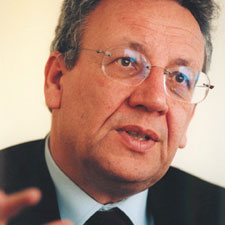
EU Research Commissioner Philippe
Busquin. © European Communities, 1995-2002.
EU Research Commissioner Philippe Busquin said the main aim was to stop a "brain drain" of the brightest scientists leaving Europe to work in countries like the US, Australia and Singapore.

He said: "Europe is in a relatively weak position."

"Obviously there are ethical concerns. But the real question is 'Are we able to have excellence in this field in Europe?’"


"By setting strict ethical rules... for such funding, the EU contributes in a responsible way to advancing this science for the benefit of patients across the world, while at the same time ensuring that it takes place within a clear ethical framework."

He said countries could continue to choose whether they funded embryonic stem cell research themselves, but that the EU felt it was important to encourage as much research as possible.

"In some countries like the UK and the Scandinavian countries, this will be pursued aggressively," he said. "That means the other countries can live in peace."

Sir George Radda, chief executive of the Medical Research Council in Great Britain, said:

"The decision to set a cut-off date for which embryos can be used is limiting and may mean fewer high-quality embryos available for research, but we recognise compromise was needed given the disparate views of member states."

"Overall we're pleased that the Commission has recognised the importance of granting funding to allow researchers to generate stem cells using freely donated embryos left over from IVF research."

"The MRC sees stem cell research as a key research priority over the coming decades and the UK government has had the foresight to put in place legislation that will enable ethical and beneficial research into heath and human disease to be carried out."

"It's good to see this being echoed in EC policy, as we are on the brink of real medical progress."


The EU's research framework, which runs through 2006, foresees spending more than 2 billion Euro (US$2.3 billion) on biotechnology projects, but grants for stem cell research have been blocked by the moratorium.


L.
Ed.
CellNEWS
03-07-11

READ MORE:
EU split over stem cell research BBC, Thursday, 10 July, 2003
EU stemcell guidelines releasedCNN, Wednesday, July 9, 2003
EU Sets Rules for Embryo Use in Stem Cell ResearchReuters,Wed July 9, 2003

RELATED LINKS:
European Commission
European Parliament
European Union
EU’s Sixth Framework Programme
European Commission Staff Working Paper, Report on Human Embryonic Stem Cell Research – pdf file
European Group on Ethics in Science and New Technologies
Belgian Parliament Says "Yes" to Therapeutic Cloning and Research Using Human In Vitro Embryos
UK Patent Office Inventions Involving Human Embryonic Stem Cells
Top


European Commission Discusses Human Embryonic Stem Cell Funding
Friday, 25 April 2003

The European Commission yesterday took a step toward resolving its policy on the funding of stem cell research. Currently, funding of such research within the Sixth Framework Programme is banned.

Angelo Vescovi, a pioneer stem cell researcher from the Stem Cell Research Institute of Milan, Italy, was among those urging the Commission to decide soon if and how it intends to lift the ban.
"Time is of the essence," he said, "especially for those who can't wait for a cure."

Vescovi was speaking at a seminar in Brussels arranged to discuss a report released earlier this month summarising the ethical and legislative issues facing the European Union and Commission.

The representative of the German government pleaded:

"Please do not finance research in areas that are banned in some member states."

If the Commission heeds that plea, it could effectively ban all EU funding of human embryonic stem cell research for the foreseeable future. The German position was firmly endorsed by the government representatives from Austria and Italy.

The opposite view was expressed most strongly by the Belgian, British, and Swedish governments. They made the case for "pluralism", in which respect for diverging ethical viewpoints would allow EU funding for the research in countries that permit it.

EU’s Research Commissioner Philippe Busquin gave a hint of what the Commission's eventual proposal may contain.

"We are going to have to come up with a pragmatic solution, possibly on a case-by-case basis," he said.


L.
Ed.
CellNEWS
03-04-25

Top


EU as Conservative as US On Cloning Ban
Thursday, 10 April 2003

STRASBOURG, France - The European Parliament on Thursday supported a ban on creating human embryos for stem cell research, including through cloning, a move that business said could hurt the continent's biotechnology industry.

The decision by the European Union's assembly still requires approval from each of the 15 EU member states to become law.

The original bill before the assembly was designed to guarantee safety standards, but the assembly added 50 amendments restricting the use of stem cells.

Supporters of the ban defended their position on ethical grounds:
"From the moment of the conception, you create all the individual characteristics of a person ... in my thinking you cannot kill that," said Marialiese Flemming, an Austrian Christian Democrat.

Opponents of the restrictions warned that writing them into law would hold back medical progress:
"It flies in the face of logic and human compassion to seriously curtail potentially groundbreaking areas of scientific research," said David Bowe, a British Labor Party lawmaker opposed to the ban.

Last month Philippe Busquin, EU Research Commissioner warned:
"The increasingly skeptical climate is scaring European biotech companies and research centers away," he said.

The current 15 EU governments are divided on the issue and have varying regulations concerning stem cell research.

Read more at:
EU Parliament OKs Embryo Creation Ban
AP - 04/10/2003


L.
Ed.
CellNEWS
03-04-10


^^ Back to top | Home | Archive | Links | Join Discussion! | Send Message | About CellNEWS

Hosted by www.Geocities.ws

1