|
Home | Archive | Links | Join Discussion! | Send Message | About CellNEWS |
 |
||
|
Gene Tests for New Drug Use Not Quite Yet. FDA issue draft guidelines on the use of genetic data Wednesday, 05 November 2003
The US Food and Drug Administration this week released draft guidelines regarding how genetic data could be used in new drug applications. Eventually, gene tests could predict exactly which patients might benefit from a particular drug. But this revolution will come slowly. The most telling words in the FDA's guidance may be "draft — not for implementation".
The first drug to be paired with a gene test was Genentech’s breast cancer drug Herceptin. A few other drug companies are now applying the same technology for their new drug developments. Millennium Pharmaceuticals, in particular, has been watching the FDA closely. Their late-stage trials of its already approved multiple myeloma drug, Velcade, are using DNA chips to see if patterns emerge that predict which patients are helped. Until now, it was not clear how those data would be used. The gene test approach is even more important to another of Millennium’s drugs; an early stage compound code-named MLN518 that targets leukaemia. "Nobody has ever really formally put this kind of information in front of the FDA, because there was a lot of uncertainty over how it would be treated," said Geoff Ginsburg, vice president of Millennium Pharmaceuticals, in an interview in Forbes. Aventis has also supported some work that could predict which breast cancer patients will respond to its Taxotere chemotherapy and which won’t. Individuals respond differently to drugs — some need more, some need less, some have side effects and some don’t even respond to a drug — and genetic tests could thus help determine a particular patients’ dose. Furthermore, gene tests could help drug companies develop medicines they would otherwise have thrown out because they couldn’t identify which patients would benefit from a new drug.
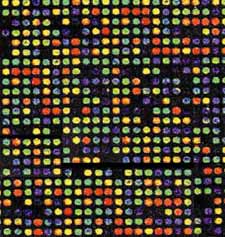
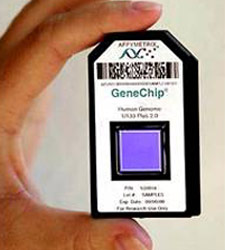
Affymetrix is one company that makes a GeneChip used in many of these studies. Janet Warrington, who is vice president for clinical and applied genomic research and development at the company, said: "Quite a number of the pharmaceutical companies have shared with us that they’ve had drugs that they’ve shelved." "Now they think that if there’s a possibility of identifying the responders, they can bring those drugs to market." The science of using genes to predict how drugs will work in patients, called pharmacogenomics, are still so new that many researchers aren’t sure how to interpret their data. Another problem is that there are not yet any standards on the use of gene chips and genetic analyses of this kind. Every company and academic lab uses different ‘home-grown’ procedures and software, thus making it difficult to compare results. Therefore, these early indications on rules from the FDA are not the same thing as having concrete guidelines. It is going to be many years before published guidelines will come to fruition.
|
|
|
^^ Back to top | Home | Archive | Links | Join Discussion! | Send Message | About CellNEWS | |
|
|
|
|
