|
Home | Archive | Links | Join Discussion! | Send Message | About CellNEWS |

|
||||
|
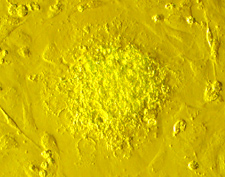
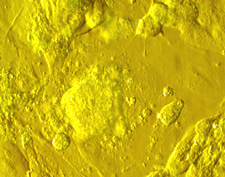
Czech Researchers Join The Stem Cell Club. Tuesday, 09 September 2003 Czech scientists say they have derived four ‘stabilised’ lines of human embryonic stem cells from spare embryos stored at an in vitro fertilisation clinic in Brno. Their work at deriving hESC lines started at the end of February 2003. This makes the Czech Republic the first of the eastern European countries to move into this controversial research area, at least as reported.
"Until now we have produced 8 lineage’s, from which 4 lines got lost at early passages. So, today we have 4 ‘stabilised’ lines named CCTL-6, CCTL-8, CCTL-9, and CCTL-10 (CCTL stands for the Center for Cell Therapy Line). Two of these cell lines have been frozen and successfully tested to grow again when thawed. Two others are still under expansion and a first batch of those should be frozen later this week." Dr. Hampl also said that they recently have invested in an extensive improvement and rebuilding of their hES cell culture facility in Brno, and that this finally was functioning last week. As usual in this type of work, many attempt to obtain an established hESC line go unsuccessful. "By now we processed total of 79 embryos. But many of them were of very poor quality. None of those bad embryos ever gave rise to hES cell line," Dr. Hampl said.
"But we will switch to human feeder cells very soon," Dr. Hampl said. The scientists are now characterising the lines, and plan to study the cells' potential to develop into differentiated cells such as neurones, which they believe could have therapeutic potential. They presented their results the satellite meeting Neural Stem Cells and Brain Repair of the Sixth IBRO World Congress of Neuroscience 2003 in Prague in July. In the laboratory in Brno, the researchers will stay at the level of basic research on hES cells by advancing the culture conditions and producing more stem cell lines in the future. As Dr. Hampl explains: "But since we are part of the Czech Centre for Cell Therapy and Tissue Repair in Prague, headed by the neurobiologist Prof. Eva Syková, we are strongly encouraged to develop protocols and strategies for neurodifferentiation of hES cells. Although this kind of research is not really covered by our expertise in Brno, the neurobiology background and the appropriate animal models are all available in the labs of our Prague-based collaborators." The Czech Republic has no law controlling human embryonic stem-cell research. But Eva Syková, head of the Centre for Cell Therapy and Tissue Repair at the Institute of Neuroscience’s, Charles University in Prague, said to the journal of Nature earlier this summer that they are working to high ethical standards. They received informed consent from the donor couples undergoing in vitro fertilisation, she points out.
The opportunities for other collaborations in Europe and the world are wide open, and such interactions are just being initiated. For example, Dr. Hampl said he recently had informal discussions with Drs. Lars Ährlund-Richter of Sweden, Peter Andrews in Great Britain, and Nissim Benvenisty who are all willing to let them become involved in the international ‘hES cell lines comparative panel’, recently set up in London at the initiative of the British MRC. However, Dr. Ample stressed that: "...all these activities are just under development." The basic costs for consumables for this project are covered by grants from the Czech Ministry of Education, Youth and Sports of the Czech Republic to the Centre for Cell Therapy and Tissue Repair. Besides these resources, two institutions significantly contribute to this research by providing the basic resources: the Institute of Experimental Medicine of the Academy of Sciences of the Czech Republic based in Prague, and the Mendel University of Agriculture and Forestry in Brno. The Czech Ministry of Education, Youth and Sports has contributed since the year 2000.
|
About MZLU Brno:
|
|
|
^^ Back to top | Home | Archive | Links | Join Discussion! | Send Message | About CellNEWS | |
|
|
|
|
