| This page takes a look at the managers United have had since the beginning of the club. Each manager made an impact on United, and however great or small that impact was, they all helped to create the most successful club in British football. |
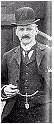
| Ernest Mangnall: 1903-1912 Ernest was United's manager from 1903-1912. He influenced the building of Old Trafford, and led United to win the FA Cup and the League for the first time in United's history. |
 |
 |
 |
 |
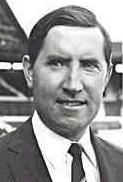
| John Chapman: 1921-1926 Chapman was appointed the United manager in 1921, and held this position until 1926. He took United to the FA Cup semi-finals, however did not win any trophies during his time as manager. |
| John Robson: 1914-1921 Robson was appointed manager two years after Mangnall resigned. In 1914, he began his bid to take United to the top. However, like Chapman, he was unsuccessful in doing so, and resigned in 1921. Robson did not leave United. He became Chapman's assistant. |
| Ron Atkinson: 1981-1986 Atkinson took over from Dave Sexton in 1981. After managing other first division clubs before managing United, he was hungry for further success. He broke the record for the most expensive player (Bryan Robson, �1 million), and also helped United to win the FA Cup twice. |
| Herbet Bamlett: 1927-1931 Herbet Bamlett was originally a referee, before beginning his career as a manager. As a manager, he was not as successful as he would have liked to have been, leading United to several defeats, and eventually loosing his job in 1931. |
| Walter Crickmer: 1931-1932, 1937-1945 Atkinson took over from Dave Sexton in 1981. After managing other first division clubs before managing United, he was hungry for further success. He broke the record for the most expensive player (Bryan Robson, �1 million), and also helped United to win the FA Cup twice. |
| Tommy Docherty: 1972-1977 Tommy Docherty, before beginning his managing career, used to play for both Preston and Arsenal. He first managerd Scotland, in 1971, but decided to move to Old Trafford the following year. He took United to the FA Cup final, but did not bring any silverware to Old Trafford. He lost his job in 1977 due to personal issues he had with the club. |
| Scott Duncan: 1932-1937 As an ex-footballer, Scott Duncan appeared to be the perfect candidate for the manager's postition at Old Trafford. He had been to the other side, and knew the game well. However, this proved to be no use to United, as Scott Duncan failed to win anything furing his time as manager. He set the club record for the lowest league position- one point from relegation into division three. |
| Clarence Hilditch: 1926-1937 Clarence was the first United player to become manager at the club. His duration as manager lasted only one year, as he returned to playing football at the club. In 1932, he retired from playing football, and became a football coach. |
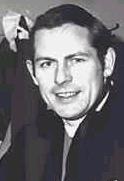
| Wilf McGuinness: 1969-1970 Wilf McGuinness, a busby babe, had to bring his professional football career to a disappointing end, after he broke his leg during a reserve match. He went on to manage the youth team in 1961, and was appointed the first team manager shortly after Sir Matt announced his retirement. |
| Frank O'Farrell: 1971-1972 Although Frank O'Farrell did not win any trophies during his time as manager, he helped United to win 20/22 league games. It was the following January when he began to struggle with United, winning only fivemore games. He is, to date, the only Irishman to have managed United. |
| Dave Sexton: 1977-1981 Dave Sexton helped United to reach the FA Cup final, and come runner's up in the League during hi stime as manager. He also became the first United manager to spend �1 million on the transfer of Garry Birtles. He left United in April 1981, and managed Coventry City before becoming an England coach. |
| Walter Crickmer: 1937-1945 |
| Sir Matt Busby: 1970-1971 |
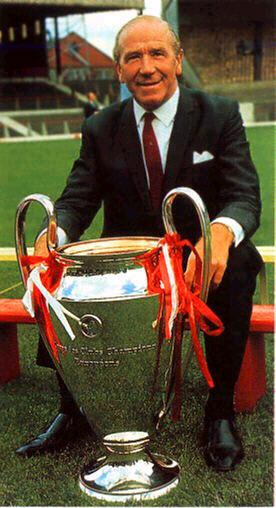
| Sir Matt Busby: 1945-1969 Sir Matt Busby is undoubtedly the most successful manager United had in their first one hundred years as a football club. Sir Matt experienced many things during his time as manager, and will always be remembered for what he achieved. It was after world war two that Sir Matt agreed to join Manchester United. Instantly, he made changes to the club, bringing in new players, and changing the spirt amongst the players and the club itself. Sir Matr gave the club something they had never had before. In 1948, he led United to win the FA Cup for the first time. Finally, in 1952, after being runners up four out of five times, United finally won the League. The youth team won the FA Youth cup five seasons in a row, and allowed many of it's players to move up to the first team. They formed the Busby Babes, and went on to acheive many things. They won the championship in 1956 and 1957, and were in the semi-final of the European Cup. It was the following year the Busby Babe era came to a tragic end, in the Munich Air Disaster. Sir Matt Busby was critically injured in the crash, and spent seventy-one days recovering in hospital. He began to rebuild his United team, and in 1963, helped them to win the FA Cup. He also helped United to be the first English club to win the European Cup in 1968. Sir Matt retired from his managing position at the end of that season, but took over again for a short while after Wilf McGuinness. Sir Matt Busby was knighted in June 1968, and became United's president. He stayed at this position until 20th January, 1994, when he tragically died. |
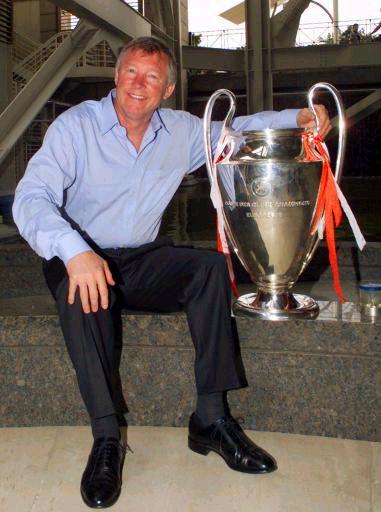
| Sir Alex Ferguson: 1986- present Alex Ferguson was already an established and successful manager before he arrived at United. He spent time managing East Sterling and St. Mirren, before moving to Aberdeen, where his success came. It was on November 7th, 1986, when Ferguson signed his contract and became the manager of Manchester United. The first trophy United won under their new manager was the FA Cup in 1990, and it was not long afterwards that the trophy cabinet began to get filled. In 1991, United won the Cup Winner's Cup, and the League Cup the following year. In 1992/1993, Alex Ferguson took United to the top, and they won the Premiership title. The following season, they won the double, and continued to win major competitions in the following seasons. During this time, Alex Ferguson made several crucial signings for his club: Eric Cantona from Leeds, and Andy Cole from Newcastle. He also signed England striker Teddy Sherringham, which proved to be worthwhile deal two years later. The 1998/1999 season had to be United's most successful season. It started well, and progressed as the season went on. United won the FA Cup after beating Newcastle, the Premiership, and the European Cup after winning against Bayern Munich 2-1. Teddy Sherringham and Ole Solskjaer scored in the last few minutes of the game, giving United their well-earned victory. United had won the Treble- and were the first English team to do so. In May 1999, Alex Ferguson received a Manager of the Year Award, and soon after, in July 1999, was knighted. Sir Alex named the year as "one of the greatest moments of my life". He has since gone on to win more trophies, and sign world- class players, to improve the already successful club, Manchester United. |
 |
 |
 |
|
|