| MEXICO, THE VANISHING CITY. | ||
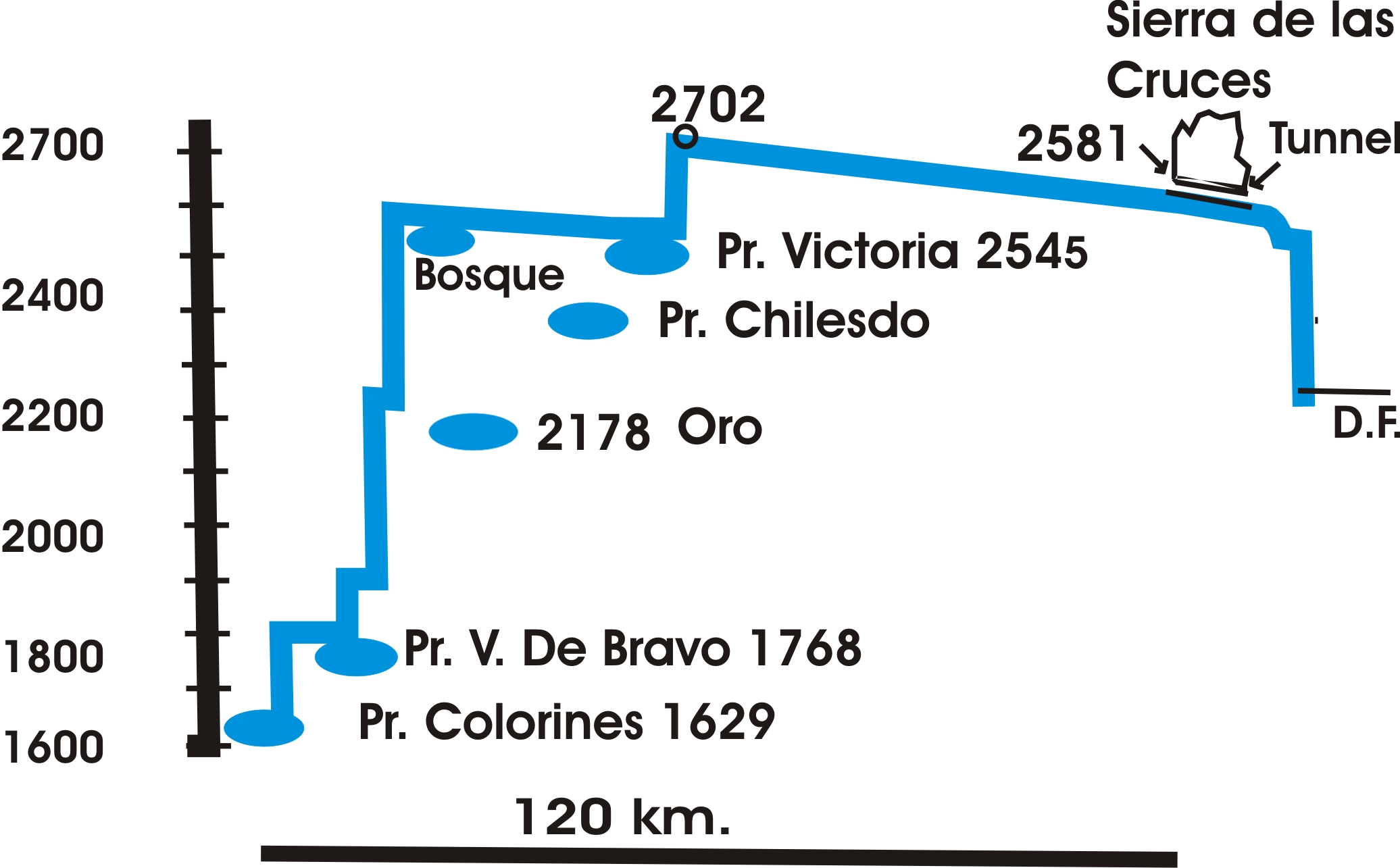
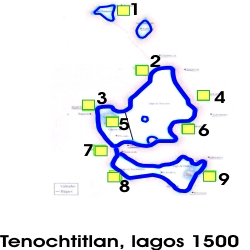
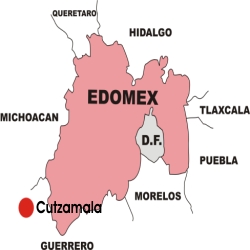
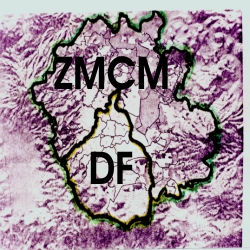
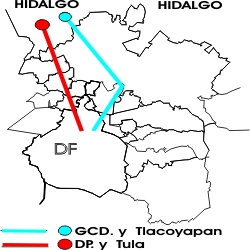
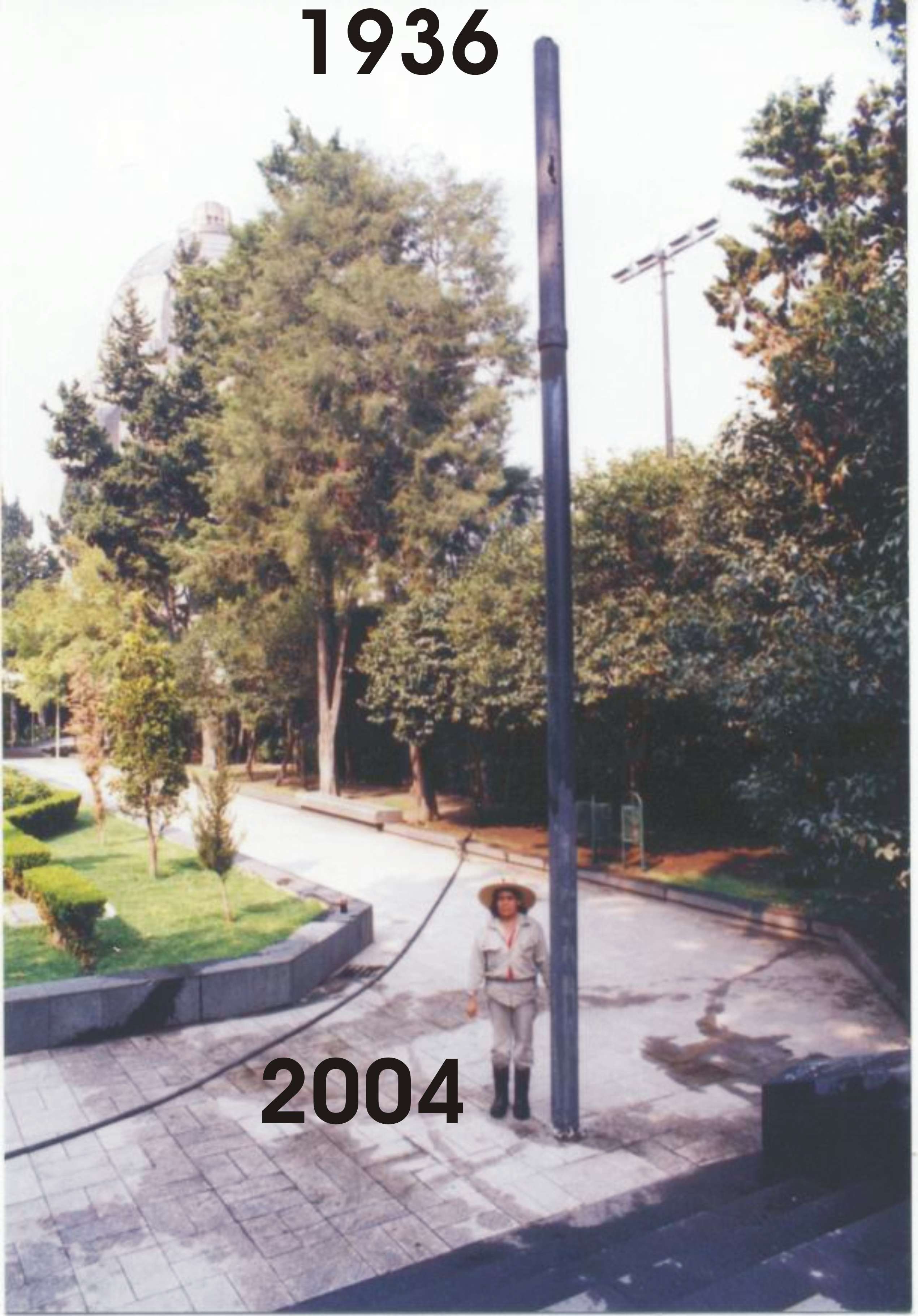
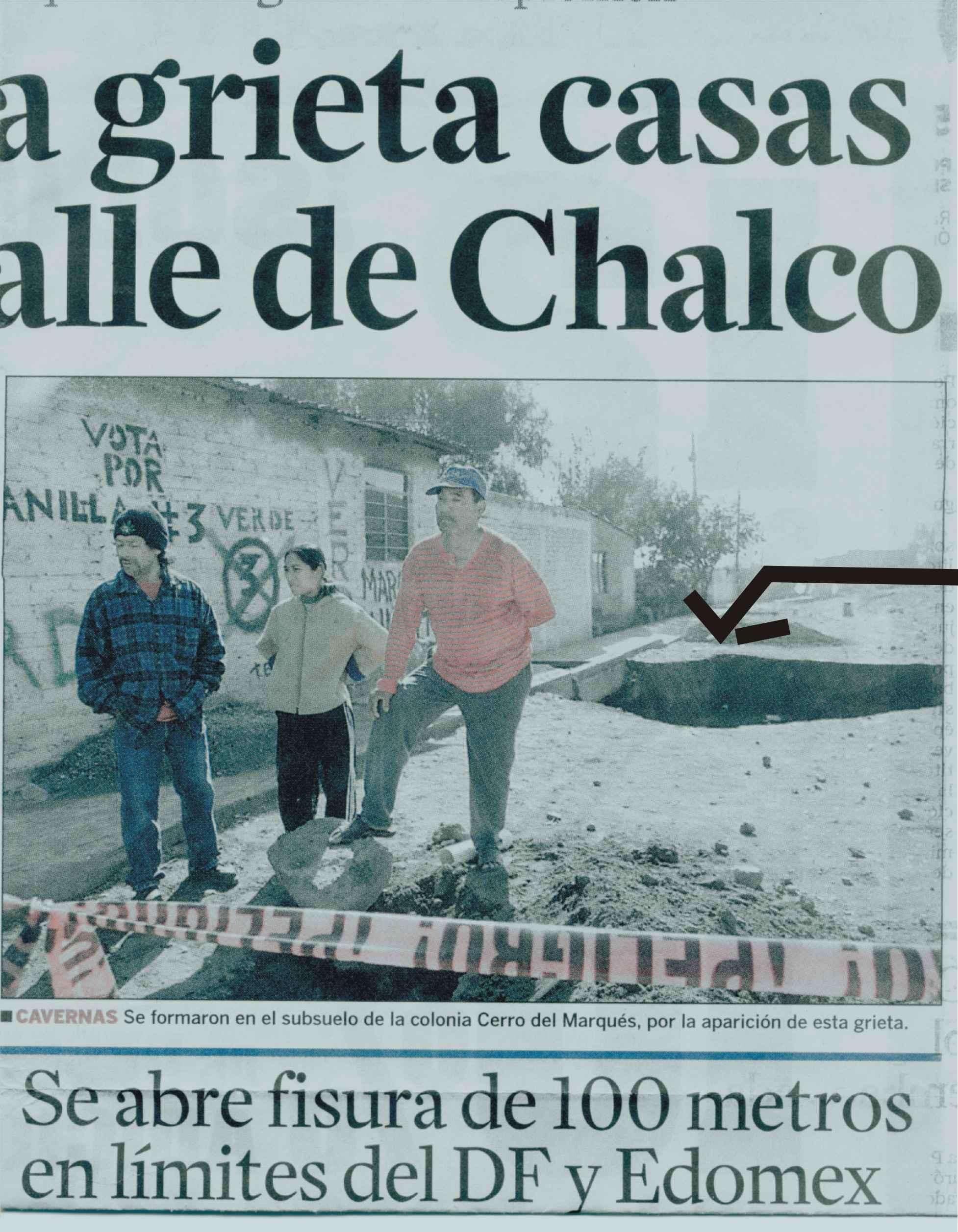
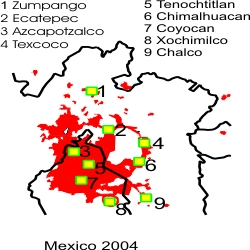
Mexico City: Symbol of human predicament worldwide. If Mexico's leaders were to rule the Sahara they would soon run out of sand. Friedman may or may not have said that, Mexico City (MC) – and Mexico as a country – is quickly running out of water. The overexploited city's aquifer, providing 72% of its potable water, is becoming toxic, and outside sources cannot supply more water. Shortages increase day by day, and even residents of the plush Santa Fe suburb have water delivered by truck. Even so, the city keeps losing 37% of its potable water in the antiquated network, and recycles only 10% of its waste‑and storm waters. Industry uses much of the precious drinking water. ISRAELI EXPERTS. Certainly, most major cities face water shortages. But Israeli water professionals, called in 30 years ago, noticed something weird: MC did not need to suffer. The water was there. Missing were the ways to keep and re-use the water. It was madness to pump water from far‑away sources through multi-dollar mega works, using it once only and then flushing it away through gigantic overburdened sewers. The Israelis recommended that the city install water treatment plants and act as Rotterdam and San Diego, recycling treated water 5 or 7 times. Obviously, Israeli experts were never invited again. The "ingenieros tuberos" kept digging tunnels and are now planning another mega-work, a 50 km long "emisor oriente", to replace the “emisor central”, the city's main expulsion pipe of the 80's, also 50 km. long, unable to cope with the city's frightening expansion. maintenance. So, why waste all that money on pumping water from afar and exhausting the subsoil aquifer, and then pump it out again? Is it corruption, indifference, ignorance, the craving for making big ostentatious constructions or what? How can it be explained? THE COLONIAL PAST. The main cause is the Mexican mentality, shaped by ages of colonial exploitation, parasitism and irresponsibility. Policy makers run their constituencies as haciendas the way colonial Spaniards did. Also, whenever they move to other positions, which happens frequently (1), most of their people move with them, and ongoing projects are abandoned: successors invariably start new ones, according to their interests, and voters rarely protest. Continuity and long-term planning, thus, are the exception. As noted San Diego University border specialist Ganster put it, Mexico has no civil service, and professional career officials are scarce (2). As a result, Mexico City has no coordinating government, no population policy, and no clearly defined Central Water Agency for the Mexico Valley: instead, water affairs are handled by feuding state governments, counties and federal agencies. Under these the circumstances, no sane water management is possible. Complicating matters is the city's location with surrounding mountains and built on spongy beds of dried up lakes. Rains, averaging 700 mm. annually, fall mainly in heavy downpours between June and October, and quick drainage is a must to avert flooding. Even the Aztecs, some 150,000 only, kept floods under control up to a point, suffering their last flood in 1499, and they took great care to keep the lakes, source of their food, scrupulously clean. The conquerors, low‑class medieval Spaniards, did not. They threw garbage, dead dogs, horses and Indians into the waters - Tenochtitlan had not much space for cemeteries at that time. Soil running off deforested sierras filled them even more, so floods soon started again. But the inundating lake water, now fetid and evil smelling, confronted the Spaniards with their own filth and feces, who didn't like that. Moreover, the lakes, making up 20% of the valley, were a hindrance for the city's contemplated expansion. Thus, the idea took hold they had to be drained dry, and the only way to do so was to cut a cleft, (tajo), through the valleys lower northwestern mountains. The first intent, the Tajo de Nochixtongo of 1608 , designed by German astronomer Heinrich Martin, was followed by Mexico City's most spectacular flood ever: 30,000 Indians drowned, and Spaniards were forced into a 5-year long exile Puebla. When finally reopened in 1789, the Tajo failed again: only a few smaller lakes in the north dried up. The greater Texcoco and Chalco lakes did not and floods kept haunting the capital. So the city started digging a second drain close to the Tajo in 1884, but this time under British supervision. In 1900 the Grand Drainage Canal (GDC) was finished: a 58-km. open drainage ditch and a 12-km. tunnel near Tequisquiac , graded to carry sewage from downtown Mexico City through gravity to the neighbouring Hidalgo State. The GDC proved effective for some decades The Texcoco and Chalco lakes were finally drained dry and are now urbanised – only some 15% of thorny thrubs remain. A few years later the city's first drainage system, meant for a city of one million people was completed. Moreover, vast underground water deposits discovered in 1847 solved the city's water supply. Over 1,000 wells had been drilled by 1900, and the capital's water troubles seemed a thing of the past. THE CURSE OF NUMBERS. They weren't. Sub soils, drained by uncontrolled well drilling compacted and from 1900 the city started sinking 5 cm. a year. (Venice sank no more than 23 cm. in the entire 20 th century). The GDC, also sinking, rapidly lost its discharging capacity and the entire drainage system was disrupted. From 1925 the flooding resumed. Far worse, the city began to industrialise, and millions of dirt-poor peasants in search of jobs settled on the dried-up lakebeds. In the 60's the population of 6 million started spilling over from Mexico City proper (the Federal District, FD) into the surrounding State of Mexico. Peaceful agrarian villages turned almost overnight into unsightly satellite settlements of millions, stretching from high on the shanty‑scarred hilltops into gullies on dry river and creek beddings. Greater Mexico City, the Metropolitan Area (MCMA), came into being, and its growth continues till now. As a result no one presently knows anymore where Mexico City begins and ends. In 1995 the Washington Research Council (3) included 17 urbanised Edomex counties in its MC's Water Supply Report (the only serious study so far). Today's reports consider 50 or 60 counties as part of the urban area of 4,900 km² or about half of the Valley. ESTIMATES. Officially 23 million people live there (4), but even former Public Security Secretary Gertz Manero labels official population statistics as “made-up” (5). Extra-official estimates put the population at 22 million as early as in 1990 (6), and the population continued to grow at more than 3% a year till 1990. Alan Riding (7) and Business Week Editor, Sol Sanders (8), among others, predicted there would be 30 or 40 million by 2000. Now, in 2006, 35 million would seem a safe guess. The mere presence of one million hawkers, street vendors and pavement butchers clogging sidewalks and metro exits confirm the frightening population growth. There were none of them in 1970, when the volcanoes could still be seen through the incipient smog. MONUMENTAL POLE. All these migrants and factories needed water. Underground pumping rose sharply. Skyscrapers and construction pushed the city further down and the sinking rates increased to a daunting 40 or 50 cm. per year between 1947 and 1951. A humble pole near the city's Revolutionary Monument symbolises the city's downfall. Firmly anchored in hard clay subsoil in 1936, the pole did not move, but the surrounding park fell 10 metres, as did most of the city's downtown area. Mexico Centre assumed its now familiar aspect of shattered old churches, with houses tilted for‑or and backward, and streets dipping for no apparent reason. Heavy downpours can turn roads into raging rivers, with sudden potholes occasionally swallowing entire trucks. Metro lines and airport strips must be revised every year. Worse, the city's entire infrastructure is being undermined. Cables snap, potable water pipes burst and cause drinking water losses averaging 37%. Wastewater seeps down from broken sewers, and from open-air garbage dumps pollute the aquifer. Gasoline filtering from cracked gasoline tanks makes the city explosive as well. No reason, then, why Guadalajara's gasoline-soaked drainage explosion of 1993 would no repeat itself in the MC. Even more dangerous, earthquakes have become more devastating. Hollow water‑drained caves destabilise subsoils, and the gelatinous underground base of sewage, water and waste, vibrating between the surrounding sierras increase an earthquake's impact. Proof are the 60,000 casualties of the 1985 earthquake disaster. AT THE BOTTOM OF A SLUMP. Another victim is the drainage system. The sinking city now became the Valley's lowest point, so waste-and storm waters now drain to the centre and no longer to the Texcoco Lake, formerly the Valley's deepest point. Pumps were thus to be installed to carry the city's waste into the Canal and then it beyond km. 18.5 near Ecatepec, where the rocky sub soil prevents any soil sinking. More pumps restored broken connections among sewers underground; regulating dams, tunnels and a second Tequisquiac exit were dug; the old Tajo de Nochixtongo was modernised; remaining rivers were piped in, and authorities started pumping water in through the giant Lerma works in 1951, to limit the aquifer's overexploitation, the main cause of the soil subsidence. In short, everything was done, except addressing the REAL problem – the city's unstoppable growth- an issue shunned until this day. NO A LA DECENTRALIZACION. It wasn't enough. Heavy rains flooded two thirds of the city centre for days or weeks in 1950 and the same happened again in 1951. Mexico's policy makers were forced to clearly outline their long-term policy: -- either further expand and industrialise the city with huge investments in hydraulic infrastructure, or consider decentralising, countryside development, reforestation and large-scale water treatment. Aided by loans from international banks and consortiums, Mexico's rulers opted for further growth. All in all, Mexico City's role as the magnet for the country's poor population was enhanced. The aquifer's over‑exploitation and resulting soil subsidence increased. MC dug itself a hole from which it would never be able to crawl out. THREE MEASURES. Three major measures, all costly and basically the cause of the capital's predicament now were taken. 1. Wells and Sinking to the outskirts. Wells in the centre were closed and new ones were drilled in the eastern outskirts, where people, then still rural, wouldn't protest. Now, 50 years later, the millions living in Chalco, Ixtapalapa, Ecatepec and Chimalhuacan do the sinking at some 20 cm. per year on average, and 50 cm in some areas. Meanwhile, the historic centre is sinking a mere 6 or 9 cm yearly - still twice as much as Venice. 2. Lerma, Cutzamala. Many more wells were drilled in the Lerma Basin. The catchment's areas were ruined, and farmers and fishermen there were told to become tourist guides, do something else, or go somewhere else. Next, with the Lerma wells nearing depletion, the even more ambitious Cutzamala project started in 1975, lifting 19 m 3 /s of water 1100 metres upwards, and then moving the water 127 km. laterally. Presently Lerma and Cutzamala contribute 27% of MC's drinking water. Also, Mexico's planners had more ambitions: expanding the Cutzamala works to the Temascaltepec Basin; tapping from the Amacuzac and Tecolutla basins, 300 and 400 km. away, using the melting snow of the Popocatepetl volcano and at one time, even the Gulf. Technological euphoria knew no limits in the early 50's.
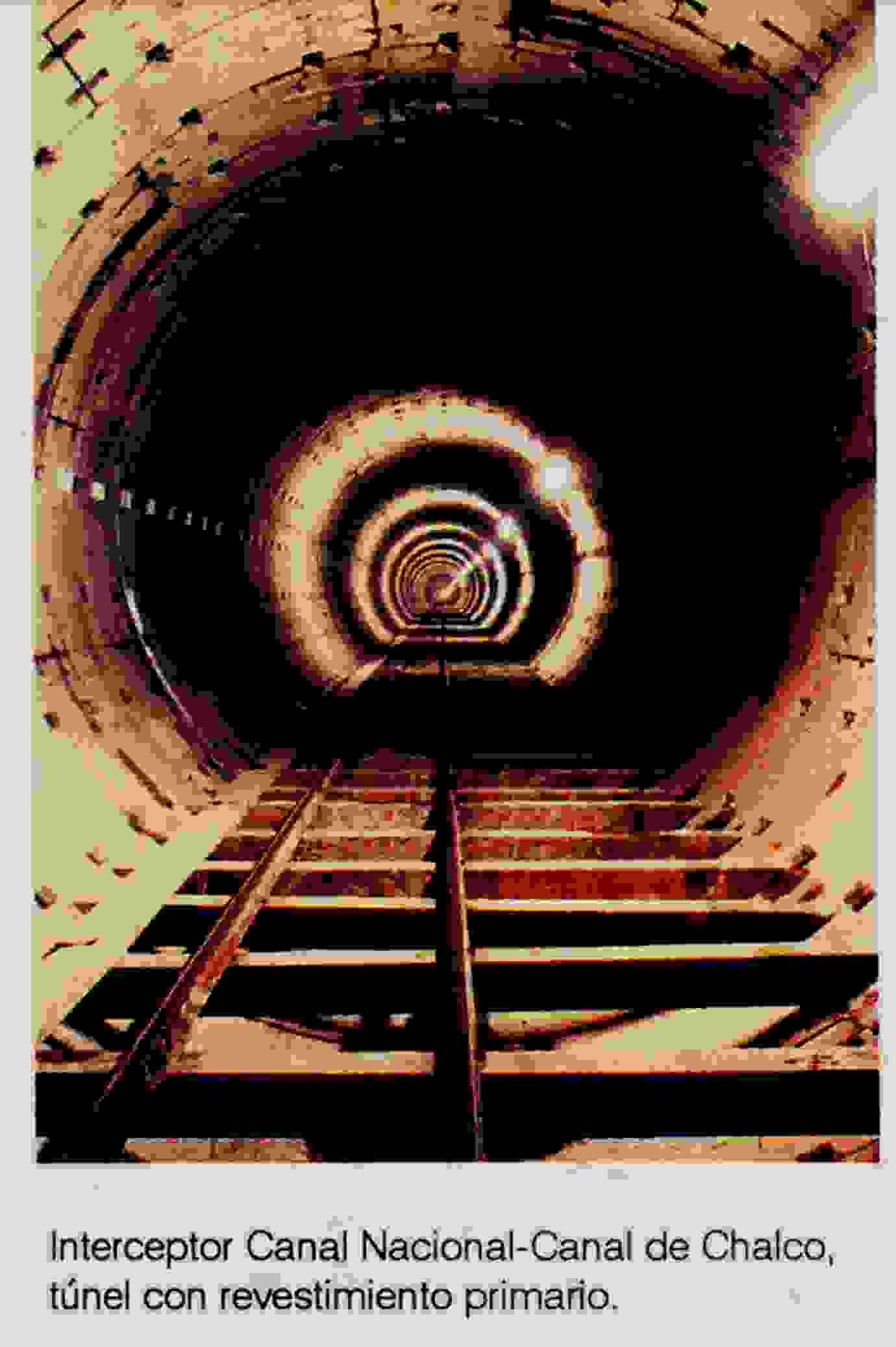
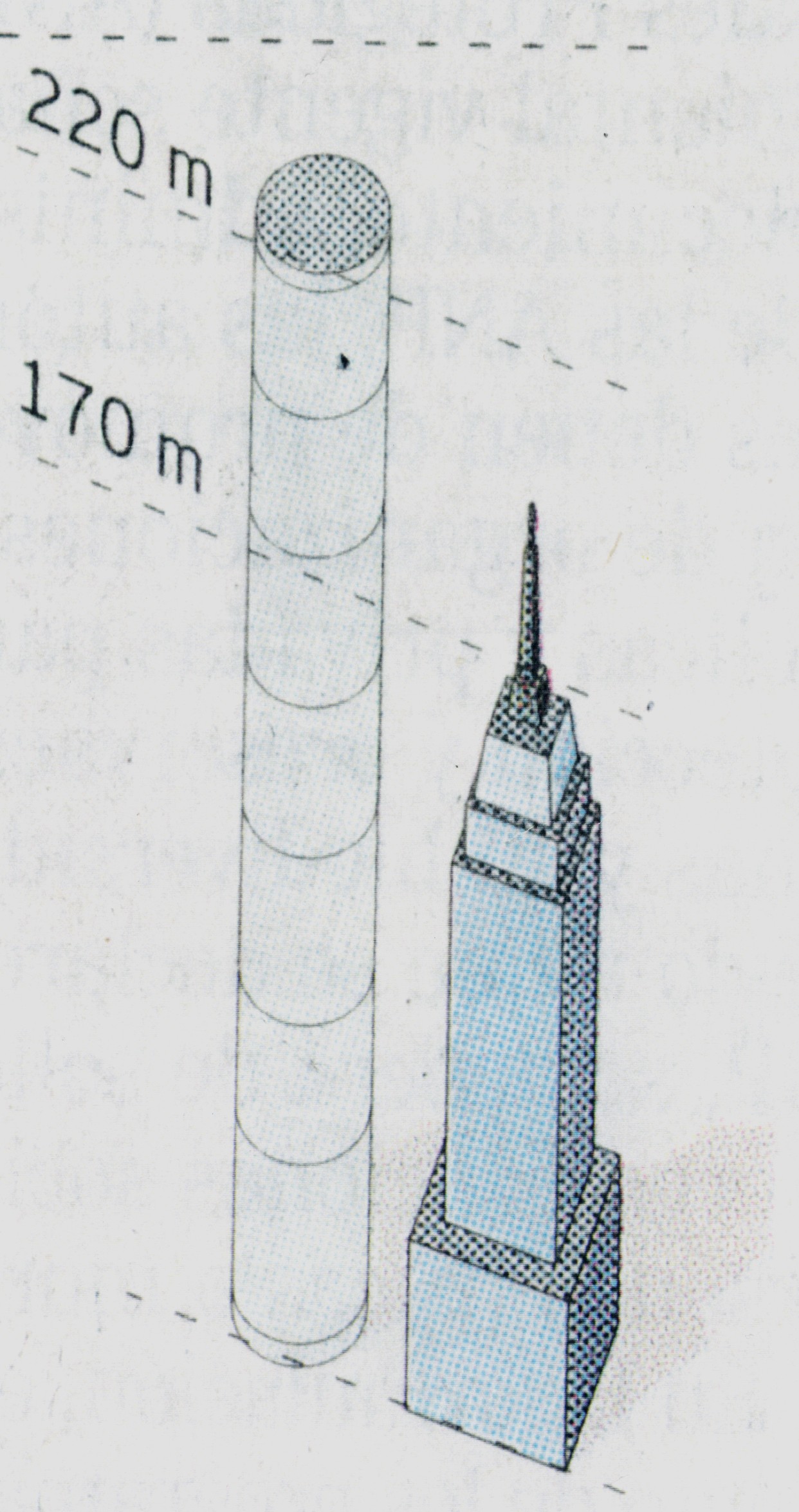
lifting 19 m3 of water 1,100 metres per second is costly… Times changed, though. Soon it was discovered that maintenance and service of those magnificent mega works wasn't simple and cheap. Water pumped up from so far and so deep had to be paid for in gold. Further, local farmers in Guerrero, the State of Mexico (Edomex) and Michoacan, scared by the ecological destruction in the Lerma areas rebelled, arms in hand, against the Temascaltepec project, supported by the PRI and the expanding local industries needed the water too. In 1997, then, Temascaltepec, meant to supply another 4m3/s to the capital's south‑eastern suburbs, was shelved. To meet the needs of their bulging populations, Xochimilco, Ixtapaluca, and other suburbs in the southeast started digging their own wells, while sinking up to half a metre a year in places, and suffering floods in the rainy season. 3. Deep Drainage. Another pharaonic work, the Deep Drainage (DD) was started in 1967, and its main part, the emisor central, a 50 km. long single expulsion pipe of 6.5 metres across, with 21 huge vertical ventilation and machinery shafts, was completed in 1975. Its untreated wastewaters, like those of the Grand Canal and the Tajo, now irrigate some 100,000 hectares of maize and vegetables grown in Hidalgo's Mezquital area for the capital. As the Hidalguenses say, “shit is what they give us, and shit is what they get back”. O fficial information regarding the effects on health is scarce. The DD, at depths from 25 to 220 metres is claimed to be invulnerable to earthquakes and soil subsidence. Presently the DD stretches out over more than 160 km 200 km. and keeps expanding. Deep Drainage problems. The Deep Drainage (DD), undoubtedly a masterpiece of Mexican engineering, functioned well during 15 years. But Mexico's policy makers did not. -- From the beginning they used the DD, built for storm waters only, for wastewaters too. -- Secondly, ignoring the awe-inspiring population explosion in city's east the imminent breakthrough of the Canal de la Compañia, the main sewer there caught them by surprise in 1992. A last-minute decision to dump its contents into the Grand Canal made things worse. Due to its inversion, the sunken Grand Canal carried the smelly brown masses down into the city, and not out of the valley, as in former times. -- Then the rulers made their real BIG mistake. They ordered to unload the Grand Canal's refuse into the DD, 100 metres down, through an adapted vertical shaft (lumbrera). Since then, 1992, the DD's emisor central near Naucalpan has been constantly overcharged, making it impossible for engineers to get inside and carry out the required annual check‑ups and repairs. S teel reinforcement rods and corrosive gasses emanating from the wastewater may be piercing the cement walls. They simply don't know. They do know, though, the consequences of a total breakdown of the emisor: the entire central city would be flooded, causing paralysis of the metro and electricity. Officials of the Federal District's public works described their fears in interviews: "crisis situations, lasting from 30 minutes to 6 hours occur 3 or 4 times in the rainy season. The DD is then unable to absorb one more drop and the risk that the system might explode is real... and even the earthquakes of 1985 would be child's play of what would then happen” ( ). PUMPS, FROGMEN, SUBMARINES. Characteristically, authorities only began acting when the Canal de la Compañia finally DID break in June 2000, cutting off the Mexico-Puebla highway for days. First, pumps were installed at the junction of the Canal de la Compañia and the Grand Canal near km. 18.5, to restore the Grand Canal's capacity to its initial 46 m3/s and enable it to channel the refuse out of the Basin instead of dumping it into the emisor. It was hoped, that this would relieve the emisor central near Naucalpan sufficiently to allow engineers to enter, inspect and repair it during the dry season. Things turned out otherwise. With the pumps in place in September 2003, unforeseen water currents kept filling the emisor. Heavy rains then flooded Naucalpan (one of Mexico's richest counties) in the month October, and the authorities were forced to reveal that the emisor had lost 25% of it expulsion capacity because of unknown objects ‑ car parts, maybe, trees, or mattresses. Its total collapse could not be not ruled out – and still isn't. Next, French video-photo taking submarines were launched in the DD's entrails, but they got stuck and “shitdivers” (frogmen) had to pull them from the mud. Then, enormous floodgates were to be inserted to close off the unwanted water currents filling the emisor. Apparently this plan has not provided solutions either. Thirdly, a kind of “endoscopy” was being tried out, with cameras mounted on boats of 1.40 by 3.60 metres and navigating little by little through the tunnels. Presently, efforts are made to use amphibian vehicles. Temperatures in the emisor, situated at a depth of 140 metres, are high and gasses may be poisonous, so physical inspection is ruled out as being too dangerous. A SECOND EXPULSION PIPE. On the base of the photos thus taken, it was finally decided that the Central Emisor had suffered no structural damage. The problem was another: as in 1950, the city's growth had exceeded the capacity of the entire sewage system: not only of the DD and its Central Emisor, but also of the entire secondary network of 12,000 km. and with tubes often measuring a mere 40 or 50 cm. across. During torrential rains these narrow tubes may easily be saturated and local floods may occur, even though the Central Emisor is empty. As in the 50's, too, engineers and constructors are now insisting on adapt the hydraulic system to the city's growth, instead of trying to slow it down. They particularly insist on building a SECOND emisor as a duplicate of the Central Emisor, 50 km. long and 6.5 metres across also, to help or replace the existing Central Emisor. It would be ready in by 2011 or 2012, but so far the governments of the DF, Edomex and the Federation have been unable to agree on the budget, and works have not yet been started. Now, what if the first emisor central DOES break down before the second one is ready? Plans are to divert its wastewaters to the Grand Canal in that case. Many expect the overloaded Canal would then break, and vast inundations would affect an estimated 8 million people in the poorer eastern suburbs, but the city centre would be spared. Apart from this, in the rainy season 190,000 litres of waste-and storm waters circulating every second in Mexico's underground flow toward the ever-sinking city, and they will increase as the city keeps growing. Therefore, risks of massive floods will continue, with a second emisor or without. RUNNING DRY. Meanwhile, the ever looming and far more dangerous threat of drought is growing. Presently, hundreds of thousands must get their water of doubtful quality by trucks and pay for it, from community faucets or walk for miles to carry it home in buckets. But what if rains are scarce or fail to come at all? Droughts and years of scarce and irregular rains have haunted Mexico's history. Droughts killed more than half of MC's population between 1736 and 1740 and helped ignite both of Mexico's revolutions. In 1927, a year of heat and drought, the desperate population, then less than a million, broke open sewers to get water. What's more - meteorologists predict global heating will hit Mexico hard, and heat waves, floods and landslides are likely to increase. The spring of 1998 gave a foretaste: 4 months of record heat, starting early in February, sufficed to bring the city to the brink. In March trees lost their leaves – a rare phenomenon - and in June the city had water left for only three more months. Then the rains, coming at the usual time and abundant, brought relief and temperatures dropped. It was a warning only. But what would happen of a real wave as in Western Europe experienced in 2003 would happen here?... CAN SOMETHING BE DONE YET?. Reportedly, regulatory pressure valves in 330 sectors of the city according to their topography are expected to cut water losses, now 37%, by 4 m3/s. Considering the 10% to 15% water losses in Europe's and North American major cities this isn't impressive, but policymakers say a total update of the 10,000 km. potable network with flexible materials is out of the question. Obviously, apart from these valves, far more drastic changes are needed, such as a total overhaul of the obtuse metering, pricing and subsidy system; registration, taxing, or closing, of all 6,000 wells, legal and illegal; modernisation of the obsolete fragile cement pipes of the networks, both of 12,000 km., with flexible material. Also, pipedreams such as a massive water treatment to reduce the aquifer's over-drafting and its recharge have to be discarded: simply, the space for the treatment plants needed and storing the water to be treated is not there. Meanwhile, the city keeps expanding in all directions, and water needs increase by an estimated 1,000 litres per second annually. No study has been done to find out how much longer the dwindling aquifer, sinking 2 metres a year, can continue to meet the city's water requirements, but it won't be for long. Besides, contamination filtering down from open-air garbage dumps, hazardous wastes from landfills, leaching pesticides, and saline intrusion may turn underground water toxic even before its feared depletion. As things are, the clown of the late Heberto Castillo's parable comes to my mind. The clown is blowing up a balloon. Hoards of children around him are looking on in fear. They know the balloon is going to burst, but they don't know WHEN. They are frightened, yet don't run away. Almost all city people are aware and afraid of the water problem, yet fears are suppressed and no one acts. All in all, MC's water future does not seem bright.
1 The term of state governors is 6 years, of municipal councils and water operating administrations 3 and 1.5 years, resp. In between, there are frequent changes 2 Financiero International, 02.XII.1996. 3 MC's Water Supply, National Research Council Washington, 1995. 4 INEGI, Radio Centro, 01.VII.02. 5 El Lado Oscuro de México, 1991, p.31: annual population growth is over 3%. 6 oel Simon, Endangered Mexico, 1997, p. 72. 7 istant Neighbors, p. 370. 8 haos a la Vista, p. 223 9 Ing. Dovali and Guasch, the District's leading water executives, in interviews in Excelsior and El Heraldo, on March 20, 2001 and July 7, 2001. |
|
|
|
||
|
||
|
||
|
||
|
||
|
||
|
||
|
||
|
||
|
||
|
||
|
||
DD tunnels stretch out over more than 160 km |
||
|
||
|
||
|
||
|
||
|
||
|
||
Mexico City 2004: inundations, mudslides
|
||
|
||
|
||
|
||
| © Copyright 2004 - Geert Oosterhuis, Ciudad de México, Tel: 5511-5076 Mail: [email protected] | ||