|
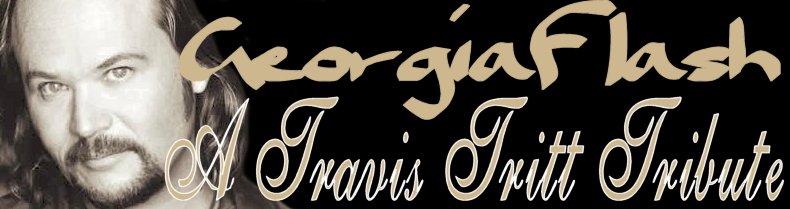
Travis Tritt was born on February 9, 1963 in Marietta,Georgia to James Tritt, a bus driver and former farmer, and Gwen Tritt, bookkeeper and homemaker.
He fell in love with music as a child, teaching himself how to play guitar when he was eight and beginning to write songs when he was 14. Travis was determined to have a musical career, but his parents didn't encourage him to follow his instincts. His mother didn't mind that he wanted to perform, but she wanted him to sing gospel (his first musical performances were made in children's choir at First Assembly Church of God); his father was afraid there was no money in singing. When he was 18, he tried to settle down, work and have a family but he was unsuccessful -- he was married and divorced twice before he was 27. He continued to play music while working various jobs, including one at an air-conditioning company. The company's vice-president was a guitarist who gave up hopes of a musical career and he urged Tritt to follow his dreams. Travis quit his job and began pursuing a career full-time.
In 1982, Tritt began his pursuit by recording a demo for a promotion man, who happened to be an executive at Warner Brothers. For the next several years, Travis recorded demos while he played the honky tonk circuit. The singer was developing a distinctive sound, adding elements of country-rock and Southern rock to his honky tonk.
Part way through in 1989, Warner Brothers' Nashville division signed Tritt and his debut album, Country Club, appeared in the stores in the spring of 1990. Their investment paid dividends immediately as Tritt's first single, Country Club, which still ranks among his top-selling singles, went Top 10 on the charts in 1989. The album Country Club came out in 1990, and songs like Put Some Drive In Your Country earned Tritt a reputation as a country singer with one foot in rock.
Despite his success, the Nashville music industry was hesitant to embrace Tritt. His music and stage show owed too much to rock & roll, and his image didn't conform with the behatted legions of new male singers. Nevertheless, Travis had a breakthrough success with his second album, 1991's It's All About To Change. Prior to its release, he had hired manager Ken Kragen, who also worked with Lionel Richie, Trisha Yearwood, Kenny Rogers, and We Are the World. Kragen helped market Tritt in a way that appealed to both country fans and a mass audience, sending It's All About To Change into multi-platinum territory.
T-R-O-U-B-L-E, Tritt's third album, was released in 1992. Although it didn't match the success of It's all About to Change,it had the number one single Can I Trust You With My Heart and went gold. Travis bounced back to form in 1994 with Ten Feet Tall & Bulletproof, which went platinum, spawned the number one single Foolish Pride, and marked his highest position, number 20, on the pop charts. His 1995 compilation Greatest Hits: From the Beginning went platinum within six months of its November release.
As he was becoming one of country music's most recognizable voices, Tritt was also becoming one of the genre's most visible entertainers. He won the Country Music Association's Horizon Award in 1991 and won a Grammy in 1993 for his work with Marty Stuart. That partnership led to several chart-topping hits, as well as the acclaimed "No Hats" tour in 1992.
A part in the 1993 made-for-TV movie Rio Diablo led to feature film work in The Cowboy Way and Sgt. Bilko. Tritt also had a role in HBO's Tales From The Crypt, performed in the Atlanta area for a Disney concert special titled Coming Home, and provided half-time entertainment for a half-billion people at 1993's Super Bowl. The Rhythm, Country & Blues album, produced by Don Was, found Tritt singing with Patti LaBelle and he reunited The Eagles on the video shoot for Take It Easy from the Common Thread: The Songs Of The Eagles album. Tritt released a holiday album in 1992, A Travis Tritt Christmas: Loving Time Of The Year. His autobiography, Ten Feet Tall And Bulletproof, was released in conjunction with the album of the same name in 1994.
On his next album, The Restless Kind, Tritt decided not to use long-time producer Gregg Brown, instead sharing production duties himself with master producer Don Was and the two opted to go for a more traditional country sound, getting back to Tritt's musical roots. The result was a record that captures an artist at the peak of his creative powers, while keeping a personal and friendly feel. Among the many memorable performances were More Than You'll Ever Know and Where Corn Don't Grow.
Tritt wrote or co-wrote five songs for No More Looking Over My Shoulder, his next release (with Stewart Harris, Bruce Ray Brown and fellow Grammy-winners Gary Baker and Frank J. Myers as his collaborators). Rising country star Michael Peterson, co-writing with Craig Wiseman, contributed the album's title cut. Bowing to his rock 'n' roll impulses, Tritt covered two songs written by Bruce Springsteen and Jude Cole. The remaining all-star writers on the album are J. P. Pennington and Les Taylor (of Exile fame), Larry Cordle (who wrote the Ricky Skaggs' hit, "Highway 40 Blues") and Leslie Satcher (composer of Pam Tillis' "I Said A Prayer").
The plaintive and heartfelt ballad, If I Lost You, was the first single from the new package. It also served as the soundtrack for the final music video in the trilogy that features Tritt as wounded war veteran Mac Singleton. "The first video, Anymore, dealt with the friendship of two injured Vietnam vets, Mac and Al," Travis says. "The second, Tell Me I Was Dreaming, concentrated on Mac and his pregnant wife, Annie, who is accidentally killed. But the baby, Annie, is saved. The third follows the story of Mac and Annie."
Most songs are written first and the concept for the video follows. "This was just the opposite," Travis says. "The other videos were so poignant and had such a strong message that I started thinking about what would Mac be doing right now? What kind of life would he have? I kept getting this picture of him watching Annie, now 5. I saw him thinking, 'I've lost the use of my legs. I've lost my wife. I've lost belief in myself. I've lost so many things in my life and I've learned to come to grips with all that. But I've built everything around you, Annie. There's no way in the world I could live if I lost you.'
Two more singles, No More Looking Over My Shoulder and Start The Car, followed. In the summer of 1999, after 10 years with the label, Travis asked to be released from Warner Bros. Records citing the need for a change. The parting was amicable and Travis has since been pursuing several of his many interests besides music (participating in an unbelievably successful series of Radiothons with other country stars to benefit St. Jude Children's Research Hospital in Memphis, as well as acting in a couple of TV shows: Touched By An Angel on CBS and Arli$$ for HBO).
Travis also spent some quality time at home in 1999 with his beautiful wife, Theresa, and their adorable children, Tyler and Tristan.
Tritt re-emerged in 2000, signing with Columbia Records and releasing Down the Road I Go. The album's first single, "Best of Intentions", was a No. 1 hit. He collaborated with Patty Loveless, singing background vocals on her Strong Heart album. Tritt also plays banjo and sings on Ricky Skaggs' Bill Monroe tribute album, Big Mon: The Songs of Bill Monroe.
Name: James Travis Tritt
Birthdate: February 9, 1963
Birth place: Marietta, Georgia
Hair color: Brown
Eye color: Blue
Height: 5 feet 10 inches
Spouse: The former Theresa Nelson, married April 12, 1997, at Travis' estate just outside of Atlanta. "I'd tried marriage twice and figured I wasn't very good at it. Marty Stuart and I even had a pep talk about it. We agreed, 'We're better off staying single.' Then I met Theresa - which completely blindsided me."
Children: Daughter Tyler Reese, born February 18, 1998; son Tristan James, born June 16, 1999, son Tarian Nathaniel, born November 20, 2003. "Travis is really good with the kids," says Theresa. "He changes diapers and gets up in the middle of the night to feed them. He does everything."
Label: Columbia
Band: Country Club - Members: Jared Decker (keys), *Wendell Cox (guitar), Scottie Simpson (bass guitar), Paul Kramer (fiddle), Dave Northrop (drums), Steve Strum (steel guitar) - (*: Original Member, other members added in 2000)
Musical hero: Charlie Daniels, with whom he wrote two songs for his current album, Down The Road I Go; "I'm very proud of the songs - especially "Southbound Train." It has that Charlie Daniels feel all over it."
Favorite color: Black
Grand Ole Opry: Inducted in 1992.
Early performances: Was a soloist in the children's choir at the First Assembly of God church in his hometown. "I have pictures of me at age 3 standing on a chair next to my father. He's playing an old Gibson, and I've got one of those small plastic ukelele-looking guitars."
First song he wrote: "Spend a Little Time," after a girlfriend broke up with him.
TV and movie roles: Travis has appeared in more than 10 films, including Blues Brothers 2000 (1998), Dill Scallion (1999), and the TV movie Outlaw Justice (1998); he's guest starred on TV shows Sesame Street, Touched By An Angel and Dr. Quinn: Medicine Woman, among others.
CMA awards: 1991 Horizon Award;
1992 Vocal Event of the Year (with Marty Stuart);
1994 Album of the Year (for his collaboration on the Eagles tribute album Common Thread: The Songs Of The Eagles)
Grammys: 1992 Best Vocal Collaboration (with Marty Stuart)
Gold albums: A Travis Tritt Christmas - A Loving Time Of The Year (1992); Down The Road I Go (2000)
Platinum albums: Country Club (1900, 2 million); It's All About To Change (1991, 3 million); T-R-O-U-B-L-E (1992, 2 million); Greatest Hits - From The Beginning (1995, 1 million); Ten Feet Tall And Bulletproof (1994, 2 million); The Restless Kind (1996, 1 million).
Billboard Top 10 singles: 18, including
"Country Club" (No. 9, 1989)
"Help Me Hold On" (No. 1, 1990)
"I'm Gonna Be Somebody" (No. 2, 1990)
"Here's a Quarter (Call Someone Who Cares)" (No. 2, 1991)
"Anymore" (No. 1, 1991)
"The Whiskey Ain't Workin'" (No. 2, 1991, with Marty Stuart)
"Nothing Short Of Dying" (No. 4, 1992)
"Can I Trust You With My Heart" (No. 1, 1992)
"Foolish Pride" (No. 1, 1994)
"Tell Me I Was Dreaming" (No. 2, 1995)
"More Than You'll Ever Know" (No. 3, 1996)
"Where Corn Don't Grow" (No. 5, 1996)
"Best Of Intentions" (No. 1, 2000)
"It's A Great Day To Be Alive" (No. 2, 2001)
"The Love of a Woman" (No. 2, 2002)

|