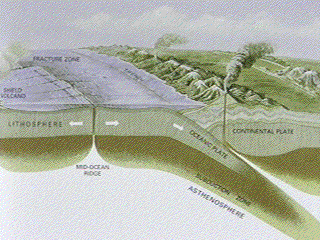
 In recent decades,
scientists have learned that the earth's crust is divided into many large
"plates" that shift and slide against each other.
In recent decades,
scientists have learned that the earth's crust is divided into many large
"plates" that shift and slide against each other.
In recent decades,
scientists have learned that the earth's crust is divided into many large
"plates" that shift and slide against each other.
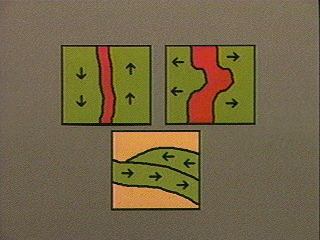 The rigid plates are an average
of 50 miles thick. They slide past, spread apart from, or collide with
each other in slow motion. These plates move on top of the Earth's hot
pliable interior.
The rigid plates are an average
of 50 miles thick. They slide past, spread apart from, or collide with
each other in slow motion. These plates move on top of the Earth's hot
pliable interior.
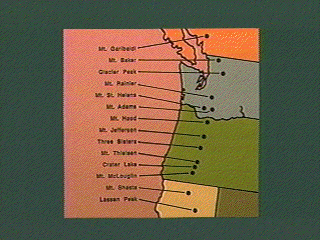 Mount St. Helens is one of the
volcanoes of the Pacific Northwest. These volcanoes lie on the land side
of the boundary between the Juan de Fuca and North American plates.
Mount St. Helens is one of the
volcanoes of the Pacific Northwest. These volcanoes lie on the land side
of the boundary between the Juan de Fuca and North American plates.
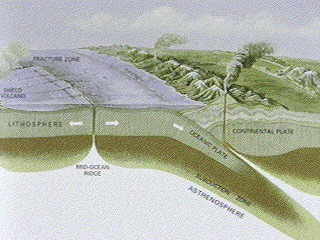 As you can see, the Juan de Fuca
plate is thrust beneath the North American continental plate. It moves
at the rate of about 1 inch per year. That's about the same rate as your
fingernails grow. As the Juan de Fuca plate is thrust beneath the continent,
it bends downward. As the plate descends, rock in the overlying plate is
partially melted.
As you can see, the Juan de Fuca
plate is thrust beneath the North American continental plate. It moves
at the rate of about 1 inch per year. That's about the same rate as your
fingernails grow. As the Juan de Fuca plate is thrust beneath the continent,
it bends downward. As the plate descends, rock in the overlying plate is
partially melted.
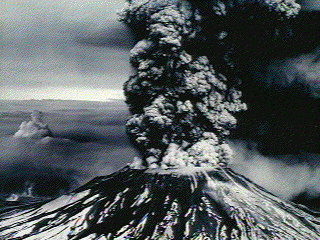 As some of this newly-formed magma rises toward the Earth's surface, it
forms the volcanoes of the Pacific Northwest.
As some of this newly-formed magma rises toward the Earth's surface, it
forms the volcanoes of the Pacific Northwest.
|
|
|
|