

Primary function
Airborne surveillance reconnaissance and target acquisition
Contractor
General Atomics Aeronautical Systems Incorporated
Engines
Rotax 914 four cylinder engine producing 101 horsepower
Dimensions
Length: 27 feet
Height: 6.9 feet
Wingspan: 48.7 feet
Weight
1,130 pounds empty, maximum takeoff weight 2,250 pounds
Performance
Speed: Cruise speed around 84 mph, up to 135 mph
Payload: 450 pounds
Operating radius
Up to 400 nautical miles (454 miles)
Ceiling: up to 25,000 feet
Fuel Capacity: 665 pounds (100 gallons)
Inventory: Active force, 48
Mission
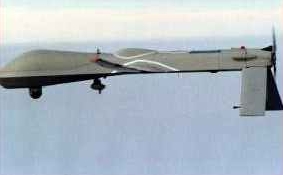
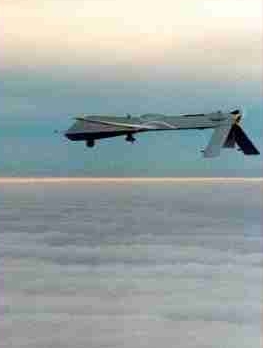
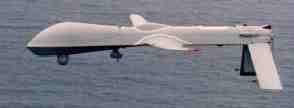
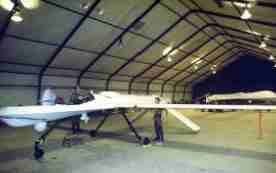
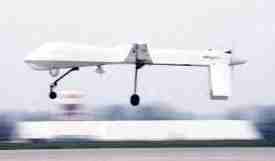
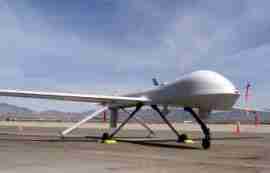
The RQ-1 Predator is a medium-altitude, long-endurance unmanned aerial vehicle system. It is a Joint Forces Air Component Commander-owned theater asset for reconnaissance, surveillance and target acquisition in support of the Joint Force commander
Features
The basic crew for the Predator is one pilot and two sensor operators. They fly the aircraft from inside the GCS via a C-Band line-of-sight data link or a Ku-Band satellite data link for beyond line-of-sight flight. The aircraft is equipped with a color nose camera, a day variable aperture TV camera, a variable aperture infrared camera (for low light/night), and a synthetic aperture radar (SAR) for looking through smoke, clouds, or haze. The cameras produce full motion video and the SAR still frame radar images. The three sensors are carried on the same airframe but cannot be operated simultaneously.
In the future, Predators will carry the Multispectral Targeting System (MTS) with inherent AGM-114 Hellfire missile targeting capability, and integrates electro-optical, infrared, laser designator and laser illuminator into a single sensor package. These Predators cannot carry MTS and the SAR simultaneously. The aircraft will carry and employ two laser-guided Hellfire anti-tank missiles with MTS.
