Krista Tippett's
Speaking of Faith: Beyond the Atheism Divide
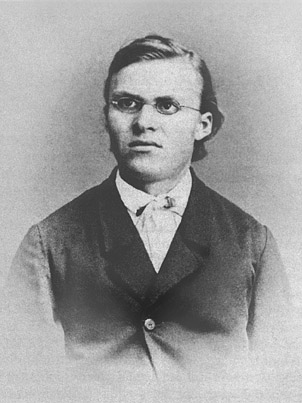 Nietzsche |
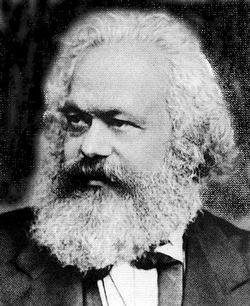 Karl Marx |
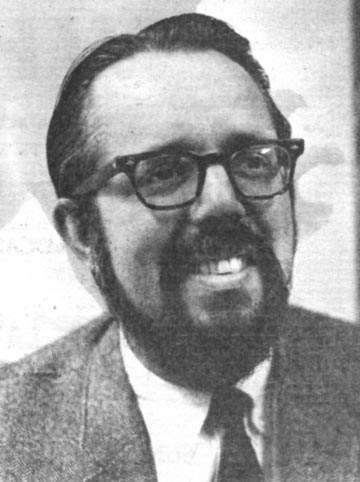 Harvey Cox |
|
Nietzsche |
Karl Marx |
Harvey Cox |
Harvey Cox also says that the fight between atheism and religion obscures the interplay that should be happening between them. He also states that the marginalization of religious institutions does not imply God is confined within those institutions. These institutions have had a history of warping the facts to aid their cause which ultimately led to the era in the 1960s of religious exhaustion, or the belief that religion in institutional form just does not belong in our society today. Religious institutions are not created by God, but by the leaders. Cox also mentions the beliefs of Dawkins and Hitchens: that religion has gone amuck. The violence and zeal associated with religious institutions prove that they are evil. But the problem with Dawkins and Hitchens is that they "don't seem to be interested or don't have the time or don't have the discipline to really tune in on these conversations..."
Interestingly enough, Cox also mentions Stephen J. Gould's Rocks of Ages and the concept of non-overlapping magisterium: that there are two projects or magisterium: science and religion. In the 1960s, although there was the religious exhaustion, there was much religious openness, also. Because of Vatican II, Catholics, for the first time in a while, were urged to be open and more ecumenical. Because religion, in the 20th century, had been something that was shallow, it because easily affected by the leaders and politics of the time. Cox refers to religion as "ominous" on the horizon implying that institutional religion may be a threat to free thinking instead of something that should assist it. Cox stresses the see-saw battle between religion and secularism. He says that most people, in their minds, have made a truce between the two sides and just do not want to bother with the complicatedness of the situation that could be presented if they let one side take over the other. Lately, Cox states, something creative has been happening between the two sides in the ongoing "conversation." He stresses that Agnostics aren't necessarily religious and they are interested in the arguments and conversation, but they don't want to take a stance on it yet.
Another point Cox makes is how religion and secularism affect society. He points out that until the scientific method came along, faith and healing had always been paired together. Once medicine became an exact science, healing was disassociated with faith... until recently. Nowadays scientists admit that spirituality does affect healing, but not in the same way people associated faith and healing with it before. Perhaps this is a sign of reflective unity, Mr. Sciuto? :-D Another thing that Cox mentioned was the effect that religious people have had on our society. He said that many of the famous leaders of our society have been religiously driven, like Martin Luther King, Jr., for example. And, so, instead of trying to solve our problems through the corrupted and twisted world views of science versus religion, perhaps we should look at where it all went wrong.