- The first thing I would like to remember from this chapter is the three things associated with science and religion in history. The unities and disunities, that is. I'm not remembering these because they are particularly insightful or anything like that, but because I disagree with them. Unreflective Unity was in the ancient times where religion and science were one thing, combined into "philosophy." The next stage came during the Renaissance. They called this Reflective Disunity, and it was the time where religion and science began to split. The scientific method was developed. By employing this universal method scientists were able to discover many wonderful things. Religion during this time split off into a different direction. It was shunned by science because if everything could be solved by science and reason, there was no need for faith and beliefs. Now, here is where I disagree: 1900 to the present day is classified as a Reflective Unity. This implies that science and religion are beginning to get along again. I don't think so. It makes the news nearly every day that religious institutions and big scientific firms are clashing on things such as morals and ethics, the largest example of this is the embryonic stem cell research. Reflective Unity implies that both sides know what they are doing and they also are getting along. If you just look, I think the Reading Book was trying to squeeze a classification that logically was next in succession to fit into it's history of science and religion. Tsk tsk.
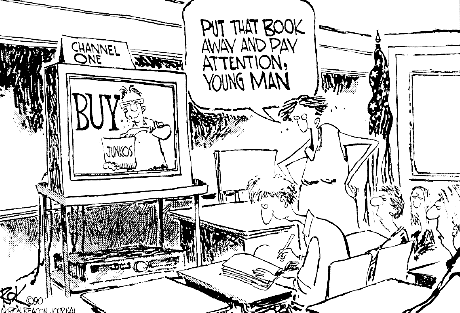
- The next thing I would like to remember is also for the same reason as above, and that is the deal about the Power of Dehumanization. Throughout the entire chapter studying the effects of consumerism and objectification and all that on the teenage population, teenagers a clumped into an enormous "THEM" group. Perhaps the point all the videos and the reading were trying to prove was that capitalist America only views teenagers as one large clump of revenue, which I would agree with, but that wasn't the argument. The argument was that all these awful isms challenge our faith and value system. It's not that I disagree with the core of the argument. Sure, all these isms affects self-image and all that, but I think the Consumerism chapter went about it just the same way that the big companies do: take something related to teenage life and throw it back at them. As one of the videos said, the companies just take a teen's life, markets it, and sells it back to them.
From fair.org