
|
|
|
||||||||||||||||||
|
|||||||||||||||||||
|
|
|||||||||||||||||||
|
|||||||||||||||||||

I've had a nonpartisan grudge against John Kerry for 18 years. This seems an
appropriate time to air it.
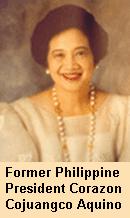
In February 1986, Philippine president Ferdinand Marcos — unpleasant,
unwell, and unloved — held a "snap election." This was a somewhat
baffling attempt to bolster his authority by running against Corazon Aquino, widow of the opposition leader assassinated by
Marcos henchmen. The American diplomatic response was baffled. Marcos was a
friend of
Not knowing what the heck to do in the
I was in the
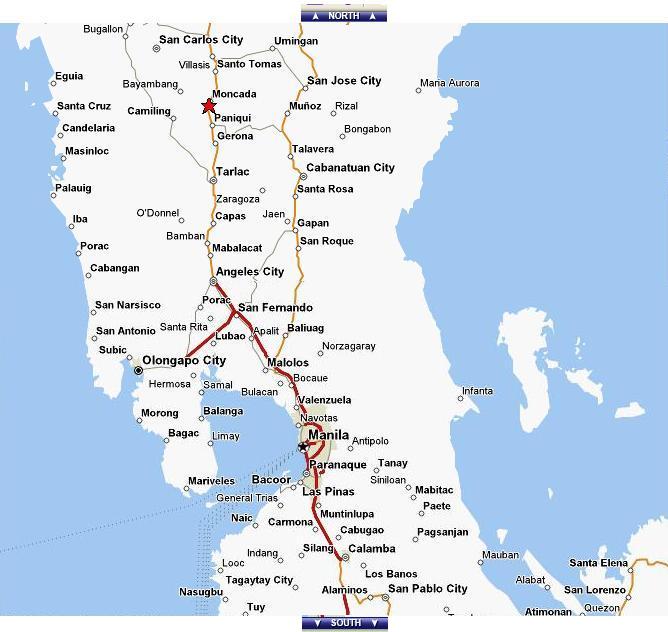
I've had a nonpartisan grudge against John Kerry for 18 years. This seems an
appropriate time to air it.
In February 1986, Philippine president Ferdinand Marcos — unpleasant,
unwell, and unloved — held a "snap election." This was a somewhat
baffling attempt to bolster his authority by running against Corazon Aquino, widow of the opposition leader assassinated by
Marcos henchmen. The American diplomatic response was baffled. Marcos was a
friend of
Not knowing what the heck to do in the
I was in the
The
following is an excerpt from my Rolling Stone article, "Goons,
Guns, and Gold."
Most of the
On Sunday night, two days
after the election, thirty of the computer operators from COMELEC [the Philippine
government "Commission on Elections," appointed by Marcos and in
charge of compiling the final vote tally] walked off the job, protesting
that the vote figures were being juggled. Aquino
supporters and NAMFREL volunteers took the operators, most of them young women,
to a church, and hundreds of people formed a protective barrier around them. [NAMFREL--The
National Movement for Free Elections--was supposedly nonpartisan, but NAMFREL
members were strongly anti-Marcos.]
Village Voice reporter
Joe Conason and I had been tipped off about the
walkout, and when we got to the church, we found Bea Zobel,
one of Cory Aquino's top aides, in a tizzy. "The
women are terrified," she said. "They're scared to go home. They
don't know what to do. We don't know what to do." Joe and I suggested that
Mrs. Zobel go to the Manila Hotel and bring back some
members of the Congressional observer team. She came back with Kerry, who did
nothing.
Kerry later said that he
didn't talk to the COMELEC employees then because he wasn't allowed to. [A bone-head Rolling
Stone fact-checker sent the article to Kerry's Senate office for comment.
Kerry staffers were wroth
|
|
and insisted the senator's
version of events be included.] This is ridiculous. He was ushered into an
area that had been cordoned off from the press and the crowd and where the
computer operators were sitting. To talk to the women, all he would have had to
do was raise his voice. Why he was reluctant, I can't tell you. I can tell you
what any red-blooded representative of the
And there you have
probably the only comparison of Kerry to a male model ever made. Not quite
trusting my memory--or my reporting, for that matter--I searched out my notes
from 1986. I found some scribbles that I'd made on the Sunday night and a
journal with a summation of the evening's events written two days later. I was
a foreign correspondent at the time, and not much interested in domestic
politics. I have Kerry down variously as "Sen. Carey" and "Rep.
Kerry."
About nine o'clock on
Sunday night, Conason and I were drinking in the bar
of the Manila Hotel when a friend of mine from ABC News told us about the
COMELEC defections. The workers who quit in protest were very young, in their
teens. The 28 girls and 2 boys weren't really computer operators. They were
doing data input. They were kids from poor families and very proud that they'd
been to data input school. They didn't seem to be politically motivated and
were at pains to describe themselves as unpolitical
in a touching, if somewhat garbled, statement they
read to the press at the NAMFREL-surrounded church. And they certainly were
scared. But their professional dignity had been intolerably injured when the
voting data that they'd input did not, as it were, outcome.
Joe and I actually sent
Bea Zobel to get members of the international
election observer delegation, headed by
From my journal:
"Gets there & never talks to Comelec girls.
Boy is ball-less. Joe and I finally push forward & tell Kerry it was us (1
Dem. & 1 Rep.) that called for him (we also heard, Comelec
girls wanted Observers called). That it was Joe & me
seemed to make a big difference to Kerry. Who still did f---all."
What I meant by
"seemed to make a big difference" was that Kerry's ears perked right
up when he heard his name called by members of the press. His reaction was to
turn to us and say, magisterially, "No interviews, boys." We
explained that we had no interest in interviewing him and suggested that he
provide some reassurance to the frightened conscientious objectors from COMELEC.
Now, with benefit of
hindsight, I think I can tell you why Kerry didn't do so. He was caught in
Kerry-ish calculation--an ambitious young senator on
his first important bipartisan delegation with its delicate mission of
neutrality. Cory Aquino was very popular. But so was
President Reagan. Which way to have it? Why, have it both ways! So Kerry was
firmly behind Pash Commit of Flips to Dem, up to a
point. Just as today Kerry is brave sailor/bold war protester; foe of
Saddam/friend of Hans Blix; political
underdog/entitled nominee; big government liberal/corporate tax-cutting
conservative; rider of Harleys/marrier of Heinz; and,
incidentally, still a real jerk.
P.J. O'Rourke is a
contributing editor to The Weekly Standard and author of the forthcoming Peace Kills:
Similar copy of the article is found at the following sites: