
|
|
Africa AIDS fund created to deliver free drugs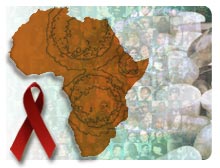
WASHINGTON (Reuters) -- A small U.S. firm said on Wednesday it was creating a $250 million fund to buy AIDS drugs and distribute them free in Africa where price and infrastructure are huge barriers to keeping patients healthy. The company, Phyto-Riker, has the backing of the U.S. Export-Import Bank, the government of Ghana and members of the Congressional Black Caucus in the effort. "We realize at the end of the day the African governments cannot pay for the medicine at any price," Kennon Brennen, president and chief executive officer of Phyto-Riker, told Reuters in a telephone interview.
The issue of AIDS drugs for Africa is hugely contentious. Most people infected with the AIDS virus live in sub-Saharan Africa -- 25 million out of the 36 million HIV patients worldwide. Yet African nations have the least access to the drug cocktails that can keep patients healthy for years. Price is one issue, but the companies that make the drugs and some African officials say that even if the drugs were given free, there is no infrastructure in place to get them to the right people and make sure they are prescribed properly. Brennen said his company, which makes and distributes generic drugs in Africa, could address such concerns. "Our company has been in Africa operating for about 3 years and bought the largest pharmaceutical manufacturing facility in Ghana," he said. "We have learned how to ship to 18 countries to date in Africa. ... We have learned about pricing. So we find ourselves in a position to be able to solve the logistical problems." Brennen signed a memorandum of understanding Wednesday for $250 million in loan guarantees with Export-Import Bank Chairman James Harmon and Ghana's health minister, Dr. Richard Anane. He said he also had strong interest from Kenya, Uganda, Senegal and Zimbabwe, and had spoken to five top makers of HIV drugs -- GlaxoSmithKline Plc, Bristol-Myers Squib, Boehringer-Ingelheim, Merck & Co. and Pfizer, none of which had any immediate comment. "This cooperative initiative is an important step in making HIV/AIDS protease inhibitors and other medicines and related equipment more widely available to HIV/AIDS victims," Ex-Im Bank Chairman James Harmon told a news conference. Brennen said he hoped to buy HIV drugs at a discount from the companies to give to African governments, which would then distribute the drugs to selected clinics. "I think (the companies) are basically interested in selling to Africa. We will provide the mechanism to buy, pay for them and distribute them in a secure manner," he said. He said the Ex-Im bank, a U.S government agency, would guarantee immediate payment to the seller. He said the $250 million could help drugs reach about 2.5 percent of infected Africans -- a small number that he hoped could be built on once the program was shown to be a success. Brennen said he planned to go to nonprofit groups, international agencies and the pharmaceutical companies to raise the cash. He added he believed he could break down suspicions that African countries had about foreign companies offering free drugs or vaccines to their people. "We have broken through the wall because they have seen us sweating in Africa with them," he said. "The Black Caucus wants to get it done however it can be done, and if private industry can lead, fine," Emile Milne, a spokesman for New York Democratic congressman Chuck Rangel, who hosted the signing ceremony, said. Only in December, after months of negotiations, South Africa approved the free distribution of Pfizer's drug Diflucan, used to treat fungal infections in HIV patients. GlaxoSmithKline, which makes several HIV drugs including the first drug AZT, has come under extreme pressure from activists in recent weeks to lower its prices. Britain has a plan to set up an international purchase fund for medicines and vaccines and the United Nations AIDS agency UNAIDS said earlier this week that drug companies were close to striking a cut-price supply agreement with Rwanda. Copyright 2001 Reuters. All rights reserved. This material may not be published, broadcast, rewritten, or redistributed.
RELATED STORIES:
Twelfth birthday a milestone for South African AIDS activist
RELATED SITES:
HIV/AIDS Fact Sheets - CDC/NCHSTP/Divisions of HIV/AIDS Prevention (DHAP) | |||||||||||
|
ETHICS HOME PAGE SLC HOME HELP
PLEASE NOTE: These pages are always going to be under review and revision. They have been assembled for the use of students in Gen024, Medical Ethics. The course is offered at St. Lawrence College, Kingston, Canada. For further information on this course or to report problems with this page, please contact [email protected]
|
