
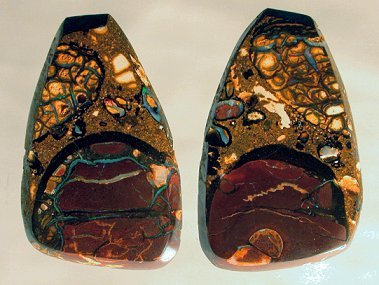
The mineraloid opal is amorphous SiO2�nH2O; hydrated silicon dioxide, the water content sometimes being as high as 20% but is usually between three and ten percent. Opal ranges from colorless through white, milky blue, gray, red, yellow, green, brown and black. Common opal is truly amorphous, but precious opal does have a structural element. The word opal comes from the Sanskrit upala, the Greek opallios, and the Latin opalus, meaning "precious stone."
Opal is a mineraloid gel which is deposited at relatively low temperature and may occur in the fissures of almost any kind of rock, being most commonly found with limonite, sandstone, rhyolite, and basalt.
Opal is one of the mineraloids that can form or replace fossils. The resulting fossils, though not of any extra scientific interest, appeal to collectors.
Grounds and promotes clarity. Excellent for cleansing the aura. Helps to relieve manta stress while promoting clarity. Facilitates connection with ones guides.Helps with Aging,.
