 |
 |
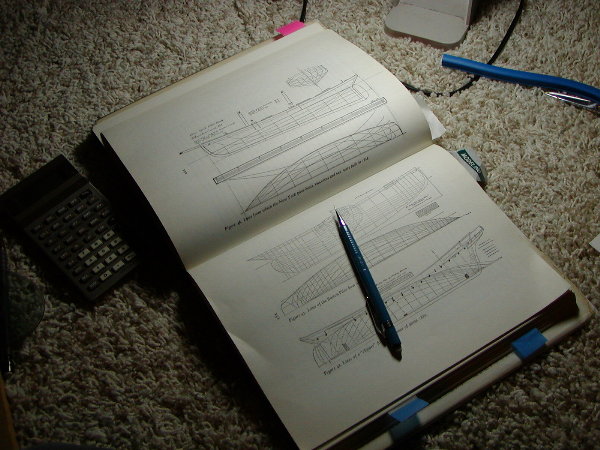
| 1. Find the plans. They need to provide stations (verticle to the waterline) and lifts (parallel to the waterline). |
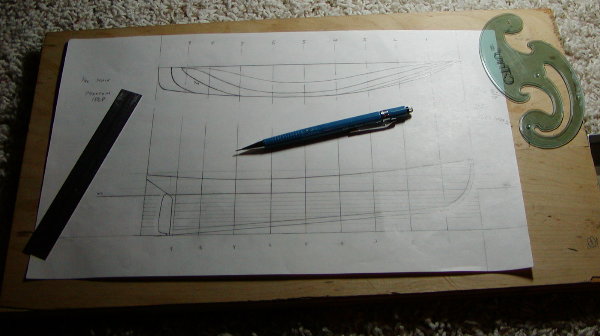
| 2. Reproduce to scale. Include all the "stations" and "lifts" you may need. Lifts should be as thick as the wood planks you plan to use. |
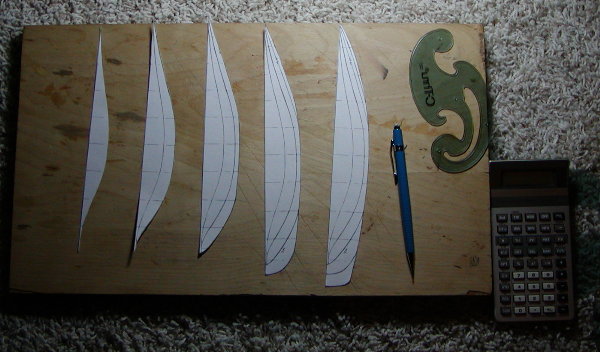 |
| 4. Make several copies of the plans and cut out each lift (waterline template) you plan to use. |
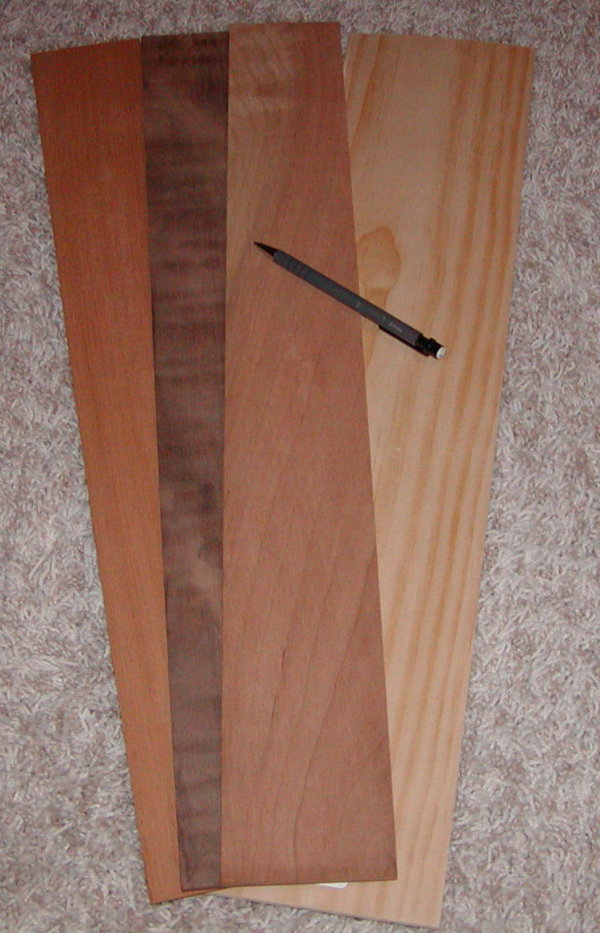 |
| 3. Gather the ship's raw material. In this case, 1/8 inch thick planks of pine, cherry, and black walnut with 1/16 inch thick mahogany. |
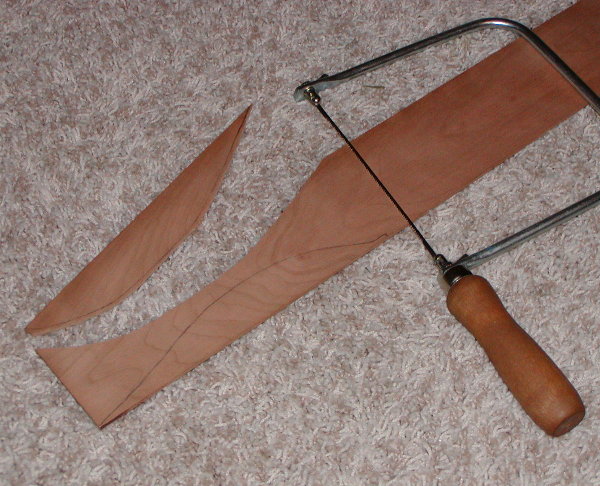 |
| 5. Use the templates to cut the wood. This creates "lifts" parallel to the waterline. |
 |
 |
 |
 |
 |
| Cut the outside edges a little large to leave room for filing and sanding later. |
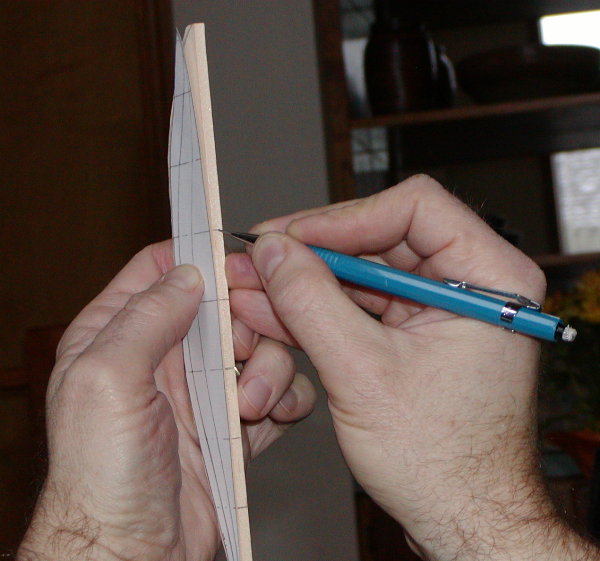
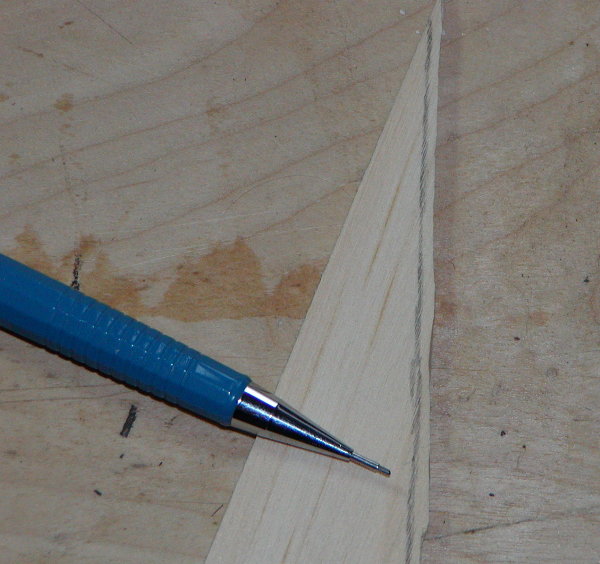
| 6. Mark stations on the back (straight edge) of each lift. |
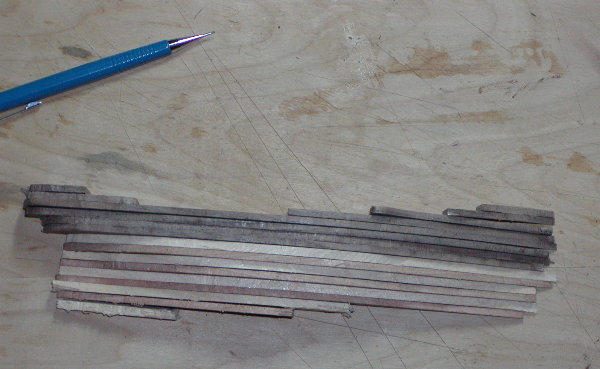
| Here the stations on the back are lined-up and the various lifts are laid together (but not yet glued). |
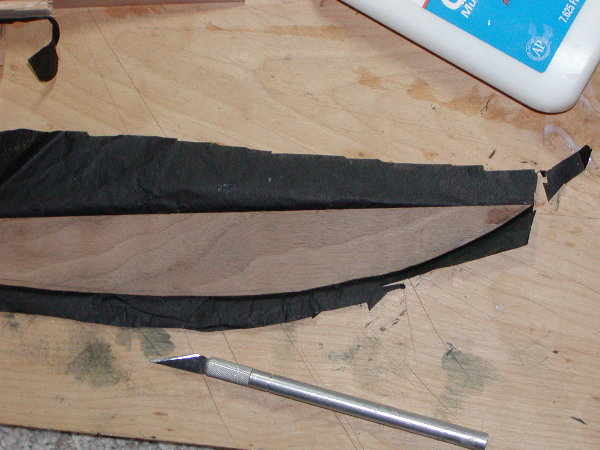
| 7. Black tissue paper is glued to one side of each lift to provide definition later. Thicker construction paper was used at the waterline. |
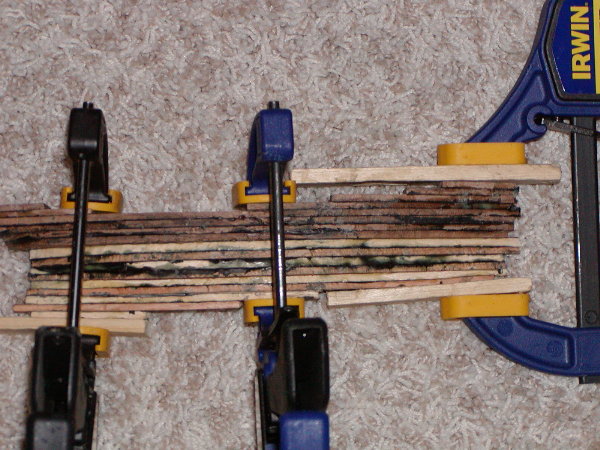
| 8. Using the station guides on the back, the lifts are glued and clamped a couple of layers at a time until the entire ship is "built-up." |
| BUILDING THE HALF HULL "PHANTOM" |